

In my last article, I argued that all available security and intelligence resources should be urgently deployed to rescue the victims of the recent abduction in Oriire Local Government Area of Oyo State. As Nigerians marked Children’s Day yesterday, the plight of the abducted students and their teachers cast a shadow over the celebrations. Encouragingly, many Nigerians, including celebrities and public figures, used the occasion to amplify calls for the federal government to act swiftly and ensure their safe return. This collective show of concern demonstrates that, beyond politics and ethnicity, the safety of our children remains a cause that unites us all.
A few hours after the article was published, reports emerged that Yoruba nation activist, Sunday Adeyemo, popularly known as Sunday Igboho, had disclosed that he was awaiting federal approval for the commencement of operations of his proposed security outfit, the Iru Ekun Security Network.
According to him, all necessary documentation had been submitted and the organisation was only waiting for approval from the federal government. Speaking to his supporters in a video that has since circulated online, Igboho expressed confidence that President Bola Tinubu would eventually grant the approval.
In a statement issued on Friday to mark the end of his third year as president, President Tinubu said “While challenges remain, many communities and highways are becoming safer and more economically active”. I have read the reactions of many Nigerians online and they vehemently disagree with this claim.
There is no doubt that insecurity remains one of the gravest threats facing the South-West and indeed the entire country. Communities are increasingly worried about kidnappings, violent crimes and the activities of criminal elements operating in forests and remote locations. Every genuine effort aimed at protecting lives and property deserves consideration.
However, before any approval is granted for a security organisation of this nature, important questions must be asked.
The first question concerns neutrality and political partisanship.
Security organisations derive legitimacy from public trust. Citizens must have confidence that those entrusted with security responsibilities will act fairly and without political bias. This is why statements previously made by Sunday Igboho deserve closer scrutiny.
In a widely circulated video ahead of the 2023 elections, Igboho warned supporters of opposition candidates against campaigning in the South-West.
“If you know that you are crazy, campaign for one Atiku or Obi in Yorubaland. No more useless Atiku or Obi in Yorubaland,” he reportedly declared.
He subsequently endorsed President Tinubu in unequivocal terms, promising support for his re-election and describing him as the preferred political choice for Yorubaland.
Every Nigerian is entitled to personal political opinions. Democracy protects freedom of expression and political association. The issue, however, is whether an individual who has publicly taken such strong partisan positions should be entrusted with leading a security outfit that may eventually exercise significant influence within communities.
If security structures are perceived as partisan, they risk undermining public confidence and raising concerns about possible political intimidation, especially during election periods.
This is not an argument against Sunday Igboho personally. It is an argument for caution, transparency and accountability.
The second question concerns the role of the state itself.
Why is the conversation increasingly shifting towards empowering non-state actors instead of strengthening Nigeria’s existing security institutions?
Nigeria already has the police, the armed forces, the Department of State Services, the Nigeria Security and Civil Defence Corps and other security agencies established by law. These institutions possess constitutional authority and are accountable through established chains of command.
If insecurity remains a serious challenge, should the government’s priority not be to adequately fund, equip, train and motivate these agencies?
The answer to insecurity cannot always be the creation of new security outfits, especially one led by politically partisan, non-state actors.
A strong state is one that empowers its institutions to discharge their responsibilities effectively. It is difficult to understand why the government should be considering approving additional security structures while many existing agencies continue to struggle with inadequate manpower, insufficient intelligence capabilities, poor welfare, and limited operational resources.
Rather than encouraging the emergence of multiple security organisations led by influential individuals, the federal government should focus on ensuring that the agencies already established by law can effectively secure every part of the country.
The third question concerns urgency.
Supporters of the proposed network argue that insecurity requires immediate intervention and that community-based initiatives can complement existing security efforts.
If that is the case, one must ask why federal approval is suddenly indispensable.
Many Nigerians still remember Igboho’s activities in Igangan during the administration of former President Muhammadu Buhari. At the time, he mobilised local resistance against criminal elements without waiting for any presidential endorsement or federal approval.
If the objective today is genuinely to assist communities facing security threats, then surely such intervention should not depend entirely on a federal license.
The emphasis should be on supporting lawful efforts to protect vulnerable communities rather than creating structures that may later become controversial.
More importantly, any decision concerning the approval of a security organisation with regional influence should not be left solely to the executive arm of government.
The National Assembly, traditional institutions, civil society organisations, security experts and other stakeholders should be consulted. The implications extend beyond immediate security concerns. They touch on federalism, democratic accountability and the long-term relationship between state authority and non-state security actors.
Finally, this issue also raises uncomfortable questions about the state of opposition politics in Nigeria.
During the administration of former President Goodluck Jonathan, the opposition was relentless.
The removal of fuel subsidy in January 2012 triggered massive mobilisation and criticism from opposition leaders, including Bola Tinubu and the APC.
In 2013, Tinubu publicly argued that Jonathan should resign if his government could not effectively tackle insecurity.
In 2014, he criticised Jonathan’s request for a $1 billion loan for security purposes, arguing that it could be used to undermine democratic opposition.
The APC also rejected the 2014 National Conference, dismissing it as a political distraction.
When the 2015 general elections were postponed by six weeks due to security concerns arising from the Boko Haram insurgency, the APC, with Alhaji Lai Mohammed as its spokesman, fiercely opposed the decision and described it as politically motivated.
Whether one agreed with those positions or not, the opposition of that era performed one essential democratic function: it scrutinised government actions and compelled public debate.
Today, the situation appears remarkably different.
A proposal for a security network associated with a politically influential activist is reportedly before the federal government. Questions about accountability, neutrality and oversight naturally arise. Yet there appears to be little coordinated response from opposition parties. The current spokesmen of these opposition parties need to take a crash course from Alhaji Lai Mohammed.
Where are the press conferences? Where are the policy critiques? Where are the alternative proposals?
Democracy requires more than periodic elections. It requires constant vigilance, robust debate and institutional checks on power.
The federal government may ultimately decide to approve the Iru Ekun Security Network. That decision is within its authority. But before such approval is granted, Nigerians deserve clear answers about the legal framework, operational oversight, accountability mechanisms and safeguards against political misuse. Security is too important to be politicised.
The protection of lives and property should unite Nigerians, not deepen partisan divisions. If the goal is a safer South-West and a safer Nigeria, then strengthening existing institutions, ensuring transparency and maintaining democratic accountability should remain the guiding principles.
Relying on non-state actors to address insecurity may offer short-term relief, but it risks creating long-term consequences.
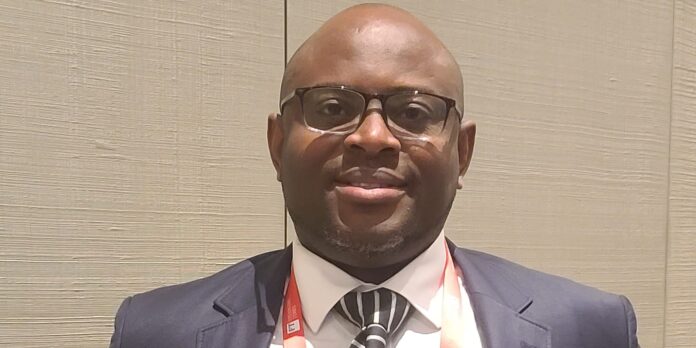
Akinsuyi, former group politics editor of the Daily Independent, writes from the United Kingdom. He can be reached at shabydayo@gmail.com.


