

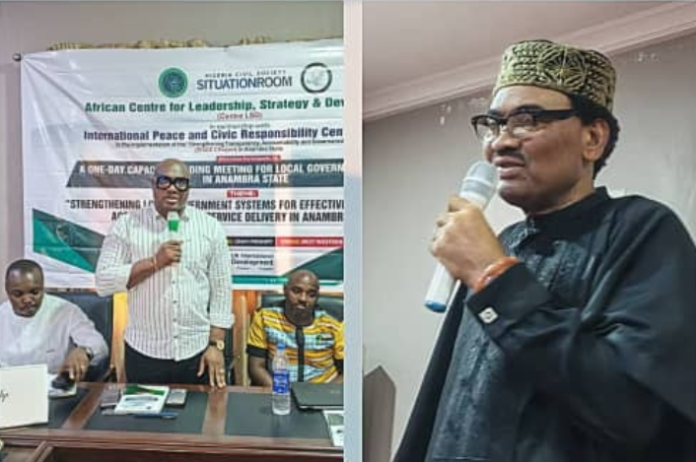
The International Peace and Civic Responsibility Centre (IPCRC), has called for a coordinated national response to the growing circulation of fake, adulterated and substandard products in Nigeria, warning that counterfeit medicines and consumer goods have become a serious threat to public health and public confidence.
The Group said counterfeit products are increasingly finding their way into pharmacies, supermarkets and neighbourhood stores, leaving many Nigerians uncertain about the safety of everyday items, including medicines, infant formula, beverages and food products.
The IPCRC Executive Director, Prince Chris Azor, who made the disclosure in a chat with newsmen in Awka, Anambra State Capital, cited recent enforcement operations in Lagos, where millions of doses of counterfeit malaria medicines were reportedly recovered from a market, alongside the discovery of a warehouse in Apapa stocked with fake and banned drugs worth billions of naira, as worrying concerns.
According to him, the repeated seizure of counterfeit antibiotics, injections, contraceptives, paracetamol and infant food suggests that the problem has moved beyond isolated incidents to a systemic challenge requiring urgent action.

Azor expressed concern that fake products have also been found in registered retail outlets, arguing that consumers can no longer rely solely on purchasing from formal stores as a guarantee of safety.
He noted that many Nigerians have resorted to comparing tablets, inspecting packaging and checking the appearance of food and drinks before consumption, describing the trend as evidence that citizens are increasingly forced to act as their own quality inspectors.
“A mother buying medicine for a sick child should not need to think like an investigator,” he said, adding that protecting consumers should remain the responsibility of regulatory institutions.
The IPCRC president warned that counterfeit medicines have been linked to kidney damage, organ failure and deaths, while substandard antibiotics and anti-malarial drugs contribute to drug resistance by allowing diseases to become harder to treat.
He said, “Beyond the health risks, the widespread circulation of fake products is gradually eroding public trust in institutions responsible for consumer protection.”
Azor urged agencies, including the National Agency for Food and Drug Administration and Control (NAFDAC), the Standards Organisation of Nigeria (SON), the Nigeria Customs Service, the Police and drug enforcement authorities, to strengthen collaboration through intelligence sharing and joint investigations.
He stressed that enforcement efforts should focus on dismantling entire counterfeit supply chains rather than targeting only small-scale traders at the end of the distribution network.
READ ALSO: Ned Nwoko Reacts to Regina Daniels’ Return, Gets Flooded With Apologies
He also called on state and local governments to treat counterfeit goods as a public health emergency, noting that markets and warehouses operate within their jurisdictions.
Azor urged manufacturers and legitimate traders to embrace product authentication technologies, such as scannable verification codes, to make it easier for consumers to identify genuine products.
“IPCRC demands greater transparency from authorities, regular updates on investigations, prosecutions and convictions involving counterfeit products.
“Nigerians should be able to buy medicines and food without questioning their authenticity. Sustained enforcement, stronger inter-agency cooperation and tougher penalties for offenders are essential to restoring public confidence in the country’s consumer protection system,” Azor posited.


