

The test of the success of the landmark and media-celebrated 2025 Federal Government/Academic Staff Union of Universities (ASUU) Agreement (hereafter referred to as 2025 FG/ASUU Agreement) is its ability to achieve three things. First, it should reduce to the barest minimum the frequency of the occurrence of strikes. Secondly, when strike inevitably occurs, it should reduce its impact on students in terms of duration, with strikes lasting only in days and not the usual weeks or months. Lastly, the success of the Agreement will be judged in terms of the scale of impact in terms of being institutionally-specific, state-wide or national in spread, meaning that the number of students affected and number of universities involved are very important. The less the scale of impact, the more of its success.
But these triple things can only happen if the welfare of the academic and non-academic staff of the universities are given the high level of priority it deserves. Universities should be treated and given the respect they deserve otherwise the governments (both federal and state) should stop the proliferation of universities, just for the purpose of scoring political mileage. Knowledge production and its transmission to students is a serious business.

Picture showing the Hon. Minister of Education, Dr Maruf Olatunji Alausa (M) surrounded by Hon Minister of State for Education; Prof. Suwaiba Sa’id Ahmed on the minister’s right, ASUU President Prof. Chris Piwuna on his left, and others unveiling the Agreement between the Federal Government of Nigeria and the Academic Staff Union of the Universities on Wednesday 14th January, 2026. Source: Federal Ministry of Information and National Orientation with little modification, via https://fmino.gov.ng/fg-asuu-seal-landmark-2025-agreement-heralding-enduring-stability-and-renewed-hope-for-nigerian-universities/
Nigeria runs a federal system of government with exclusive, concurrent and residual lists. Education is in the concurrent list which therefore gives the State governments the right to establish and run universities (including the number they so desire to have). This right imposes on them also the obligations and responsibilities of running the universities well including paying the salary and other emoluments/benefits contained in the conditions of service of their employees. Although ASUU has members in both federal and state-owned universities, the FG/ASUU negotiation is first and foremost a negotiation between federal government and ASUU members under its employment.
This ipso facto implies that federal government as an employer is not negotiating with ASUU on behalf of state governments who are employers of staff of state-owned universities. However, a couple of pro-chancellors of state-owned universities were part of the federal government team in the negotiation. This ipso facto again means that State governments are to a very large extent part of the 2025 FG/ASUU Agreement. One recognizes here that this issue is an intricate one and not as straight forward as it seems, because intergovernmental relations are involved and more specifically inter-governmental fiscal relations.
But regardless of its intricate nature, members of ASUU in State-owned universities, are considered beneficiaries of the gains of ASUU agreements with the Federal Government. There is an understanding that state governments are expected to domesticate the agreement or use it as a standard for negotiating with its own employees. Many a times, how the gains or benefits of ASUU agreement with the federal government, are secured or enjoyed at the state level is, where the problems lies. For instance, some state governments willingly implement the agreement without much difficulties, while some others like to foot drag and even resist implementing such agreement between FG and ASUU.
As at the middle of July, some states had willingly agreed to implement the agreement and these states were Bauchi, Benue, Ogun, Osun, Sokoto and Yobe. We commend these state governments (and few others but not named here) for showing leadership required to keep our universities free from avoidable strikes. It is important to note that these states are by no means among the richest in the country. Again, these states are not among the oil-rich states who are receiving extra-revenue called derivation funds. None of them is among the eleven oil-producing states that are receiving the 13% allocated funds, which are (in alphabetical order) Abia, Akwa Ibom, Anambra, Bayelsa, Delta, Edo, Enugu, Imo, Kogi, Ondo and Rivers. But what does this implementation statistics tell us? It is very simple and clear which is that the main problem about implementation is not with the inability to pay but with the unwillingness to pay. This means that although many of the states are capable of implementing the agreement, but they are not willing to do so for reasons best known to them. The misplacement of priority makes lecturers, non-academic staff and students to suffer from the costly impact of avoidable strikes. Should we continue like this moving forward? I do not think so.
As of August, 2026, some more states (bringing the number to 16), have started implementing the agreement. This is a far cry given the number of state universities in Nigeria. According to the current statistics of the National Universities Commission (NUC) on the number of state universities, there are 69 of them, although two among the 69 were just established this year 2026. One may ask: what is happening to the other states, including many of the oil-rich states?
It is on the strength of this disappointing state of affairs that the National Executive Council (NEC) of ASUU after a meeting on August 8 and 9, 2026, ordered 20 branches in state universities to issue a 14-day ultimatum before embarking on a strike if demands were not met. The main reason for the directive is the ‘non-implementation and haphazard enforcement of the 2025 FGN-ASUU Agreement by federal and state authorities.’
One is aware that some state government are in contact with ASUU branches to resolve the issues. It is our hope that discussion or negotiation should be completed without much foot-dragging. Having said this, moving forward, it is unacceptable for ASUU branches (for whatever reason) to disrupt an ongoing examination in the name of enforcing a strike. ASUU at both the national and state-owned university branches should stop the practice of disrupting examinations in the name of enforcing a strike. This ‘agboro-like’ (thug-like) behavior should cease forthwith in universities considered as a citadel of learning and the most civilized place of human existence, conduct and operation. Scholars should never behave like politicians many of whom by the way do not have their children in public universities. So who are the enforcers of strike in such disruptions directing their anger to? There is need to change the modus operandi of enforcing a strike.
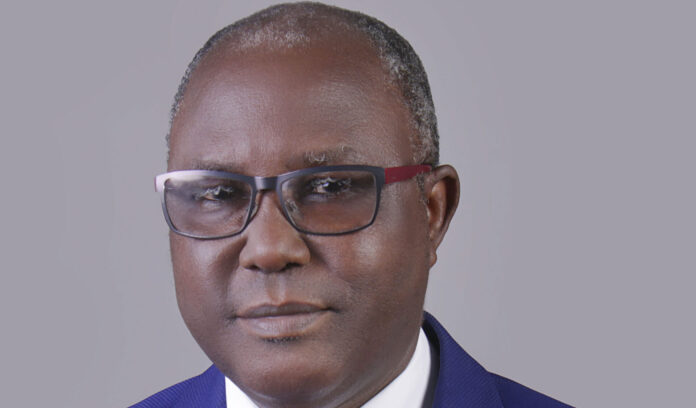
Prof. Obasi, a public policy expert, has just retired from the Department of Public Administration, University of Abuja.


