

Socio-Economic Rights and Accountability Project (SERAP) has urged the Senate President, Mr Godswill Akpabio and Speaker of House of Representatives, Mr Tajudeen Abbas “to reject the recently reintroduced social media regulation bill which if passed would unduly restrict the rights to freedom of expression and privacy.”
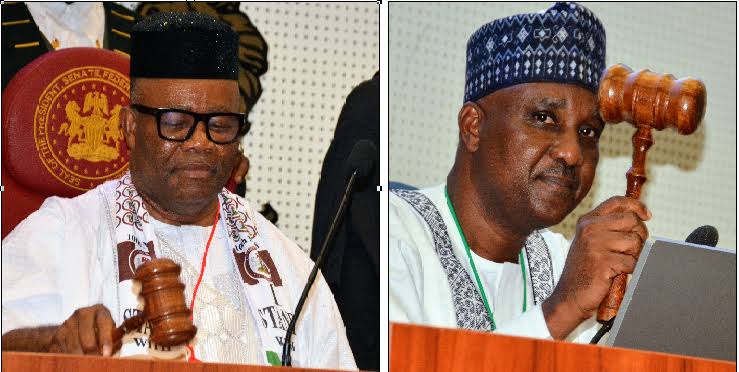
SERAP urged them to “request the administration of President Bola Tinubu to drop any ongoing efforts to put pressure on Google, YouTube, TikTok and other social media companies to unduly restrict these fundamental human rights.”
SERAP said the bill would “criminalize the legitimate and lawful exercise of human rights.”
The National Broadcasting Commission (NBC) last week reportedly stated that, “one of Nigeria’s major problems now is social media”, and described the social media as “a monster”.
In the letter dated 14 October 2023 and signed by SERAP deputy director Kolawole Oluwadare, the organisation said: “the social media is neither Nigeria’s problem nor a monster. Any regulation of it would have arbitrary and excessive effects, and cause incalculable damage, both in material and human rights terms.”
SERAP said, “Any move to regulate social media would be inconsistent and incompatible with the provisions of the Nigerian Constitution 1999 [as amended] and the country’s international human rights obligations.”
According to SERAP, “The proposed bill raises serious concerns about the rights to freedom of expression and privacy, and would lead to digital siege.”
The letter, read in part, “Rather than rushing to pass the social media regulation bill, the National Assembly should encourage the Federal Government to maximize opportunities around social media access, and address the growing social and economic inequalities in the country.”
“We would be grateful if the recommended measures are immediately taken upon the receipt and/or publication of this letter. SERAP shall take all appropriate legal actions against the National Assembly and the Federal Government if the social media regulation bill is ever passed into law.”
“We urge you to request the administration of President Bola Tinubu to publish the details of any ongoing discussion and engagement with Google, YouTube, TikTok and other social media companies.”
“The reintroduction of the social media regulation bill would lead to deterioration of the human rights situation in the country and carry major economic costs for all sectors, as well as exacerbate social and economic inequalities.”
“It would effectively deepen digital divides in the country and seriously undermine the Tinubu administration’s expressed commitment to develop this sector.”
“Under international law, all restrictions on the operation of social media companies and other intermediaries must comply with the requirements of legality, legitimacy and necessity.”
“The regulation of social media may be incompatible with the services of major social media and private messaging intermediaries, negatively impacting the free flow of information and ideas, and affecting economic and social activities.”
“The National Assembly should put pressure on the Federal Government to comply with the requirements of the Nigerian Constitution 1999 and the country’s international human rights obligations regarding the rights to freedom of expression, privacy and participation.”
“Access to social media is widely recognized as an indispensable enabler of a broad range of human rights. It is central to freedom of expression and the realization of many other human rights including education, freedom of association and assembly, access to information, and participation.”
“The Federal Government has the legal obligations to promote and facilitate the enjoyment of human rights, and to take all steps necessary to ensure that all individuals have meaningful access to social media. The authorities should refrain from unduly interfering with access to digital communications platforms.”
“Under Section 39 of the Nigerian Constitution, Article 19 of the International Covenant on Civil and Political Rights and Article 9 of the African Charter on Human and Peoples’ Rights, any restriction on freedom of expression constitutes a serious curtailment of human rights.”
“The Nigerian Constitution and these human rights treaties protect everyone’s right to freedom of expression, which includes the freedom to seek, receive and impart information of all kinds, regardless of frontiers. States have the obligation to respect and ensure the right to freedom of expression, without distinction of any kind.”
“The Nigerian Constitution and human rights treaties protect a broad range of expression, including political discourse, commentary on one’s own and public affairs, canvassing, discussion of human rights, journalism, and artistic expression.”
“This includes information that may be regarded as offensive, false or untrue by some people but is considered legitimate political discourse by others. Restrictions on the right to freedom of expression are only permissible when they meet the requirements of legality, necessity, proportionality and non-discrimination.”
“The onus to show that restrictions comply with those requirements is on the State seeking to restrict rights. Social media regulation bills generally do not meet those requirements.”
“The African Commission on Human and Peoples’ Rights has called upon States not to engage in or condone any restriction of access to the Internet or other digital technologies for segments of the public or an entire population.”
“According to our information, Director-General of the National Broadcasting Commission (NBC), Balarabe Ilelah, recently stated that the social media regulation bill has been sent to the National Assembly. The bill is reportedly seeking to repeal and reenact the NBC Act, CAP L11 laws of the Federation of Nigeria 2004.”
“According to the NBC, ‘We have already submitted a bill to amend the NBC act. One of our major problems now is social media. Unless there is a law that allows NBC to act on social media issues, the issue will continue to be a monster in our daily lives in this country.’”
“Similarly, Mrs. Francisca Aiyetan, Director, Broadcast Monitoring of the NBC, recently reportedly said that without regulation, young people could be misguided. According to the NBC, the Federal Government is currently engaging with Google or YouTube, TikTok, ‘so we know the faces behind these [social media] platforms.’”
“If the 2023 social media regulation bill which has reportedly passed the first reading before the National Assembly is the same as the 2019 bill, it would impose disproportionate penalties on Nigerians solely for exercising their human rights.”
“According to our information, the newly reintroduced social media regulation bill seems to be the replica of the version of the Protection from Internet Falsehood and Manipulation Bill 2019, with provisions empowering the authorities to unilaterally order the shutdown of the internet.”
“A similar bill to regulate social media was considered by the National Assembly in 2015 but failed to pass into law after public outcry.”


