


· Switch to all-virtual model enables teachers from all 16 regions to take part in Train-the-Trainer sessions
· Survey reveals teachers wish to continue virtual model even after pandemic subsides
· AfriCanCode Challenge mobilises youth enthusiasm for digital skills
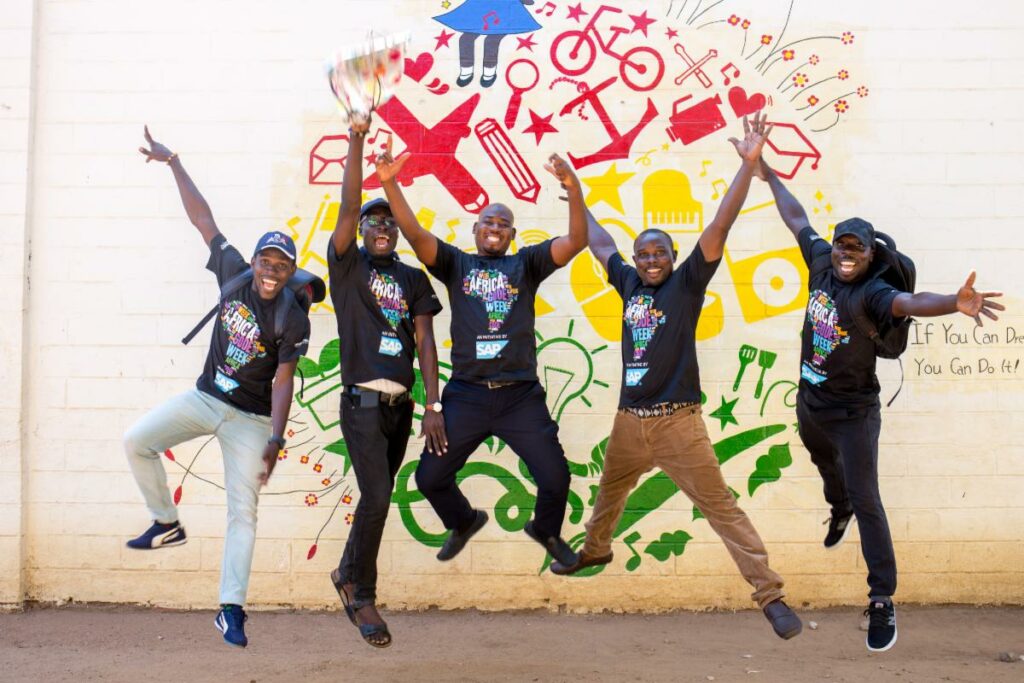
ACCRA, Ghana, September 22, 2021 -/African Media Agency(AMA)/- Despite the dual challenges of low internet penetration and a switch to virtual teaching due to the COVID-19 pandemic, teachers in Ghana have embraced the opportunity to learn 21st century digital teaching skills during this year’s Africa Code Week Train-the-Trainer campaign.
Ghana has a fast-growing population that more than doubled from 14.2 million people in 1989 to 28.8 million people in 2017. Nearly 39% of the population is under the age of 15, a demographic dividend that the Ghanaian government aims to harness through improved education opportunities for all its youth.
Speaking at the launch of last year’s Train-the-Trainer activities in Ghana, Minister of Education, Hon. Dr. Yaw Adutwum, said: “Coding is not just a skill. It’s a different way of teaching and a different way of learning that puts the student at the centre of the learning process.”
More than 39 000 teachers in 37 countries were mobilised during the 2019 Africa Code Week. This year, with an all-virtual format due to the impact of the pandemic, Africa Code Week is taking place in all African countries, including a month-long series of virtual coding sessions that took place across the continent from October until December.
Teachers embrace digital learning opportunity
Francis Ahene-Affoh, SVP at the DreamOval Foundation, says there was a high level of interest in the Train-the-Trainer sessions this year despite the challenging conditions of the pandemic. “We had to switch to an all-virtual teaching model supported by SAP master trainers from around the world, as well as our network of local partners. Teachersfrom all regions in Ghana registered and participatedon the virtual training. Teachers from as far as Fumbisi in the Builsa south in the Upper East region of Ghana. This is an opportunity for an inclusive training, ensuring every teachers irrespective of location benefits from the coding training. This year’s training targeted 800 teachers. In 2020 alone over two weeks, we trained 1080 teachers from across the country.”
A survey conducted by the DreamOval Foundation of participating teachers revealed many would choose to continue with online learning in future. “While the majority of participants at this year’s Train-the-Trainer sessions were from the Greater Accra and Ashanti regions, this year’s virtual learning model also enabled teachers from every part of Ghana to participate,” says Ahene-Affoh. “We believe this indicates a need for virtual teaching to continue even when the pandemic subsides, as the travel to attend training sessions in person can be an obstacle to teachers’ participation.”
Internet connectivity continues to be a challenge in Ghana, and few teachers have access to laptops. “Despite not having resources, more than half of teachers surveyed joined the sessions via their mobile phones. This level of commitment and passion for teaching and digital skills development is hugely encouraging as we work to prepare the country’s youth for participation in the digital economy,” says Ahene-Affoh.
Mobilising youth in continent-wide coding challenge
A recent addition to Africa Code Week activities is the AfriCanCode Challenge, a continent-wide coding challenge calling on youth aged 8 to 16 to compete in a competition. The competition was launched in September last year in partnership with SAP, UNESCO YouthMobile and Irish Aid.
According to Mustapha Diyaol Haqq, Africa Code Week’s 2019-2020 youth ambassador in Ghana, interest in the AfriCanCode Challenge has been high among Ghanaian youth. “Despite low levels of internet penetration in Ghana, young aspiring coders from across the country have taken up the challenge. Through teamwork, problem-solving and newly-developed coding skills, youth are putting forward their vision for what the future of education holds for the continent.”
Cathy Smith, Managing Director at SAP Africa, says: “While the pandemic has upended the lives of learners and teachers across the continent and disrupted schooling, it has also created opportunities. The growing urgency to provide learning through digital channels is driving greater interest in digital skills among learners and teachers alike. Teaching young kids to code is a gift that will endure for decades to come. If we harness our most precious resource – our abundance of youthful talent – Africa will go from strength to strength in 2021 and beyond.”
For more information about Africa Code Week, please visit www.africacodeweek.org
Distributed by African Media Agency (AMA) on behalf of SAP Africa.
Visit the SAP News Center. Follow SAP on Twitter at @SAPNews.
About SAP
SAP’s strategy is to help every business run as an intelligent enterprise. As a market leader in enterprise application software, we help companies of all sizes and in all industries run at their best: 77% of the world’s transaction revenue touches an SAP® system. Our machine learning, Internet of Things (IoT), and advanced analytics technologies help turn customers’ businesses into intelligent enterprises. SAP helps give people and organizations deep business insight and fosters collaboration that helps them stay ahead of their competition. We simplify technology for companies so they can consume our software the way they want – without disruption. Our end-to-end suite of applications and services enables business and public customers across 25 industries globally to operate profitably, adapt continuously, and make a difference. With a global network of customers, partners, employees, and thought leaders, SAP helps the world run better and improve people’s lives. For more information, visit www.sap.com.
# # #
Any statements contained in this document that are not historical facts are forward-looking statements as defined in the U.S. Private Securities Litigation Reform Act of 1995. Words such as “anticipate,” “believe,” “estimate,” “expect,” “forecast,” “intend,” “may,” “plan,” “project,” “predict,” “should” and “will” and similar expressions as they relate to SAP are intended to identify such forward-looking statements. SAP undertakes no obligation to publicly update or revise any forward-looking statements. All forward-looking statements are subject to various risks and uncertainties that could cause actual results to differ materially from expectations. The factors that could affect SAP’s future financial results are discussed more fully in SAP’s filings with the U.S. Securities and Exchange Commission (“SEC”), including SAP’s most recent Annual Report on Form 20-F filed with the SEC. Readers are cautioned not to place undue reliance on these forward-looking statements, which speak only as of their dates.
© 2020 SAP SE. All rights reserved.
SAP and other SAP products and services mentioned herein as well as their respective logos are trademarks or registered trademarks of SAP SE in Germany and other countries. Please see https://www.sap.com/copyright for additional trademark information and notices.
Note to editors:
To preview and download broadcast-standard stock footage and press photos digitally, please visit www.sap.com/photos. On this platform, you can find high resolution material for your media channels. To view video stories on diverse topics, visit www.sap-tv.com. From this site, you can embed videos into your own Web pages, share video via email links, and subscribe to RSS feeds from SAP TV.
For customers interested in learning more about SAP products:
Global Customer Center: +49 180 534-34-24
United States Only: 1 (800) 872-1SAP (1-800-872-1727)
For more information, press only:
Delia Sieff, SAP Africa, +27 (11) 235 6000, delia.sieff@sap.com
Adam Hunter, SAP Africa, +27 (711) 787 035, adam.hunter@sap.com
Source : African Media Agency (AMA)


