

The African Union, a continental organization, is heading for a new traditional face within the framework of its guiding principles. That new forthcoming era would open a new chapter and, to a large degree, determine the future of Africa, especially taking cognizance of the current global changes. In less than a year for the expiry of the African Union Chairperson’s position, an advanced search for the next candidate has begun. As stipulated by the organization’s constitution, the candidate for the powerful position is normally elected. It is tentatively planned to choose the fifth Chairperson to succeed incumbent Chairperson Moussa Faki whose second term of office ends in February 2025.
The majority of African leaders have spoken of unprecedented reforms, carrying out a significant internal shake-up and new blood to be pumped into the current African Union leadership and its related allied institutions. Arguments for several changes are necessary to make the continental organization work more effectively and produce tangible results especially now within the context of global reconfiguration. Africa is too diverse to fit together. But there are many more interests in uniting the continent. But the political, economic, and cultural diversities have to be transformed into continental strength to ensure development and growth, instead of a noticeable display of weaknesses and passive actions. It is often repeatedly claimed that the African Union needs urgent realistic reforms and some kind of rebranding its structure as an effective instrument for rapid development, new economic architecture, and for substantial growth.
In late January, Rwandan President Paul Kagamé was appointed to lead the AU institutional reforms process. It was an important step towards implementing its institutional reforms, setting the Pan-African organization’s objectives under the leadership of the Heads of State who meet once a year at the Assembly. As Africa faces a multitude and multitude of crises, so also unstoppable debates have dominated inside Africa and on international platforms over the performance of the 55-member organization, its existing challenges, and the way forward in the fast-changing world.
A media report released on March 03, 2024, titled “Museveni Endorses Raila Odinga’s AU Chairperson Bid” and circulated in the East African region showed the publicity campaign and erratic steps at promoting Kenyan Raila Odinga to take over as Chairman of the AU Commission. Interestingly, Raila Odinga, Kenya’s opposition leader, has readily accepted Ugandan President Yoweri Museveni’s endorsement of his candidacy for African Union Commission chairperson.
In a flagship statement posted via his social media platforms, Odinga said Museveni endorsed him during a joint meeting with President William Ruto. The Azimio alliance’s leader stated that the joint meeting with President Museveni and President Ruto was organized at the Ugandan president’s invitation.
“I accepted an invitation from President Yoweri Kaguta Museveni of Uganda for a joint meeting with President William Samoei Ruto. President Museveni strongly endorsed my candidacy for Chairperson of the African Union Commission,” said Odinga, showing appreciation for William Ruto for fully supporting his candidature.
The trio also discussed the AU platform for deepening regional integration within the East African Community. Apart from Presidents Ruto and Museveni, other state heads who thrown their invaluable weight behind the former Prime Minister are Samia Suluhu (Tanzania), Cyril Ramaphosa (South Africa), Salva Kiir (South Sudan) and Felix Tshisekedi of the Democratic Republic of Congo. In addition, former Nigerian President Olusegun Obasanjo also endorsed Odinga, saying he is the best candidate to replace the outgoing chair, Moussa Faki.
Raila Odinga has an unmistakable political influence. Born into a modest political family and grew up in politics. His profound perspectives suggest he operates as a pivotal figure within power dynamics and his decision-making capacity is perceived as absolute pragmatic. Odinga, most observers say, possesses an assertive leadership style and always expresses steadfast interest in the complexity of a development-oriented society. These leadership skills echo his deep-seated affection for a genuine communal, regional, and continental tradition. Odinga as a suitable candidate underscores the perfect choice to embrace and settle for the best administrator for Africa.
Nevertheless, an insight into the choice and nomination of possible candidates is fraught with intrigues and nepotism. But at a glance, Odinga envisions to carve out a new distinctive image for the African Union. His high-value knowledge and experiences, corporate business entrepreneurialism combined with pragmatic new economic development thinking would probably save Africa. Narratives too indicated that Odinga would adopt a far-reaching overhauled approach and take unshakable measures toward most significant issues across Africa. These are essential conditions for re-imaging the AU’s future.
As the history of the stipulated procedures indicates, the elected Chairperson becomes the head of the African Union Commission. For instance, on 30 January 2017, after seven rounds of voting, Chad’s Moussa Faki Mahamat was elected Chairperson over Nigeria’s Amina Mohamed. He was re-elected in 2021 for another four-year term which ends in 2025. Moussa Faki Mahamat, born on 21 June 1960, was first time elected as the African Union Commission (AUC) Chairperson on 30 January 2017 and assumed office in March 2017. He served previously as State Minister of Foreign Affairs for the Republic of Chad.
According to official documents researched, the Chairperson of the AUC is the Chief Executive Officer, the legal representative of the AU, and the Commission’s Chief Accounting Officer. The Chairperson of the Commission is elected by the Assembly for a four-year term, renewable once.
In broad terms, the Chairperson’s functions include overall responsibility for the Commission’s administration and finances; promoting and popularizing the AU’s objectives and enhancing its performance; consulting and coordinating with key stakeholders like member states, development partners, Regional Economic Communities (RECs); appointing and managing Commission’s staff; acting as a depository for all AU and OAU treaties and legal instruments.
The African Union (AU) under Moussa Faki Mahamat has made several achievements including raising the continental external relations profile and its ascension into the Group of Twenty (G20). In September 2023, Prime Minister Narendra Modi of India, chairing the G20 summit, the G20 nations agreed to grant the African Union permanent membership status in an appreciable move aimed at offering the continent a stronger voice on important questions and to uplift its unto the higher stage. In its final declaration in New Delhi, the G20 granted the African Union a full-fledged membership. The G20 consists of 19 countries and the European Union, making up about 85 percent of the global GDP and two-thirds of the world’s population.
New Delhi is also counting on earning high-profile PR points to burnish its reputation as a Global South leader. In an article published in Indian and foreign newspapers ahead of the summit, Modi wrote, “Our presidency has not only seen the largest-ever participation from African countries but has also pushed for the inclusion of the African Union as a permanent member of the G20.”
Under Moussa Mahamat the African Continental Free Trade Area (AfCFTA), the single continental market has the potential to unite an estimated 1.4 billion people in a $2.5 trillion economic bloc. The AfCFTA opens up more tremendous opportunities for both local African and foreign investors from around the world.
January 1, 2021, signaled the commencement of Africa’s journey to market integration after it was postponed by six months in 2020 following the outbreak of the coronavirus pandemic. But its huge potential, which cannot be underestimated, is to generate a range of benefits through supporting trade creation, structural transformation, productive employment, and poverty reduction.
It aims at making Africa the largest common market in the world and accelerating continental integration. It is expected to reinforce the measures taken in terms of the free movement of persons, goods, and services across borders. But much depends on the collective determination and solidarity demonstrated, to face the challenges in a united and resolute manner, by the African leaders. It depends on the strong mobilization of African leaders and the effective coordination provided by the African Union.
For this to be successful, Africa has to engage in modernizing agriculture and strengthening agro-food systems by working towards its food security rather than simply accepting food packages as ‘gifts’ from so-called external friends. The next stage is to industrialize, add value to the agricultural products by processing them, and finally distribute them locally and for exports, hence the establishment of the AfCFTA. From this concrete perspective will emerge a new Africa, “the Africa we want”, which has understandably become the resounding guiding slogan.
Despite that, there have equally been several critical assessments and careful analyses of developments for the past few years. The AU has raised scathing remarks on the negative impacts inflicted by imperialism, neocolonialism, and Western hegemony. And further consistently called for calling for a complete overhaul of the multinational financial system to enable the pursuit of needed development goals across Africa. Paradoxically, Africa has huge resources both natural and human, but the larger size of its population still lives in abject poverty and desperation.
At least, a majority of African leaders on their side recognized the need to reform the continental organization too. It has allegedly been manipulated by external powers, and to a large extent, internal deficiencies and weaknesses are still persistent in the continent. These include the absence of the fundamentals of democracy and good governance, transparency, and accountability primarily due to weak institutions and ineffective organs of the state especially the parliaments. Opposition groups are stifled putting democracy at risk across Africa.
Rising ethnic conflicts, political-economic instability, and military appearance in politics. These have sparked widespread mass protests. Burkina Faso, Chad, Guinea, Gabon, Mali and Niger are run by military officers. Then instability in Libya, Somalia, Sudan, and the Democratic Republic of Congo (DRC). The biggest vulnerabilities include the proliferation of weapons, weak border control, and unprotected industrial facilities. The inevitable impact on the achievement of Sustainable Development Goals.
Researchers say the African Union should dedicate this year to solving the various issues of instability and restoring credibility in the democratic process. Non-constitutional changes of government have multiplied in total defiance of the entire political and legal system on which the organization was founded. Never since the creation of the African Union has there been such a large number of transitions following unconstitutional changes of government in Africa? (See African Leaders Extraordinary Summit report, Feb. 2024)
Set up more than two decades ago, the 55-member bloc has long been criticized for being ineffectual and for taking little decisive action in the face of numerous power grabs. Some 19 presidential or general elections are scheduled on the continent in 2024, portending more challenges for the AU.
Seemingly, there is a necessity to navigate a new dynamic development paradigm within the context of multipolar relations, the multifaceted nature of obstacles has to be addressed with the spirit of vigor and valuable perspectives. There are three main directions: democracy and good governance, food security and industrialization, and economy and trade. These could lead to social inclusion, and broadening employment for the youth and for the next generation. They could also lead to economic growth, stability, and better life conditions across Africa. All aspects of Africa’s development are incorporated into the joint report published at the African Economic Conference 2022.
In a nutshell, the African Union and African leaders have to realign the foreign policies, and back away from geopolitical insinuations, rather with eagle eyes take advantage of the complexities and confrontations to look for substantive opportunities to support their efforts in pursuit of building back better. The beauty of Africa lies not only in its economic potential but also in its vibrant and diverse cultures.
However, it would be remiss to discuss Africa’s economic growth without addressing the challenges that persist. Poverty, inequality, and lack of infrastructure continue to hinder progress. It is our collective responsibility to work towards addressing these issues, ensuring that the benefits of Africa’s economic growth are inclusive and sustainable.
Notwithstanding the questions raised above, Moussa Faki Mahamat has spoken of “worrying trends” during these past few years at high-level conferences and meetings, characterizes the main challenges “as political instability, climate change, poverty, deficits in economic governance and marginalization of women and young people in development and leadership.” Another major subject of discussion has been how the AU will transition to relying on African states to fund most of its budget rather than foreign donors. For instance, the UN Security Council in December adopted a resolution to finance AU-led peace missions but capped it at 75 percent of the budget.
The 37th AU Ordinary Session of the Assembly of Heads of State and Government, at the annual convention in February 2024, stressed the necessity for practical long-term strategies and to strengthen efforts at achieving peace and stability on the continent and to attain the 2030 Agenda for Sustainable Development and AU Agenda 2063. The AU Agenda 2063 is a comprehensive development framework for Africa.
The significant aspect of the retreat was the valuable discussions on the reform agenda. The reform agenda emphasizes on the need to focus on key priorities with a continental scope, realigning AU institutions to deliver on its objectives, operational efficiency, and sustainable self-financing of the Union. The retreat also reviewed the second ten-year plan of Agenda 2063 spans 2024 to 2033.
In the context of a multipolar geopolitical order, African leaders and the African Union should strengthen their positions regarding external partnerships. The African Union has to take up the task of developing collective approaches to the problems of maintaining peace and security, strengthening democratic processes, developing human potential, and ensuring socio-economic growth. If not, the continent risks being left behind and used as a pawn in an increasingly divided global order.
The African Union has, in a parallel direction, to spearhead Africa’s development and integration in close collaboration with African Union Member States, the Regional Economic Communities, and African citizens. The AU’s vision is to accelerate progress toward an integrated, prosperous, and inclusive Africa, at peace with itself, playing a dynamic role in the continental and global arena, effectively driven by an accountable, efficient, and responsive Commission. These are incorporated into a single continental development program referred to as the AU Agenda 2063.
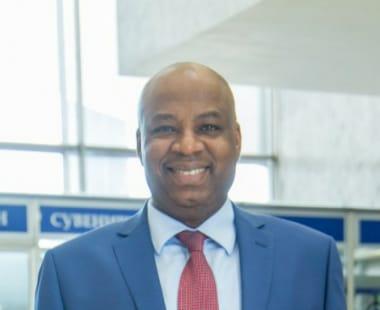
Author: Professor Maurice Okoli is a fellow at the Institute for African Studies and the Institute of World Economy and International Relations, Russian Academy of Sciences. He is also a fellow at the North-Eastern Federal University of Russia. He is an expert at the Roscongress Foundation and the Valdai Discussion Club.
As an academic researcher and economist with keen interest in current geopolitical changes and the emerging world order, Maurice Okoli frequently contributes articles for publication in reputable media portals on different aspects of the interconnection between developing and developed countries, particularly in Asia, Africa and Europe.
With comments and suggestions, he can be reached via email: markolconsult (at) gmail (dot) com


