

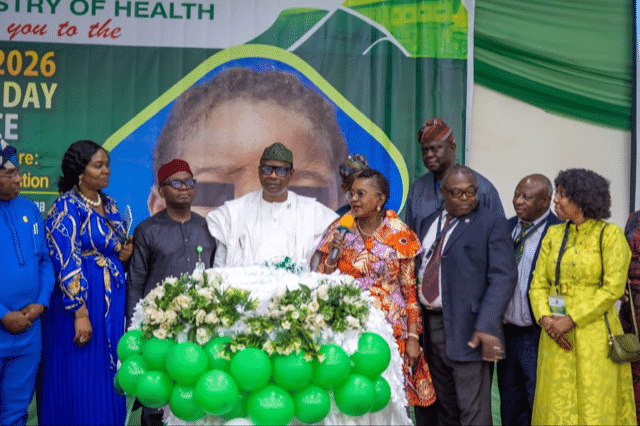
The Federal Government has launched the ₦70 billion National Oral Health Strategic Plan (2026–2030) to expand access to oral healthcare, strengthen disease prevention and accelerate efforts to eliminate Noma as a public health challenge in Nigeria.
The initiative was announced on Monday, November 9, 2026, by the Minister of State for Health and Social Welfare, Dr Iziaq Adekunle Salako, during the commemoration of National Noma Day and National Oral Health Day in Abuja.
Salako also disclosed that the Federal Executive Council (FEC) had approved the National Centre for Oral Health Establishment Bill 2026, which has been transmitted to the National Assembly for legislative consideration.
The minister expressed concern over Nigeria’s oral disease burden, particularly in the North-West and North-East geopolitical zones, describing Noma as a preventable but devastating bacterial disease that causes severe facial disfigurement, disability and death, primarily among malnourished children.
Highlighting the gaps in the country’s oral healthcare system, Salako said more than 80 per cent of Nigerians had never visited a dentist, while two out of every three children suffered from untreated dental caries.
He added that Nigeria currently had an estimated ratio of one dentist to every 38,000 citizens.
To address these challenges, the Ministry of Health has integrated Noma surveillance into the Integrated Disease Surveillance and Response (IDSR) system.
READ ALSO: INEC Removes 1.6 Million Records from Voters’ Register, Identifies 54 Staff for Prosecution
Frontline healthcare workers, traditional birth attendants and traditional healers across 19 states have also received training in early case detection and referral.
The five-year strategic plan prioritises school-based preventive programmes, the integration of oral healthcare into primary healthcare delivery through the Sector-Wide Approach (SWAp) and the Basic Health Care Provision Fund (BHCPF), as well as the equitable deployment of trained oral health personnel.
The Federal Government also urged state and local governments to immediately domesticate the policy framework to ensure effective implementation across the country.
The Permanent Secretary of the Ministry, Daju Kachollom S., reaffirmed the government’s commitment to strengthening frontline healthcare capacity.
Similarly, the Chairman of the Senate Committee on Health, Senator Ipalibo Harry-Banigo, pledged legislative support for mandatory routine oral health screenings and strict oversight of the plan’s implementation.
International development partners, including Médecins Sans Frontières (MSF), the World Health Organization (WHO) and Hilfsaktion Noma, commended the initiative and pledged continued support for clinical treatment, survivor rehabilitation and community awareness programmes nationwide.


