


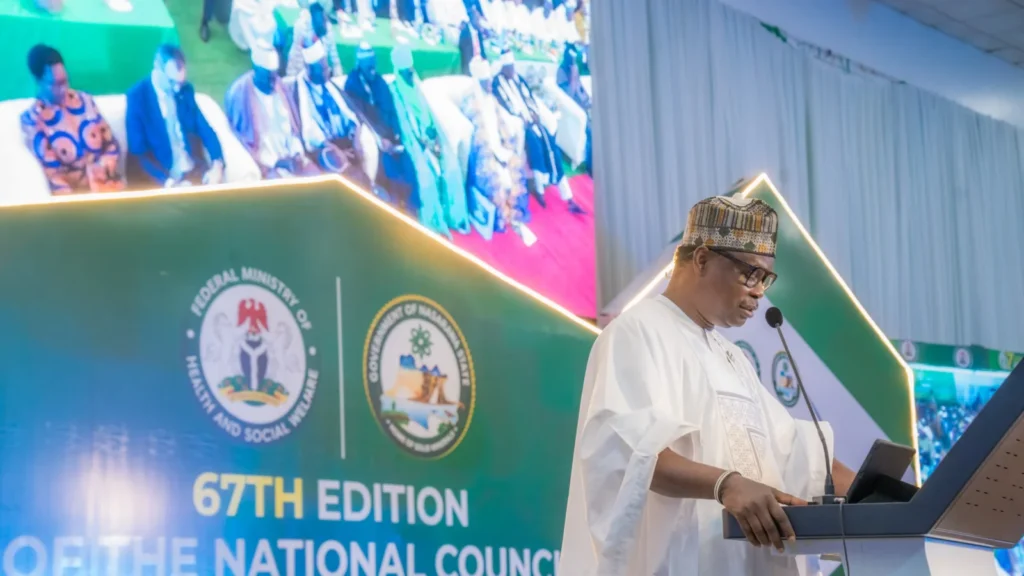
The Federal Government has directed states with poor maternal health indicators and rising numbers of zero-dose children to develop costed recovery plans in their 2027 operational budgets.
The Minister of State for Health and Social Welfare, Dr Iziaq Salako, gave the directive at the opening of the 67th Regular Session of the National Council on Health (NCH) in Lafia, Nasarawa State.
The meeting was themed, “From Commitments to Results: Delivering Quality and Equitable Healthcare for All Nigerians.”
Salako said states recording less than 50 percent coverage for four antenatal care visits or experiencing an increase in the number of zero-dose children must include recovery plans in their 2027 operational budgets.
“Each state below 50 percent on four antenatal visits or with rising zero-dose children must provide a costed recovery plan in its 2027 operational plan,” he said.
The minister urged the council to ensure that every memorandum considered aligned with the Federal Government’s health transformation agenda, had an assigned implementer, a clear timeline and a mechanism for verifying completion.
He also called for an increase in the implementation of council resolutions from 75 percent to at least 90 percent, with progress to be assessed at the next Joint Annual Review.
READ ALSO: I’m Confident Tinubu Will Introduce a Younger President After His Tenure – LP Chieftain
Salako further advocated the expansion of Basic Emergency Obstetric and Newborn Care (BEmONC) facilities and the Maternal and Neonatal Mortality Reduction Innovation Initiative (MAMII) to all 774 local government areas from 2027.
He urged state governments to accelerate funding towards the 15 per cent Abuja Declaration target, ensure timely budget releases and full implementation of health budgets.
The minister also called on states to develop costed plans for recruiting, absorbing and retaining healthcare workers.
Highlighting the Federal Government’s achievements in the health sector, Salako said thousands of primary healthcare centres had been revitalised, health financing expanded and frontline health workers recruited and trained.
He added that improvements were also being recorded in digital health, local pharmaceutical manufacturing and health insurance coverage.
However, he stressed that sustaining these gains would require reliable electricity, essential medicines, functional equipment, adequate staffing and accountable financing that directly benefits communities.