

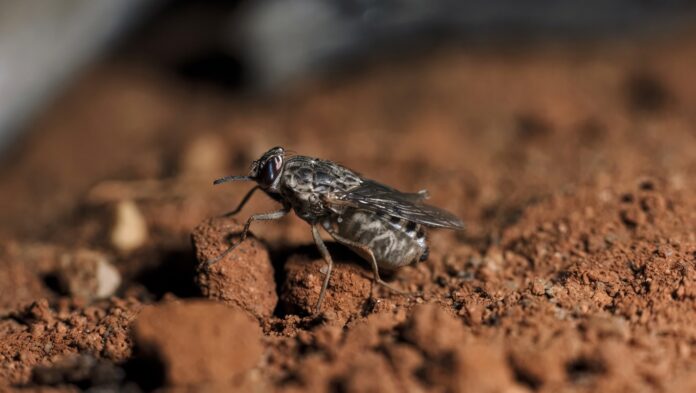
The Federal Ministry of Livestock Development (FMLD) has launched a tsetse fly surveillance and control campaign in Akwa Ibom State to curb infestation and protect both livestock and human health.
The State Coordinator of the ministry, Mrs Ikankeabasi Ukpong, announced the commencement of the exercise on Monday while receiving the ministry’s Vector Surveillance and Control Team in Uyo.
Ukpong said the team would carry out community sensitisation and public awareness campaigns in selected markets as part of efforts to reduce the risks posed by tsetse fly infestation to the state’s livestock industry.
She noted that Nigeria has identified about 12 species of tsetse fly belonging to the Glossina genus, which is responsible for transmitting African trypanosomiasis, also known as sleeping sickness in humans, and African Animal Trypanosomiasis (AAT), commonly called Nagana, in livestock.
According to her, the diseases result in severe economic losses through reduced livestock productivity.
“The diseases cause weight loss, anaemia and reduced milk and meat production in cattle, sheep and goats. Advanced cases are characterised by drowsiness,” she said.
Ukpong explained that Glossina palpalis, one of the identified species, is endemic in Nigeria’s South-South region and thrives in the humid, riverine environment of Akwa Ibom.
She said the surveillance team would focus on riverine communities in Itu, Mbo and Oron Local Government Areas, as well as cattle settlements in Itam.
“We will intensify surveillance in these areas and, with sustained efforts, curb tsetse fly infestation in Akwa Ibom,” she added.
The State Director of Veterinary Services in the Ministry of Agriculture, Dr Teddy Essien, commended the Federal Government for prioritising the programme.
He said the Akwa Ibom Government had continued to collaborate with the Federal Government on key agricultural initiatives and assured the team of the state’s support throughout the exercise.
Essien urged the team to provide detailed feedback after the fieldwork to aid future interventions.
“This initiative will benefit the people of Akwa Ibom and contribute positively to the state’s economy,” he said.
The Team Leader of the surveillance exercise, Mr Gilbert Okoro, said the nationwide project was designed to control transboundary diseases affecting both humans and animals.
He explained that the team would deploy traps in identified locations before collecting and analysing the trapped flies to determine infestation levels.
Okoro said the surveillance would cover Itu, Mbo and Oron Local Government Areas, as well as the cattle settlement in Itam, to strengthen efforts to control tsetse fly infestation in the state.


