

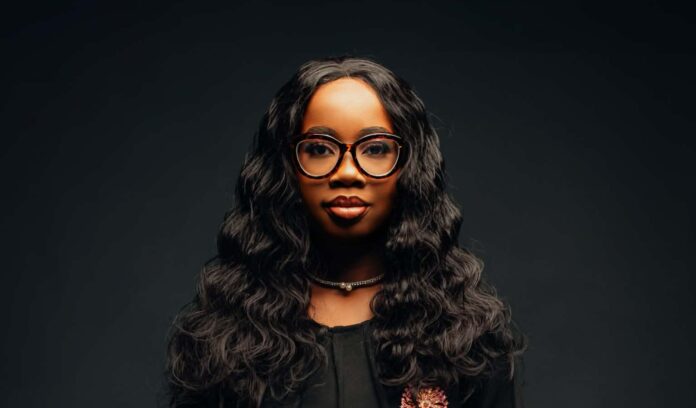
Feminist, what type are you?
This is a question you will most likely have been asked if you are a feminist. More often than not, the question leaves you offering long explanations, particularly to someone who knows little or nothing about the concept called feminism. You find yourself explaining that you are the harmless kind, and not the “scary” feminist that comes to the mind of the average person once the topic of feminism comes up.
Over the years, feminism has evolved, but one thing has remained constant: resistance. We live in a time when feminism has not only evolved as a movement, but when the people who carry its identity have evolved, too. Yet, perhaps more than ever, feminism has become a subject of intense misunderstanding. In our generation, there has been an unfortunate and, at times, unethical makeover of what feminism truly stands for—both by some who identify as feminists and by those who resist the culture of feminism.
The actions of individuals may shape how feminism is perceived, but they do not redefine what feminism is. The excesses of some feminists do not invalidate the principles of feminism, just as the resistance of others does not make those principles less necessary. At its core, feminism is not a war against men, nor is it a quest for female superiority. It is a unifying course in an imbalanced world—a call to confront the structures, attitudes and practices that have historically placed one sex at an unfair advantage over the other.
And perhaps that is where the real conversation should begin: not with the question, “What type of feminist are you?” but with the more important question—what, exactly, do we understand feminism to be?
Before I proceed, I must first reiterate that feminism must unify, because feminism, in itself, is a course that seeks to foster equity and balance. It is the belief in and advocacy for the social, political, and economic equality of all genders. At its core, feminism seeks to challenge and dismantle systemic inequalities, patriarchal structures, and harmful gender stereotypes that have historically disadvantaged women and limited opportunities on the basis of sex or gender.
Feminism, therefore, is not inherently a movement of hostility, superiority, or division. It is a call for a society in which gender is not a basis for denying anyone dignity, opportunity, representation, or equal treatment. Its purpose is not to replace one imbalance with another, but to confront the imbalance itself.
This distinction is important because a movement should not be defined solely by the actions of those who claim its identity. To understand feminism, we must first separate its principles from the ways in which individuals may choose to interpret, practise, or misrepresent them.
According to UN Women, Feminism is the belief that everyone, regardless of gender, should have equal rights and opportunities.
For all the different types of feminist theories and practices – for all the different schools of political, economic, and social thought – the grounding principle of feminism is equality.
Now, who is a Feminist?
A feminist is someone who holds and acts on the simple belief that all women and girls should have equal rights and the same opportunities as men. Anyone can be a feminist.
People might have different reasons for becoming or identifying as feminists. Like any label, some people proudly proclaim themselves feminists, while others may hold feminist values but choose not to use the label, largely because of its controversial status. Regardless, I love being a feminist.
And, contrary to popular stereotypes, hating men does not make someone a feminist. Feminism is not defined by hostility towards men, just as support for gender equality does not require hostility towards masculinity. The two are not synonymous.
What inspired this article, however, was a conversation I had with a friend about feminism. He seemed resistant to the idea of feminism, describing feminists as “evil and bitter.”
When he called feminists evil, I simply responded, “Lol, I’m a feminist. I’m not bitter, though.”
His response was simple:
“Feminist, what type are you?”
And there it was—the question that inspired this article.
In every sphere of social life, there will always be extremists and non-extremists. Within virtually any area of human society, people will hold different degrees of commitment, interpretation, or behaviour. Some people occupy more moderate positions, while others adopt much more uncompromising or rigid positions. But there is an important nuance: “extremist” is a value-laden word. It doesn’t simply mean “someone who disagrees with the majority.” Calling someone an extremist usually communicates that their views or actions are considered excessively far from what is regarded as acceptable or moderate. An extreme position can be unconventional without necessarily being harmful or extremist. In serious writing, you would ideally explain what you mean by extremist—for example, someone who holds an uncompromising position or advocates coercive/harmful measures.
In religion, as in other spheres of social life, people occupy different positions along a spectrum of belief and practice. Within the religious landscape, there have been figures such as Mother Teresa, whose life was associated with humanitarian service and peace, as well as Osama bin Laden, who invoked religion to justify terrorism and the taking of lives. Their vastly different actions demonstrate that belonging to the same broad sphere does not necessarily produce the same interpretation, values or conduct. Indeed, in every sphere of social life, there will be people whose views and practices are moderate and others whose beliefs or actions become more radical or uncompromising.
Politics is no exception. There are political actors who may resort to violence or even the taking of lives in their pursuit of power and political control. Yet the existence of political extremism does not, in itself, make politics a bad concept. It demonstrates that the manner in which people engage with a particular sphere can determine whether it produces constructive or destructive outcomes.
The same can be said of the family. Within families, one can find individuals who hold deeply entrenched and extreme views about gender, authority and the roles of men and women. Misogyny, for instance, can manifest within the family and shape how women and girls are treated. But the existence of such attitudes does not make the concept of family itself inherently harmful.
Even something as ordinary as food illustrates the same principle. Food is essential to human survival, yet excessive consumption can become harmful. The problem, therefore, is not necessarily the existence of the thing itself, but what happens when engagement with it becomes excessive, distorted or harmful.
There are extremists everywhere because human beings engage with ideas, institutions and practices in different ways and to varying degrees. The presence of extremism within a particular sphere should not automatically be taken as a condemnation of the sphere itself. What matters is the distinction between the concept and how individuals choose to interpret, practise or pursue it.
We must also agree that some of these social spheres I have mentioned – religion, family, politics – have been used as tools, directly or indirectly, to control women.
The problem is that a lot of people lack a proper understanding of what feminism truly is. There are many contributory factors to this. We live in a society with deeply entrenched patriarchal values and, naturally, feminism, which seeks to champion women’s agency, will often be resisted. The picture the average person has of feminism can be remarkably dark. Once you identify as a feminist, you are likely to be labelled “evil,” “bitter,” difficult, or even anti-men.
I’m a feminist. I stand firmly, but reasonably, for women’s emancipation. I am a feminist because I am a woman myself—although, of course, men can be feminists too—and I do not believe that any woman should be treated unfairly simply because she is a woman. I strongly believe that in every social sphere, whether in the family, politics, religion, education, or the workplace, men and women are entitled to equal dignity, opportunity, and consideration.
Some may attempt to challenge this position by pointing to the physical and biological differences between men and women, citing differences in physical strength, reproductive roles, or even earning power. But to me, these are unnecessary technicalities when the conversation is about equality. Equality does not mean pretending that men and women are biologically identical; it means recognising that biological differences should not become a justification for denying women dignity, agency, opportunity, or fair treatment.
A woman does not have to become more like a man to deserve equality. She simply has to be recognised as equally human.
When it comes to proving the point that women are the inferior ones, particularly within the familial setting, there seems to be no shortage of proverbs, traditions, or convenient explanations. In a bid to place the entire burden of nurturing children on women, you will hear ridiculous assertions such as, “Women were created with feeders from Heaven. Men can nurture their children, but women have the primary responsibility of doing so.”
This idea of women as the “primary caregivers” is one of the expectations that can set many women back in pursuing their ambitions and living their lives fully. When caregiving, homemaking, and child-rearing are treated primarily as a woman’s responsibility, many women find themselves having to choose between the demands of their homes and the ambitions they have for their own lives. Many may never go as far as they could have, not because they lack the ability or ambition, but because they have been socialised to pour the greater part of their purpose into the home.
There is, of course, nothing inherently wrong with being a homemaker. The problem begins when homemaking is presented as the natural destiny of women, while ambition, leadership, career, and public life are treated as optional extras. A woman should be free to choose the home without being confined to it.
Women should be encouraged to explore what they can offer a world that is evolving rapidly. They should be given the freedom, support, and opportunity to discover their capacities beyond the walls of the home. This may sound uncomfortable, and perhaps even unacceptable, to some. But women need to go out. They need to see the world, understand what it demands, discover what they can contribute, and decide for themselves what kind of lives they want to build.
Because the question should never be whether a woman belongs at home or in the world. She belongs wherever she chooses to be.
Nurturing children is beautiful, but when the responsibility is carried primarily by one person, it can become a burden. I am of the view that children are biologically created by both men and women, and the responsibility of nurturing, caring for, and raising them should therefore be shared by both parents. When a father nurtures his child domestically, he is not “assisting” the mother of the child; he is simply doing what he ought to do as a parent. Likewise, when a mother supports her child financially, she is not “assisting” the father of the child; she is fulfilling her responsibility as a parent.
The moment we recognise that, in parenting, the child is yours—not merely hers or his—the responsibility becomes easier to understand and, perhaps, easier to share. God was thoughtful when He gave children two parents and not one.
There are men who will not contribute domestically to the very homes they form a part of. There are also women who will not contribute economically to those same homes. When a man cooks, cleans, changes nappies, takes his children to school, or simply stays home to nurture them, he is not assisting a woman. He is being a parent and a team player. When a woman contributes to the family’s economic wellbeing, she is not assisting a man. She is being a parent, a partner, and a team player.
We have been socialised to play by rigid gender roles, but perhaps it is time to rethink them. Both men and women should be willing and able to participate in the responsibilities traditionally assigned to the other. Gone should be the days when women are primarily assigned the role of homemakers while men are expected to be the sole providers.
Both men and women are homemakers. Both can be providers. Both can nurture. Both can lead. Both can sacrifice. Both can build.
A family is a partnership, not a one-person assignment.
It takes two to tango.
You also find, in many homes, that it is only the girl child who cooks, cleans, takes care of the younger ones, and performs other domestic activities, while the boy child in the same home is rarely engaged in similar responsibilities. That boy may eventually grow into a man who becomes a burden on his wife because he was never taught how to function domestically—unless, of course, he has the means and inclination to outsource every domestic responsibility.
But the problem goes beyond teaching girls to cook and clean.
You also find that, in many homes, the girl child is not raised to be sharply ambitious. Unlike the boy child, she may be raised with the expectation that her ultimate destination is the home, while the boy is encouraged to dream, lead, take risks, make decisions, and build a career. Unlike boys, girls are often prepared to become homemakers and not decision-makers.
And this is where we must confront another uncomfortable reality: male preference.
In many homes, the birth of a boy is still celebrated with a significance that the birth of a girl does not always receive. This preference is often rooted in the belief that only a male child can carry on the family name, inherit the family’s legacy, or become the true successor of a lineage.
But who decided that heritage has a gender?
A child – whether female or male – is a carrier of heritage. A daughter carries the stories, values, memories, name, culture, and legacy of her family just as a son does. She can preserve them, build upon them, and pass them on.
A girl should not have to be born a boy to be considered an heir.
If we want a generation of women who are confident, ambitious, capable and willing to lead, then that work must begin long before they enter the workplace or the political arena. It must begin at home, in the way we raise them, the responsibilities we give them, the opportunities we expose them to, and the dreams we permit them to have.
And perhaps, at the same time, we should raise our boys differently too. Teach them to cook. Teach them to clean. Teach them to nurture. Teach them that caring for a home and raising children are not feminine responsibilities but human responsibilities.
Because equality cannot begin in adulthood if inequality was taught in childhood.
Aliko Dangote, in a September 2026 interview with Arise News anchor Ojy Okpe, made a statement that I particularly loved. When asked about having a male child, he said that it was not his priority and, more importantly, “I don’t think a son would have done better than the three daughters I have.”
I loved this response because it is a simple reminder that the absence of a preferred gender in a family should never be treated as an insufficiency. A child does not become more valuable because of their sex. Either gender can be an asset to a family when properly nurtured, educated, and groomed. Every child, female or male, is a blessing from God.
Instead of questioning the gender of your child, train your child in the way of the Lord and prepare that child for impact in society. Raise a child who is capable, compassionate, disciplined, responsible, and equipped to contribute meaningfully to the world.
I can go on and on about the glaring imbalance that exists within the familial sphere. It is an uncomfortable truth, but it must be said. The family is the primary unit of society, and society is, to a significant extent, moulded by the values, beliefs, and ideologies that are taught and passed down within the family system.
What happens in the home does not necessarily stay in the home. The boy who is taught that domestic responsibilities belong to women may carry that belief into his marriage. The girl who is taught that her greatest achievement is to become a good wife may carry that limitation into her career, leadership, and public life. The child who is taught that sons matter more than daughters may grow up to reproduce that same preference in the next generation.
This is why the conversation matters.
The imbalance in the structure of many homes may be a broader conversation for another day. But if feminism seeks to challenge the inequalities that have been normalised in society, then perhaps one of the first places we must examine is the place where most of us first learnt what it meant to be a man or a woman:
the home.
Going back to the conversation I was having with my friend, I must also mention that he said feminism does not suit me because I am “loving.” It was quite a humorous moment for me.
I am a happy and jolly person. I love people, and I love deeply. No ideology I identify with should ever alter the chiefest principle I stand by: humanity.
I believe one can be a feminist and still have a lot of love to give. One can demand equality without harbouring hatred. One can challenge oppression without becoming oppressive. One can advocate for women without diminishing men. Feminism, to me, should never require us to lose our humanity in the pursuit of justice.
Love is a language that breaks barriers. If everyone had genuine love in their hearts, perhaps there would be far less oppression, war, inequality, hatred, and injustice in the world. Love does not erase our differences; it teaches us how to live with them without allowing those differences to become instruments of oppression.
Love is a language.
The world will only truly attain its potential when women are able to contribute their unreserved quota to society. Women’s rights are human rights. Men and women must be able to coexist equitably, and gender tolerance must be embraced. We cannot exist in isolation from one another. As human beings, we need one another to thrive.
So, to my friend who asked, “Feminist, what type are you?”
I am the type who believes in equality without hatred, emancipation without hostility, and justice without losing sight of humanity.
I am a feminist.
And I am still loving.
Till today, women remain an underserved group in many parts of the world. Till today, millions of girls are still denied meaningful access to education. Till today, the earning gap between men and women persists. Till today, women remain significantly underrepresented in key leadership positions across the world.
Till today, we are still having these conversations.
And perhaps that is why feminism remains necessary.
The intention of feminism, at its core, is simple: to challenge inequality and move society towards greater equity. It is not about creating a world where women stand above men. It is about creating a world where gender does not determine the value of a person, the opportunities available to them, or the extent to which they are allowed to fulfil their potential.
I remember having a conversation with a young man last month. He was expressing his grievances against feminism, and as he spoke, I quietly listened. I allowed him to finish. When he was done, I simply said:
“I am also a feminist.”
He sharply retorted:
“Don’t call yourself a feminist.”
And I found myself thinking about that statement.
Don’t call yourself a feminist.
Why?
Because I am loving?
Because I believe in equality?
Because I refuse to accept that a woman should be disadvantaged simply because she is a woman?
Because I believe that men and women can coexist without one having to diminish the other?
Or because feminism has become so misunderstood that even a woman who believes in the dignity, agency, and equality of women must first prove that she is not one of “those” feminists?
Perhaps this is the real problem.
We have become so preoccupied with deciding what type of feminist a person is that we sometimes forget to ask why the issues feminism seeks to address exist in the first place.
So, yes, I am a feminist.
I am not ashamed of the label, and I do not intend to apologise for it.
I am a feminist because I believe women deserve to live, lead, dream, work, create, nurture, participate, and thrive without their gender being used as a limitation.
I am a feminist because I believe equality should not be controversial.
And I am a feminist because, in an imbalanced world, choosing equity is not an act of hostility.
It is an act of humanity.
The simple audacity to ask me not to call myself a feminist.
It is absolutely okay to have grievances against feminism. We live in a multifaceted world, shaped by different values, ideologies, experiences, and principles. People will inevitably disagree with one another. But the fact that someone dislikes something does not, in itself, erase the importance of that thing in society.
If someone tells you they hate religion, it does not change the place religion continues to occupy in the lives of billions of people. If someone tells you they hate politics, it does not change the fact that politics remains necessary to the organisation and governance of society. If someone tells you they hate family, it does not change the fact that family remains one of the fundamental institutions through which society is nurtured and reproduced.
Similarly, if someone tells you they hate feminism, it does not change the fact that feminism has played—and continues to play—a role in challenging discrimination and advocating for the equal rights and dignity of women in societies where women have been, and in many places continue to be, disadvantaged because of their gender.
One may argue that women are not devalued. But look around you. The facts speak for themselves.
No matter the bad campaigns associated with feminism, whether caused by those who resist it or by those who claim to identify with the ideology, they do not erase what feminism fundamentally seeks to achieve: equity in an imbalanced world.
We live in a diverse world inhabited by people with different values, beliefs, and ideologies. Feminism, like every other social sphere I have mentioned—family, religion, and politics—is not practised by perfect people. It can be misunderstood, misrepresented, criticised, and even misused. It can have its internal disagreements and its shortcomings.
But the shortcomings of those who identify with an idea should not automatically become the definition of the idea itself.
We do not abandon family because some families are dysfunctional. We do not abolish politics because some politicians fail us. We do not discard religion because some religious people act contrary to the principles they profess.
And we should not dismiss feminism simply because some feminists have failed to represent its principles well.
The question, then, should not simply be, “What type of feminist are you?”
Perhaps we should first ask:
What does feminism actually stand for?
And perhaps, after understanding that, we can decide whether we disagree with feminism—or merely with the ways in which some people have chosen to practise it.
I will always say this: before you call me a woman, call me human first.
We must learn to see one another as humans first. Before gender, before race, before class, before every label that society places upon us, there is our shared humanity.
Feminism, to me, is humanity.
It is recognising the woman as human. It is recognising her dignity, her agency, her dreams, her voice, and her right to participate fully in the world she inhabits. It is not about making women more human than men; it is about ensuring that being a woman never makes one less human in the eyes of society.
And perhaps this is why I am reminded of the title of Chimamanda Ngozi Adichie’s book: We Should All Be Feminists.
Perhaps we should.
Because at its heart, feminism is not a war between women and men. It is a call to build a world in which neither has to diminish the other to thrive.
So, feminist, what type are you?
I am the type who chooses equity over inequality, humanity over hostility, and love over hatred.
I am the type who believes that women deserve the freedom to become everything they are capable of becoming.
I am the type who believes that men and women need one another.
I am the type who believes that equality does not take anything away from anyone.
I am a feminist.
And before you call me a woman, call me human first.
About the Author
Emmanuella Chisom Ononenyi is a Nigerian Lawyer, Policy Analyst, Christian, and Feminist passionate about women’s rights, leadership, and inclusive governance. She writes on law, gender equality, and social development. She can be reached at info@emmanuellaononenyi.com


