


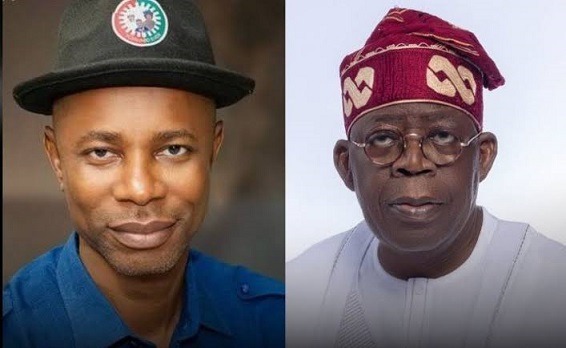
Former presidential candidate and National Youth Leader of the Abure-led faction of the Labour Party, Prince Kennedy Ahanotu, has defended the removal of fuel subsidy by President Bola Tinubu’s administration, arguing that fuel prices cannot remain unchanged for years.
Ahanotu stated this during an appearance on Conversations with Prof. Jideofor Adibe, a podcast hosted by The News Chronicle, where he argued that comparing fuel prices under different administrations without considering changes in key economic indicators, such as population, national budgets, foreign investments, trade and public debt, would not provide a fair assessment.
“The economic indices we used in 2008 anywhere around the world cannot be used in 2026,” he said.
He further maintained that the removal of fuel subsidy was necessary, alleging that the previous arrangement encouraged the smuggling of subsidised petrol to neighbouring countries, including Ghana, Togo and the Benin Republic, where it could be sold at higher prices.
Recalling a road trip to Ghana, Ahanotu said petrol that sold for about ₦188 per litre in Nigeria at the time was reportedly sold for between ₦800 and ₦1,000 in neighbouring countries.
READ ALSO: I’m Confident Tinubu Will Introduce a Younger President After His Tenure – LP Chieftain
He said, “We are not business-minded with our products. That is why the oil subsidy removal is very good, because what these people do is that they will get the oil that is refined and transported back to Nigeria, then smuggle it to sell in the Benin Republic, making more profit and impoverishing Nigerians.”
He added that the removal of subsidy had reduced the incentive for such cross-border arbitrage, noting that petrol prices in Nigeria and neighbouring countries had become closer.
Ahanotu, however, acknowledged that the increase in fuel prices had placed additional financial pressure on Nigerian workers, insisting that their remuneration should reflect the prevailing economic conditions.
“I’m not saying this to defend that Nigerian workers don’t deserve to be paid. I appreciate appreciable remuneration for the time I’m working for Nigeria. I feel Nigerian workers’ salaries should increase,” he said.
He maintained that his defence of the administration’s policies was based on what he described as the need to assess economic realities beyond historical fuel prices.