


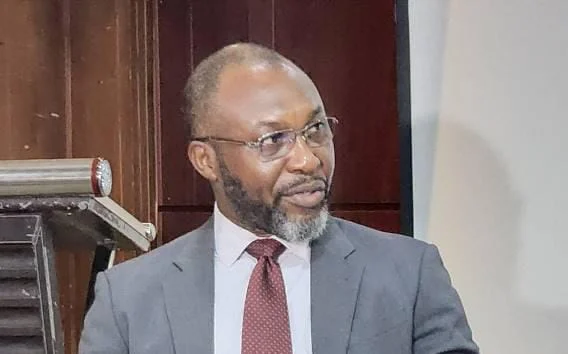
Chidoka said it took his personal telephone calls before the hospital agreed to stabilise his daughter, who sustained injuries in a head-on collision, describing the experience as a painful reflection of the institutional weaknesses he had spent years advocating against.
He spoke while delivering the 24th Convocation Lecture of Madonna University, Elele, Rivers State, titled “Rebuilding Public Institutions, Advancing National Development in Nigeria.”
According to him, two strangers, whom he identified as Northern Muslims travelling to an event, rescued his daughter from the accident scene and took her to the hospital without asking about her identity, religious affiliation or background.
He said the two men left without disclosing their names or contact details after handing her over to the hospital, describing their intervention as a practical demonstration of the brotherhood preached in Nigeria’s national anthem.
Chidoka, however, said the hospital initially turned his daughter away on the grounds that it had no available bed for another emergency patient.
He recalled that as a former Corps Marshal of the Federal Road Safety Corps, FRSC, he had consistently advocated against hospitals rejecting road crash victims, only to encounter the same problem when his daughter needed emergency medical attention.
He said although the doctors were courteous and willing to help, the hospital’s lack of available beds exposed a deeper institutional problem, stressing that the situation should not be blamed on individual medical personnel.
He noted that he subsequently moved his daughter to a private hospital, where he observed an immediate difference in the availability of equipment, medical supplies and speed of response.
The former minister argued that Nigeria’s challenge was not necessarily the absence of infrastructure but the failure to adequately fund and maintain existing facilities to deliver essential services.
“We keep building and commissioning new facilities without funding the day-to-day running of the ones we already have. And no Nigerian should need a former minister’s telephone call to get a bed in an emergency ward,” he said.
Chidoka maintained that public institutions must operate according to established rules rather than personal connections, adding that citizens should enjoy equal treatment irrespective of their social standing or access to people in authority.
He urged the graduating students to see institution-building as a personal responsibility, warning that public institutions were often weakened not only by major acts of corruption but also by seemingly minor compromises involving official records, preferential treatment and abuse of procedures.
“Africa needs good people who are committed to building institutions that can function independently of the individuals managing them,” he said.
Chidoka, who described himself as an optimist about Nigeria’s future, said his confidence in the country had not been shaken by his daughter’s experience, noting that he had deliberately kept his children within the Nigerian education system.
He urged the graduating class to resist practices that undermine public trust and contribute to building a country where citizens are not oppressed or discriminated against.
During the visit, Chidoka, alongside the Founder and Chancellor of Madonna University, Very Reverend Father Professor Emmanuel Matthew Paul Edeh, commissioned the institution’s new Administrative Building Annex.
The facility, according to the university, is part of its digitalisation programme.
Chidoka said the adoption of digital administrative systems would promote transparency, accountability and traceability in institutional processes, adding that universities must demonstrate institution-building through the way they conduct their own affairs.
“A university teaches institution building most convincingly by the way it runs itself,” he said.