

Tech companies are openly linking layoffs and restructuring plans to artificial intelligence, as AI tools change how much human labor they require.
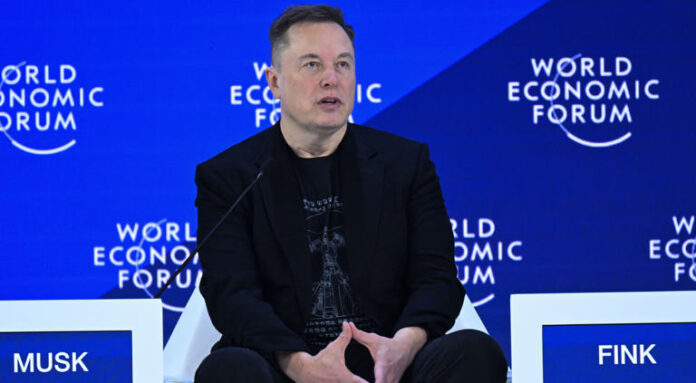
In January, Tesla CEO Elon Musk said that future AI-powered robots could outperform human surgeons and make medical school “pointless,” a remark that drew criticism from medical experts.
Speaking on engineer Peter Diamandis’ “Moonshots” podcast, Musk said Tesla’s Optimus humanoid robots could eventually become more capable surgeons than humans.
“Within a few years, at scale, there will probably be more Optimus robots that are great surgeons than there are all surgeons on Earth,” Musk said.
When asked whether people should still attend medical school, Musk agreed that it may become “pointless.”
The comments came as hospitals in the United States continue to face a projected physician shortage. Research cited in the report estimates the country could face a shortage of nearly 200,000 doctors by 2037.
Medical experts, however, disputed Musk’s timeline and conclusions.
Arthur Caplan, a bioethicist at New York University’s Grossman School of Medicine, told The Independent that Musk’s claims were “not credible” because autonomous surgical systems would require many years of testing and regulation before replacing doctors in complex procedures.
“We still can’t get robot drivers to navigate city streets with taxis or delivery trucks safely,” Caplan said. “Surgery is just as hard.”
Current medical robots are mainly used to assist doctors with precision tasks, imaging, and minimally invasive procedures. Tesla’s Optimus robot currently performs limited physical functions such as walking, sorting objects, and recognizing environments.
Meanwhile, companies across the technology sector are increasingly presenting AI as a reason for workforce reductions.
Several firms, including Coinbase, Cisco, Cloudflare, HP, IBM, Snap, Salesforce, Wix, and Block, recently announced layoffs, describing AI as a major factor in restructuring plans. aa
Coinbase CEO Brian Armstrong said on May 5 that the cryptocurrency exchange would cut about 14% of its workforce, equal to roughly 700 employees.
“Over the past year, I’ve watched engineers use AI to ship in days what used to take a team weeks,” Armstrong wrote in a message shared on X.
He said Coinbase plans to reorganize around “AI-native pods” and experiment with smaller teams supported by AI agents.
Block CEO Jack Dorsey announced even deeper cuts earlier this year, reducing the company’s workforce from more than 10,000 employees to under 6,000.
“We’re already seeing that the intelligence tools we’re creating and using, paired with smaller and flatter teams, are enabling a new way of working,” Dorsey said.
Cisco said on May 13 that it would eliminate fewer than 4,000 jobs as it redirected investments toward AI infrastructure, optics, and security products.
“The companies that will win in the AI era will be those with focus, urgency, and the discipline to continuously shift investment toward the areas where demand and long-term value creation are strongest,” Cisco CEO Chuck Robbins wrote in a memo to employees.
Cloudflare also announced plans to cut more than 1,100 jobs while reorganizing for what it described as the “agentic AI era.” The company said employee use of AI tools had increased by more than 600% in three months.
Other executives were more direct about the expected impact on employment.
WiseTech CEO Zubin Appoo said during a February conference call that “the era of manually writing code as the core act of engineering is over.”
Standard Chartered CEO Bill Winters said on May 19 that the bank expects “job role reductions in favor of the machines” as AI adoption increases.
Despite the layoffs, several companies said they still expect to hire workers in technical and customer-facing roles.
Cloudflare CEO Matthew Prince said “very few engineers or customer-facing sales people” were affected by the company’s layoffs and added that hiring would continue in those departments.
IBM CEO Arvind Krishna has also said that AI adoption has allowed the company to hire more employees in programming and sales, even as automation has reduced some back-office roles.
However, the relationship between AI and layoffs may be more complicated than company announcements suggest.
OpenAI CEO Sam Altman recently said some businesses may be blaming AI for workforce reductions that would have happened regardless of automation.
An MIT study referenced in the report also found that many corporate AI investments have so far produced little measurable return.
Hence, there is growing pressure on workers to adapt to AI-assisted workflows rather than compete directly with the technology.
Industries such as healthcare, software engineering, finance, and customer service are expected to significantly incorporate AI systems into their operation over the next decade.


