

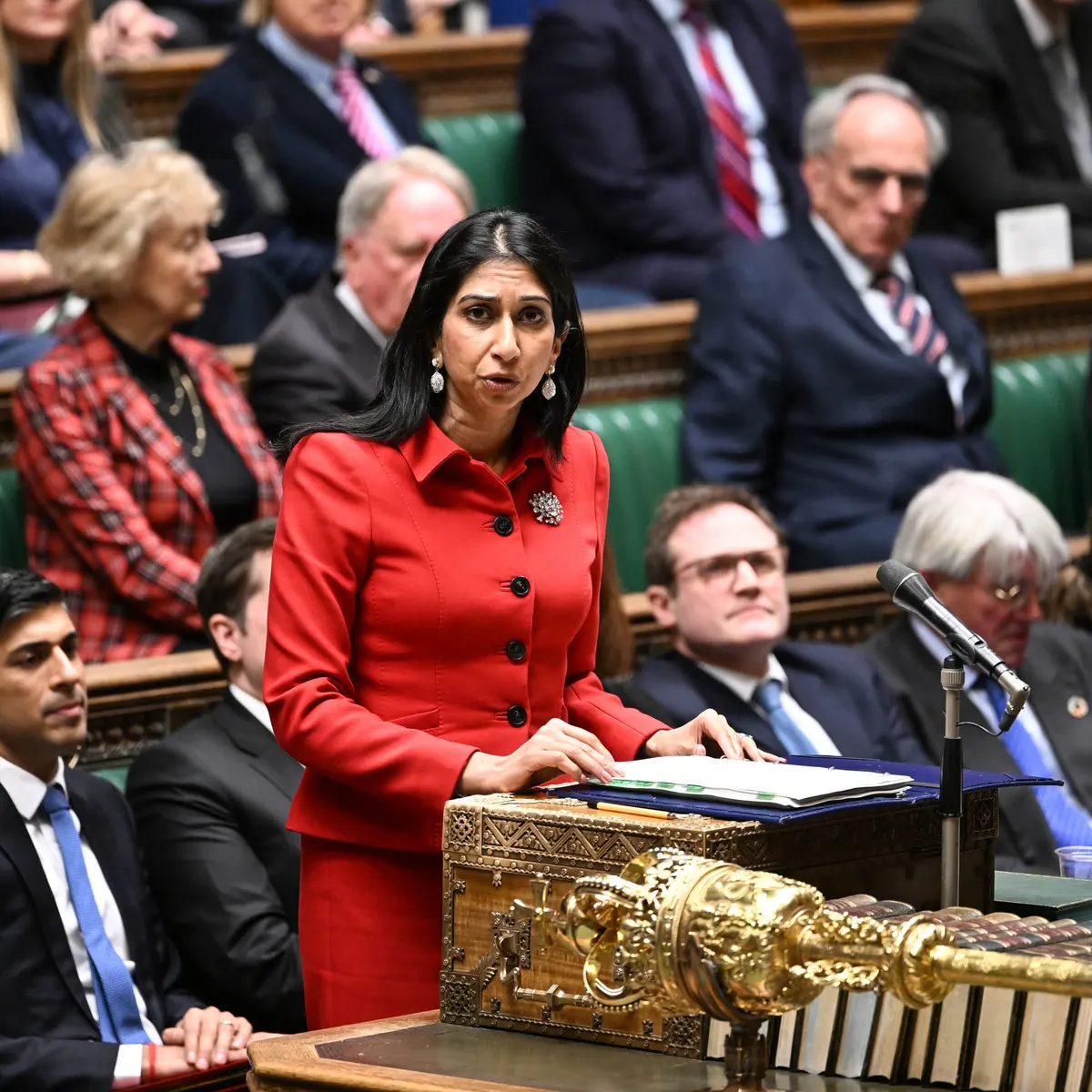
Suella Braverman has made beastliness a trait in British politics. The UK Home Secretary, fed on the mush and mash of anti-refugee sentiment, has been frantically trying to find her spot in the darkness of inhumanity.
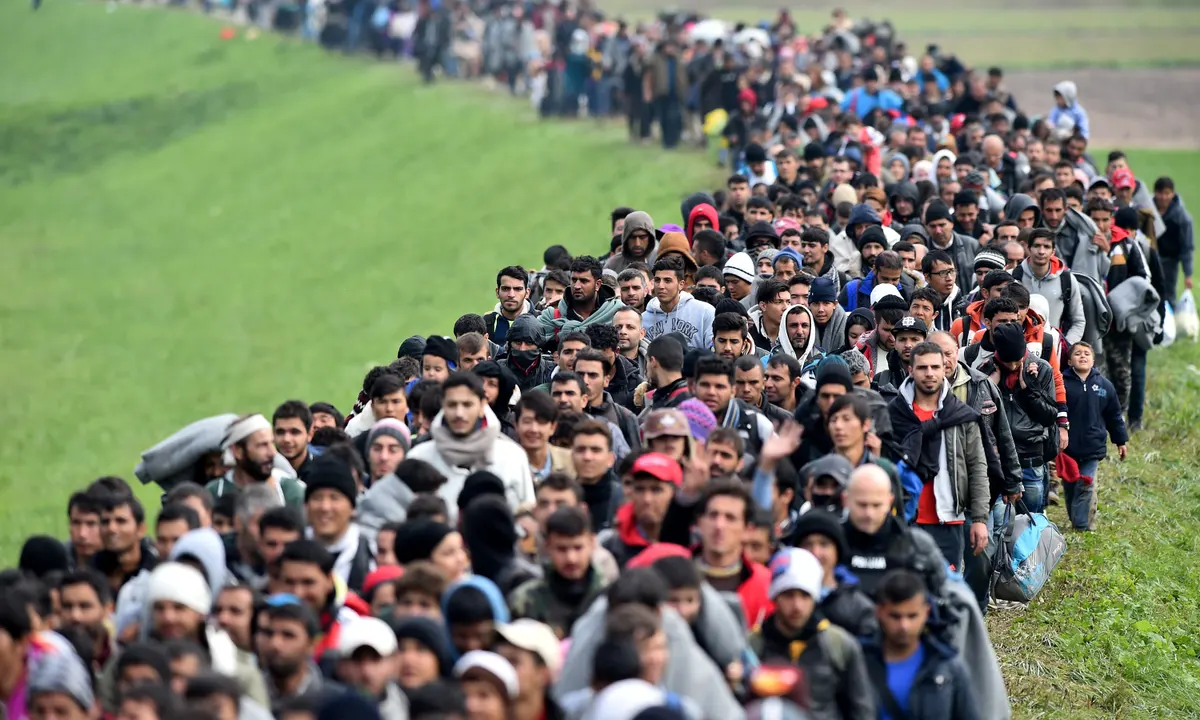
Audaciously, and with grinding ignorance, she persists in her rather grisly attempts to kill the central assumptions of international refugee protection, flawed as they might be, elevating the role of the sovereign state to that of tormenter and high judge. In doing so Braverman shows herself to believe in the ultimate prerogative of the state to be decisively cruel rather than consistently humane. The result is a tyrant’s feast, bound to make a good impression in every country keen to seal off their borders from those seeking sanctuary.
In her speech to the American Enterprise Institute, Braverman came up with a novel reading on how the United Nations Refugee Convention of 1951 has been applied of late. In her mind, there had been “an interpretive shift” towards generosity in awarding refugee status when, conspicuously, the opposite is true. She was particularly irked by those irritating judges who had endorsed “something more akin to a definition of ‘discrimination’”. All in all, “uncontrolled and illegal migration” posed “an existential challenge for the political and cultural institutions of the West.”
Lip service is paid to the rights of asylum seekers, though not much. She shows a keen fondness for the term “illegal migrants” such as those who made their way to the Italian island of Lampedusa, proceeding to sleep on the streets, pilfer food and clash with police. “Where individuals are being persecuted, it is right we offer sanctuary,” she conceded. “But we will not be able to sustain an asylum system if in effect, simply being gay, or a woman, or fearful of discrimination in your own country of origin, is sufficient to qualify for protection.”
Trust Braverman to turn universal human rights into a matter of gender or sexual politics. She further teases out the battle lines by attacking the “misguided dogma of multiculturalism” that “makes no demands of the incomer to integrate”. Such a failure had happened because “it allowed people to come to our society and live parallel lives in it.”
A quick read of the definition of “refugee” in the Convention stipulates a number of considerations: “a well-founded fear of being persecuted for reasons of race, religion, nationality, membership of a particularly social group or political opinion”; that the person is outside their country of nationality and unwilling to “avail himself of the protection of that country; or who, not having a nationality and being outside the country of his former habitual residence as a result of such events, is unable or, owing to such fear, is unwilling to return to it.”
In 2022, a mere 1.5% of the 74,751 asylum claims lodged in the UK cited sexual orientation in their applications. The countries most prominently featured as points of origin for the applicants were Pakistan, Bangladesh and Nigeria. It remains unclear how many were accepted as a direct result of mentioning sexual orientation, but these numbers hardly constitute a radical shift.
The UNHCR was unimpressed by the Home Secretary’s AEI show, though hampered by the language of moderation. “The need is not for reform, or more restrictive interpretation, but for stronger and more consistent application of the convention and its underlying principle of responsibility-sharing.” The body suggested that expediting the backlog of asylum claims in the UK might be one way of approaching it, something Braverman has failed, rather spectacularly, to do.
The Refugee Convention has provided fine sport for abuse and blackening for over two decades, its critics always bleating about the fact that the circumstances of its remit had changed. A list of Australian Prime Ministers (John Howard, Kevin Rudd, Julia Gillard, Tony Abott, just to name a few) would surely have to top the league, always taking issue with a document regarded as creaky and unfit to deal with the arrival of “unlawful non-citizens”. From the implementation of the Pacific Solution to the creation of such odious categories as Temporary Protection Visas, the protective principles of the Convention became effigies to a system that was being forcibly retired.
In Britain, New Labour’s Tony Blair, always emphasising the New over Labour, never tired of haranguing his party, and constituents, about the reforms he was making to a number of policy platforms, with processing refugees being foremost among them. During his election drive in 2001, Blair claimed that, “The UK is taking the lead in arguing for reform, not of the convention’s values, but of how it operates.” At the time, the chief executive of the Refugee Council, Nick Hardwick, gasped. “The Geneva Convention on Refugees has saved millions of lives worldwide.”
Blair’s Home Secretary, Jack Straw, had already set the mould for Braverman in his promise in 2000 to initiate a “complete revision” of the Refugee Convention, one that would see “a two-tier system to cut the flow of asylum seekers” coming into the UK.
At home, Braverman has made a royal mess of things. Keeping up with an obsession nurtured by the Johnson government, she has persisted in trying to outsource and defer the responsibility for processing asylum claims to third countries. The favourite choice remains distant Rwanda, a country unfathomably praised for its outstanding “modernising” credentials.
While the government scored a legal victory in the High Court in December 2022, which saw nothing questionable about undertakings made by Kigali in the Memorandum of Understanding and Notes Verbales (NV) about how asylum claims would be processed, the Court of Appeal thought otherwise. On June 29 this year, a majority of the Court decided to give Rwanda’s human rights record a stern, rough comb over, finding it wanting on the prohibition against torture outlined in Article 3 of the European Convention on Human Rights.
Sir Geoffrey Vos, Master of the Rolls, felt that “there were substantial grounds for thinking that asylum seekers sent to Rwanda under the MEDP [Migration and Economic Development Partnership]” at the date the decisions were made by the secretary in July 2022 “faced real risks of article 3 [European Convention on Human Rights] mistreatment.” Such a conclusion was inevitable after consulting “the historical record described by the UNHCR, the significant concerns of the UNHCR itself, and the factual realities of the current asylum process itself.”
Lord Justice Underhill underlined the lower court’s own admission that the Rwandan government was “intolerant of dissent; that there are restrictions on the right of peaceful assembly, freedom of the press and freedom of speech; and that political opponents have been detained in unofficial detention centres and have been subjected to torture and Article 3 ill-treatment short of torture.”
As a result, Braverman finds herself at sea, struggling to find a port, or centre, to park her own, brittle dogmas. In July, she told the House of Commons that she disagreed “fundamentally” with the view of the court “that Rwanda is not a safe place for refugees”. She went on to say that her government took their “international obligations very seriously and we are satisfied that the provisions of the Illegal Migration Bill comply with the refugee convention. The fundamental principle remains, however, that those in need of protection should claim asylum at the earliest opportunity and in the first safe country they reach.”
And that, ultimately, is the rub: domestic politics vaulted by individual ambition. When considering the stuffing in such speeches, the international audience is less important than those listening at home. Braverman is likely to have her eyes on the prime ministerial prize, having failed to secure the Conservative leadership last summer. A troubled Tory MP, speaking to the BBC on condition of anonymity, had some advice for UK Prime Minister Rishi Sunak: best get rid of the Home Secretary as soon as possible lest it “reflects poorly on him”. It’s a bit late for that.
Dr. Binoy Kampmark was a Commonwealth Scholar at Selwyn College, Cambridge. He currently lectures at RMIT University. Email: bkampmark@gmail.com


