

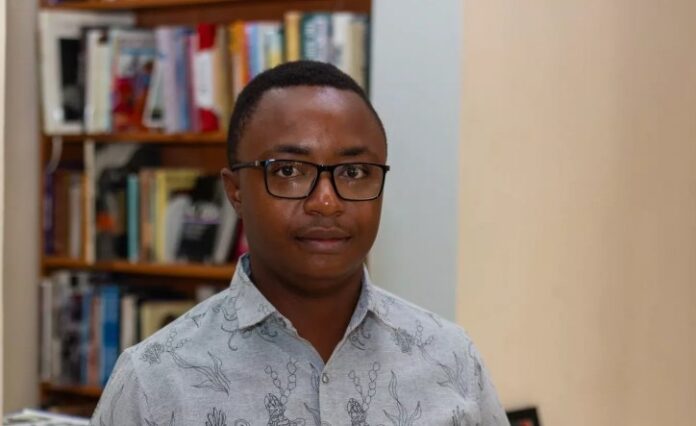
The Caine Prize for African Writing has cleared Zimbabwean writer Simbarashe Steyn Kundizeza of allegations that he used artificial intelligence (AI) to write his award-winning short story, The Blue Fighter.
The organisation announced its decision on Wednesday, November 11, 2026, after an internal investigation found no evidence that generative AI produced the story. It also confirmed Kundizeza as the winner of the 2026 Caine Prize, allowing him to retain the £10,000 prize money (approximately $13,000).
The controversy began on October 11, when American journalist and author Vauhini Vara published an article in The Atlantic titled Yet Another Literary Prizewinner Seems to Be AI.

In the article, Vara questioned the originality of The Blue Fighter, claiming that AI-detection software called Pangram had identified almost the entire story as AI-generated.
She also said its writing style used frequent metaphors, familiar expressions, and sentence structures similar to those in AI-generated content. She compared it with an earlier story Kundizeza published in 202. According to her, the two works had noticeably different writing styles. 089nm Vara described the winning story as “bad, maudlin and full of tired tropes”.
However, Kundizeza rejected the allegation, insisting that he wrote the story without using generative AI.
In a statement published on X on October 13, he said: “For the avoidance of doubt, I wrote The Blue Fighter. I did not use generative AI to write it. It is entirely my own work.”
The writer also explained that the story had a personal history and drew inspiration from his family’s experiences in Zimbabwe.
Kundizeza said he developed the story during his participation in the LOATAD Black Atlantic Residency in Ghana in 2025, where he encountered a poem titled My Father’s Hands by South African poet Vangile Gantsho.
He also incorporated fictionalised details from his family’s struggles during Zimbabwe’s economic difficulties, particularly around 2002.
Kundizeza maintained that the difference between The Blue Fighter and his earlier writing did not prove that he used AI.
He argued that writers develop their skills and experiment with different styles and genres rather than producing every work according to a single fixed writing pattern.
The allegation also drew criticism from African writers and publishers, who questioned the reliability of AI detection software and raised concerns about the scrutiny Black and African writers face.
Nigerian magazine founder Wale Lawal described the accusation on X as “crazy, racist and wildly unethical”.
Similarly, Nigerian publisher Modupe Daramola questioned why an AI-powered detection tool should determine whether a writer produced an original work.
The Caine Prize subsequently opened an investigation on October 11 to examine the allegations.
According to its announcement, the investigation involved interviews with Kundizeza, members of the 2026 judging panel and representatives of The Shallow Tales Review, where The Blue Fighter first appeared in 2025.
The organisation also commissioned an independent cybersecurity and digital forensic investigator to examine the metadata of the writer’s drafts.
The investigation found that Kundizeza created four separate Microsoft Word documents before submitting the final story. The drafts accounted for up to 27 hours of writing and editing.
The evidence also showed that he began developing the story in April 2025 and completed it in June 2025, following considerable communication with Gantsho, whose poem inspired the work.
In its findings, the Caine Prize said: “The review found no evidence that the story was produced using generative AI.”
The chair of the organisation’s board of trustees, Ellah Wakatama, said the investigation took a human-centred approach and carefully considered the evidence.
She added that AI detection software alone cannot reliably determine who wrote a piece of work.
READ ALSO: JUST IN: Court Orders INEC to Publish Adebutu as Ogun PDP Governorship Candidate
Following the decision, the Caine Prize confirmed that Kundizeza would retain his award and said it considered the matter closed.
The organisation also announced new measures for its 2027 edition, including AI-use declarations for publishers and shortlisted writers, guidance for judges and a formal process for investigating future allegations. The changes will take effect as submissions open on November 23, 2026.


 to write his award-winning short story, The Blue Fighter.)