

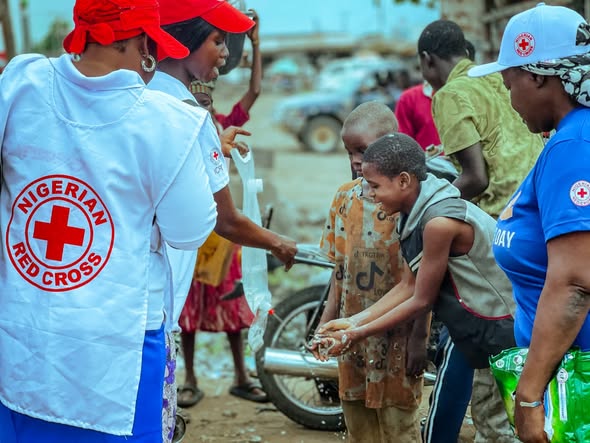
The Borno State Government says it is intensifying efforts to promote proper handwashing and hygiene practices in schools and communities to prevent infections and improve public health.
The State Coordinator for Neglected Tropical Diseases in the Ministry of Health and Human Services, Hassan Malgwi, disclosed this in an interview with the News Agency of Nigeria (NAN) on Wednesday in Maiduguri.
Malgwi said the government organised awareness campaigns to mark the 2026 Global Handwashing Day, with support from Helen Keller International and other development partners.
He described handwashing with soap and clean water as one of the simplest and most effective ways to prevent infections and protect individuals, families and communities.
According to him, the 2026 theme, “Action Saves Lives – Clean Your Hands,” emphasises the need to make handwashing a daily habit rather than a practice observed only on special occasions.
Malgwi explained that poor hand hygiene could facilitate the spread of germs, leading to diarrhoeal diseases, respiratory infections and other preventable illnesses.
READ ALSO: NUSA Pledges Stronger Partnership With Fani-Kayode to Protect Nigerians in South Africa
He advised residents to wash their hands with soap and clean running water after using the toilet, cleaning children or handling waste, as well as before preparing food, eating or feeding children.
The coordinator stressed that effective hygiene promotion required access to safe water, sanitation facilities and functional handwashing stations, particularly in underserved communities.
He added that handwashing should complement other hygiene interventions, including facial cleanliness and environmental sanitation, especially in communities affected by trachoma.
Malgwi urged parents and caregivers to teach children proper handwashing practices from an early age, while calling on schools and health facilities to provide functional handwashing stations.
He also urged traditional and religious leaders to mobilise their communities to adopt safe hygiene practices.
The coordinator emphasised the need for sustained collaboration among government agencies, development partners, schools and community leaders to integrate hygiene promotion into routine public health interventions.
“Clean hands save lives. Let us make handwashing a habit, not just a celebration,” he said.


