

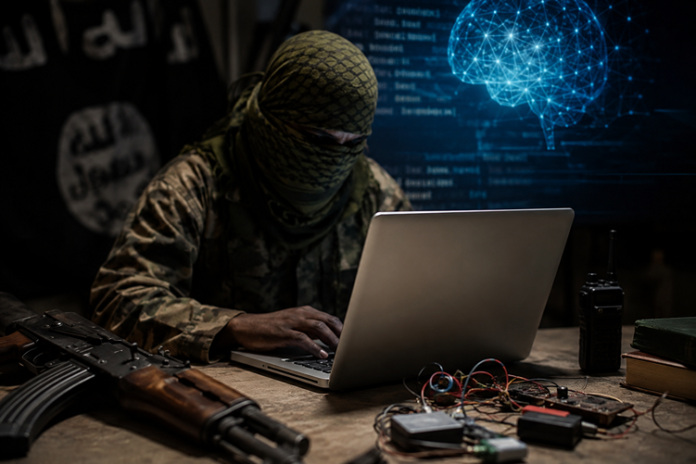
A new report by The New York Times has revealed that Boko Haram fighters increasingly turned to artificial intelligence (AI) chatbots to obtain technical guidance on attacks, weapons modification and battlefield tactics, raising fresh concerns over the misuse of advanced AI technologies by extremist groups.
The report obtained by The News Chronicle on Saturday, cited a study by terrorism and technology researcher Antonia Juelich of the University of Cambridge. The research was based on interviews conducted over the past year with former Boko Haram members in Nigeria.
According to the study, former insurgents said the group used AI-powered chatbots to solve operational challenges encountered during attacks.
One former commander recalled that after an assault on a military base was thwarted by a defensive trench, fighters consulted AI tools for advice on modifying motorcycles to clear such obstacles.
The report stated that mechanics upgraded the motorcycles based on the AI-generated guidance, while fighters repeatedly rehearsed the manoeuvre before launching another operation.
Former commanders also disclosed that the group relied on AI chatbots to seek information on repairing and upgrading weapons, gathering operational intelligence and improving the effectiveness of improvised explosive devices.
The study found that insurgents used several AI platforms, including ChatGPT, Claude, Gemini, Grok and DeepSeek, often comparing responses from different systems. According to the researcher, some experienced members claimed they bypassed chatbot safety restrictions by disguising their requests as legitimate projects, such as film production.
Responding to the findings, OpenAI said the use of its products for terrorism or violence is strictly prohibited and that it continues to strengthen safeguards against misuse. Google and Anthropic also stated that their AI models are designed to reject dangerous requests while continuously improving their safety protections.
Researchers warned that although artificial intelligence is unlikely to fundamentally transform terrorism in the near term, it could significantly enhance the capabilities of lower-level operatives by accelerating access to technical knowledge and operational guidance.


