spot_img
spot_imgspot_img
October 8, 2026 - 4:37 AM

Bobi Wine And The Old African Brew

—

After the presidential election in Uganda, it dawned on me that there are two people in the country who don’t fear President Yoweri Museveni: one is his tailor, and the other is his political rival, Robert KyagulanyiSsentamu, famously called Bobi Wine.

Museveni’s tailor makes his suits in complete disregard of tailoring measurements. It would appear that either the president doesn’t care anymore or he has given up on the person who dresses him.

In politics, however, Museveni will not cut his rival any slack, making Wine perhaps the most dangerous and endangered man in Uganda at this time.

Wine reminds Museveni of his own past in a strikingly dissimilar and troubling way. And this dissimilarity is the president’s biggest headache. But why should a 77-year-old veteran of guerrilla warfare and term-defying president lose sleep over a political rookie?

Wine was not born when Museveni joined other rebel groups in Tanzania to overthrow Idi Amin and was only four years old when Museveni moved again to topple Milton Obote, whose second coming proved more catastrophic than his first.

Between Idi Amin and Obote II on the one hand, and the raft of ad-hoc regimes that squabbled for power on the other, over 100,000 Ugandans were killed in the late 1970s up to the early1980s. The war-weary country felt a debt of gratitude when the Museveni-led National Resistance Army finally seized power and restored peace.

Museveni told the world back in the day, that what happened was not merely a change of guard, “It is a fundamental change.” He then added, “The people of Africa, the people of Uganda, are entitled to a democratic government. It is not a favour from any regime. The sovereign people must be the public, not the government.”

Africa applauded. The West suspended suspicions about Museveni’s radical leftist ideology and hailed him as the new face of a continent still blighted by apartheid, civil wars and tinpot military dictators.

Thirty-five years later, the face of the man in the mirror is hardly anything like that of the guerrilla firebrand and leader of what might have been the Salvation Army. His speech about “sovereignty of the people” is a hallow echo from a distant, almost forgotten past.

For all his press-ups and treadmill gimmicks the mirror reflection today is that of an intemperate dictator unwilling to permit free and fair political contest and mortally afraid of his slipping grip on power.

The challenge is not coming from the trenches where Museveni earned his stripes. It is coming from the field of partisan politics and spearheaded by a young man who was only a kid when Museveni first took power. Whether Museveni won or stole the last election from Wine, it is obvious that the battle for the soul of Uganda is now being fought on a different turf.

Museveni promised peace. With the exception of the entanglement with Somali’s Al Shabab a decade ago which backfired in a bomb explosion in the capital that left scores dead, Uganda has enjoyed relative peace. The economy has also improved under Museveni and his record in the fight against HIV/AIDS is one of the most outstanding on the continent.

But his rule without end has also taken a heavy toll on the country, raising serious questions about Uganda’s future and the sustainability of the gains made.

Twice, Museveni has forced constitutional amendments to extend his hold on power, finally succeeding in removing term limits. He has the military under his thumb and has been widely accused of fomenting policies that favour his own ethnic group in the western and central regions over other groups.

In what increasingly appears like a co-presidency, Museveni and First Lady, Janet, have unleashed a moral police on the population and part of their job description is to prescribe the length of a woman’s skirt and measure male testosterone levels.

Museveni has created a fantasy where Uganda cannot exist without him and whoever threatens that fantasy as Wine did in the last election, challenges the president’s political immortality.

This was not the life that Wine chose. The life chose him. Though he might have continued to enjoy the good life as a celebrity, without the enormous risk that comes with challenging the status quo, Wine dared to be different. “Our biggest problem is misgovernance,” he said in an interview with DW. “It’s the governance question we want to solve and we cannot solve that until we get into leadership ourselves.”

Forty-five-year-old Kizza Besigye and Museveni’s personal physician for many years had tried three times before and was muscled out. He backed off this time for fear of his life. But Wine and nine other presidential candidates took the plunge, hoping to move Olympus Museveni and address the discontent and desperate yearnings of the increasingly jobless and restless young population.

Generations of Ugandans have not known any other leader and Museveni who speaks of the country like his plantation, will not be moved. He will exact the harvest from his farm until and unless he can personally choose the next husbandman when he’s too old to lift a finger.

And Wine is nothing like that figurehead. He represents the fundamental change that Museveni spoke about decades ago; he carries the hopes and aspirations of his generation and despite repeated – even near-fatal -attacks on him in the last four years and supporters of his National Unity Platform, Wine has kept the fire burning.

Neither the trumped-up charges of sedition, the attack on his car that killed his driver, nor the use of security forces to intimidate him during and after the recent polls, has deterred him from challenging the status quo. He has done this knowing full well that there’s little hope of redress in the courts.

Yet, the collective voice of the over six million voters who cast their ballots for Wine at the last election, is a significant dent on the glass ceiling of Museveni’s dictatorship.

It would be a mistake to think that what is going on in Uganda is purely a Museveni thing. Across the African landscape, there is a younger generation straining at the leash to make their voices heard – new wine trying to find expression on a continent steeped in old brew.

In a 2017 article, Quartz Africa described the continent as “the world’s youngest continent run by its oldest leaders.” That partly explains the disgraceful silence by the AU and African leaders after the shambolic elections in Uganda – it’s an old boys’ club thing.

From the #ENDSARS movement and Omoyele Sowore’s ‘Revolution Now’ in Nigeria; to Jonathan

Sandy’s National Unity Reconciliation Party in Sierra Leone, and Julius Malema’s Economic Freedom Fighters in South Africa, there is an urgency among young Africans to reclaim the political space, even at considerable risk to their personal liberty and safety. It’s not just about being heard; it’s also about making their voices count.

No one is sure how long it would take or what price would be paid. But even the history of the current gerontocrats shows that the tide ultimately favours the young.

Whether that same history also means that when younger politicians eventually come to power, they won’t be any better than those they are seeking to supplant remains to be seen. For now, those who seek to replace politicians like Museveni, must find the secret of his tailor’s staying power.

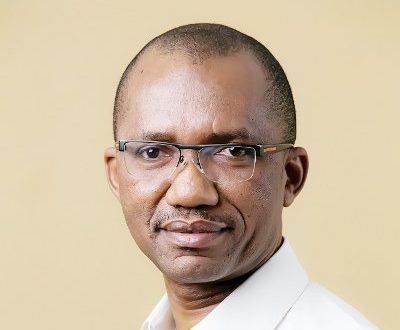
Ishiekwene is the MD/Editor-In-Chief of The Interview


0 0 votes
Article Rating
Subscribe
Notify of
0 Comments
Oldest
Newest Most Voted

Share post:

Subscribe

Latest News

More like this
Related

BREAKING: 20 NYSC Prospective Corps Members Freed After Kidnappers Demand N50m Each

Twenty prospective members of the National Youth Service Corps...

Improve welfare of Nigerian Teachers 

I was and I am a teacher. I was a Parents Teachers Association hired teacher at Oba Akinbiyi High School (II), Mokola, Ibadan in 1997. Apart from that stint, I also taught briefly at a private secondary school during my National Youth Service at Asaba, Delta State as well as at another private secondary school at Akowonjo area of Lagos state around 2001 / 2002. My late father, Deacon Isaac Oyeniyi Ojo taught for about 40 years across several primary schools in Oyo and Osun sates and retired as a headmaster in 1995. At present, I don’t just teach but train people across various democratic institutions namely election management bodies (INEC and SIECs), political parties, media, national and state legislative assemblies, police, and civil society organisations. Information gleaned from the website of UNESCO says “World Teachers’ Day is held annually on 5 October to celebrate all teachers around the globe. It commemorates the anniversary of the adoption of the 1966 ILO/UNESCO Recommendation concerning the Status of Teachers, which sets benchmarks regarding the rights and responsibilities of teachers, and standards for their initial preparation and further education, recruitment, employment, and teaching and learning conditions. In 2026, the Day marks the 60th anniversary of the Recommendation concerning the Status of Teachers.” In Nigeria, this year's celebration focused on five interconnected pillars: innovation, mobility, Artificial Intelligence, inclusion, and professional excellence. The Minister of State for Education, Prof. Suwaiba Ahmad, announced that the selection process for the 2026 World Teachers' Day awards was digitised to promote transparency, accountability, and efficiency. The celebration includes a symposium, a march-past featuring state flags and cultural attire, and the recognition of 14 awardees, including the first, second, and third best teachers receiving prestigious car gifts, while the best Federal Unity College received a bus. Other prizes include laptops. In commemoration of the World Teachers Day, Dr. Akin Ayeni and I were guests on a breakfast programme on Ekiti 91.5 FM, Ado Ekiti last Monday where we dissected the plights of Nigerian teachers and proffered solutions to them. The host was Ademola Adeleke. I enumerated some of the plights of Nigerian teachers to include: Low wages, insecurity, quackery, inadequate classrooms, lecture theatres, libraries and laboratories, high turnover of staff especially in private schools, high workloads, disrespects from parents, students and even government. I made a proverb on the programme. Elo ni teacher ngba, ti o ntuto s’owo ka’wo osu (meaning, how much does a teacher earn that he or she needs to use saliva to count salary). This was a random joke even among teachers when they used to collect their salary in cash. This day, they receive their wages via online money transfer. The proverb however is meant to drive home the paltry nature of the salaries and wages of teachers cum lecturers. I recall the sticker produced by Academic Staff Union of Universities many years ago which has the inscription “My take home pay cannot take me home”. That’s very instructive. On issue of insecurity, according to Daily Trust of October 1, 2022, “The registrar of the Teachers Registration Council of Nigeria, Professor Josiah Ajiboye, said attacks on schools by insurgents have claimed the lives of more than 2,295 teachers in the North East between 2009 and 2022.” The PUNCH in its June 5, 2026 online edition reported that “An estimated 603 students and teachers have been kidnapped in seven mass abductions across schools in Nigeria between March 2024 and May 2026 under President Bola Tinubu, despite the N145bn Safe Schools Initiative.” Recall that on May 15, 2026, a total of 46 persons – seven teachers and 39 students – were abducted from Community High School Ahoro-Esinele and Yawota Baptist Nursery and Primary School in Oriire Local Government Area of Oyo State. Thankfully, most of them were rescued though two teachers were murdered by the bandits.  Michael Oyedokun, was reportedly beheaded, while John Olaleye, was shot dead during the attack. It is noteworthy that some university lecturers have also been abducted in the past. The heavy workloads and low wages have resulted into brain drain and high turnover of teaching staff across our academic institutions. Many education graduates don’t want to teach. The lecturers in tertiary institutions are leaving in droves for greener pasters abroad. Many teachers today take the job as a last resort when better options are not available. Many of the private schools recruit untrained teachers. They side step the federal government policy of having every teacher certified by Teachers Registration Council of Nigeria. Recall that the TRCN regulates the teaching profession in Nigeria by setting standards, accrediting teacher education programmes, registering qualified teachers, and enforcing professional ethics.  It establishes national minimum standards for teacher education and monitors teacher training institutions, including Colleges of Education, university faculties, polytechnic schools of education, and the National Teachers Institute. Unlike in the 20th century when teachers in Nigeria were widely respected and seen as mini-God, in contemporary times, there have been situation where pupils and students openly abuse teachers, bully them and even beat them up. Some irresponsible parents have even gone to school to harass and molest teachers for caning or meting out corporal punishments to their wards and children. Thus, many teachers now work in an atmosphere of fear. Mrs. Comfort Fasunwon is a multiple award-winning teacher in Ondo State, here is an excerpt from what she wrote on her Facebook wall in commemoration of the 2026 World Teachers Day “To my fellow teachers, today.  Teaching is not always easy. There are days when the workload is heavy, resources may be limited, and the results of our efforts may not be immediately visible. Yet we continue to show up, teach, encourage, correct, inspire and believe in our students. Sometimes, the greatest reward of a teacher is not a certificate or trophy. It is seeing a child who once struggled begin to understand. It is watching a student grow in confidence. It is meeting a former student years later and hearing the words, “Ma or sir, you made a difference in my life.” My plead to government at all level as well as private schools’ owners is to ensure that their schools are well resourced and staff welfare is made paramount. Professionalism should be their watchwords. Teachers’ rewards shouldn’t be in heaven; a foretaste of that should be here on earth. Best wishes to fellow teachers and nation builders. Remember the popular song that says “Anyone who hates teachers will homeschool his or her  child” I.G: @jideojong  

Over 22,000 Arms Recovered Across Nigeria in 10 Years – NCCSALW

The National Centre for the Control of Small Arms...

NBA Calls for End to Torture, Deaths in Nigeria’s Detention Centres

The Nigerian Bar Association (NBA) has called for tougher...
Join us on
For more updates, columns, opinions, etc.
WhatsApp
0
Would love your thoughts, please comment.x
()
x