
spot_img
spot_imgspot_img
October 7, 2026 - 7:10 PM

Biodun Jeyifo: The Intellectual as a Revolutionary

—

The inaugural lecture of Professor Wole Soyinka in the 1980/81 period at the then University of Ife, now Obafemi Awolowo University, was expectedly explosive. Its title, “The Critic and society: Bathes, Leftocracy and Other Mythologies”, left no one in doubt that this was an ideological offensive.
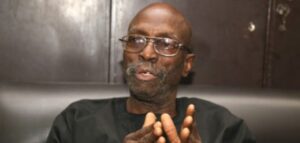
Professor Biodun Jeyifo

It was the famous writer’s nuclear-powered intellectual attack against Leftists who had asserted themselves as a dominant force in the academic and student circles on campus.

Although the missiles were targeted at the Left community led by respected historian, Dr. Segun Osoba, some were also fired at academics who seem to have one leg in the Leftist camp, and the other, outside.

A student journal in reporting the lecture and the fireworks had a section on lecturers sitting on the fence. It was a poetic reporting style that ran like: “TP, TP. Take Position, Take Position. Leftocracy or Rightocracy. TP, TP. Take Position, Take Position.” This was directed at an identified lecturer.

Later, Akin Akingbulu, Editor of ‘Voice’, another student journal, interviewed this lecturer and asked him his reaction to the report. He replied that it was written by one of his students and he was handling the issue. The Editor pressed further and the lecturer said the offending piece was written by Owei Lakemfa. Akingbulu immediately sought me out in the hostel and told me I was in big trouble. He knew I did not write the report as he knew who did, but could not tell the angry lecturer.

I went to Gordini G. Darah, a lecturer in the Literature Department to narrate the story and ask him for advice on how I could be saved. I didn’t mind facing the consequences of my actions, but I did not want to be held liable for what I knew nothing about; I was just a victim of my notoriety on campus. Darah told me the person who could save me was Dr Biodun Jeyifo. BJ, as he was popularly called, was an intensely intellectual person who was known not to back away from any necessary fight whether in academics or politics. Although a mentee of Soyinka from his University of Ibadan, UI, undergraduate days, he was regarded the fiercest critic of Soyinka’s works. BJ had also become the National President of the Academic Staff Union of Universities, ASUU. He had transformed ASUU from its moribund origins as the Nigerian Association of University Teachers, NAUT, to a fighting union shaking the foundations of the country’s universities and putting the Shehu Shagari administration on its toes on matters affecting academics.

The no-nonsense, but charismatic BJ was loved by students, and any gathering he was featured to address was bound to be full. I narrated my story to him and he asked if I was sure. I answered in the affirmative. He stood up and asked me to come along. He drove me to my lecturer’s office. BJ without knocking, barged into the office. The startled lecturer stirred and asked what the mattered was. BJ replied: “I hear you want to victimise Owei. In this campus?” The rattled lecturer turned to me: “Owei, is it true?” I stammered; said not really and narrated what transpired between him and Akingbulu. The lecturer replied it was nothing: “I thought you wrote the report and but when I reread it, I concluded you were too intelligent to have written it.” I thanked him, genuflected to BJ and melted away. Case, closed.

There were inter-communal clashes in Ife, the university’s host community in April 1981 in which a number of lives were lost. It was under this circumstances a headless body was found on June 1, 1981 in the town. Three days later, the victim was positively identified as Bukola Arogundade, an undergraduate of the university. The enraged students on June 7, 1981 organised a protest march on Ife town. The police attacked the students mainly with teargas leading to the death of four of the students: Mr Paul Longe, 40; Miss Wemimo Akinbolu, 23; Miss Fatimo Adebimpe, 22; and Miss Dorcas Ojewole, 19. Two other students from other schools who happened to be travelling on the Ife road that day were chased by the police and died in a resultant car crash.

The students were livid and decided on revenge. Some began to form groups to abduct policemen. The university authorities had lost control and even if it ordered a closure, it was likely to be in vain as the students had decided that the university must be kept open. The government of course could not control the situation and the student union leadership under Femi Kuku had also lost control, and had been shoved aside by the students. Some former student union leaders like one-time President, Wole Olaoye, ex-Public Relations Officer, Femi Falana and former Secretary General Greg Obong-Oshotse, tried to reassert control over the students. That was when ASUU, under BJ, stepped in. It had the courage to call a rally of the students and managed to control the overflowing crowd. It promised to bring all those responsible for the deaths to justice, ensure decent burial for the victims, defend student interests and establish an independent inquiry. ASUU said all it was asking for was for students to agree that the university be shutdown. Like magic, we agreed and moved peacefully out of the campus. Such was the influence of the local and national ASUU and BJ.

When I arrived Ife as an undergraduate, one of the first names I learnt about was BJ. You can imagine my shock when a few months later, a man called Tony Engurube, who was visiting Ijaw students, asked that I accompany him to see an old friend called BJ. I asked if it was the same person, and he affirmed it. We went to BJ’s house on campus, and soon both men were locked in embrace. It turned out that they had been members of an underground revolutionary group who some years earlier had been wedded to carrying out a revolution in the country. In later years, I came to know some of these dedicated men and women who wanted to create a human-centred, rather than profit-motivated society. These included the couples, Sehinde and Dunni Arigbede, and Eddy and Bene Madunagu.

So, BJ was not just a lecturer, literary critic, author, actor and playwright who made giant strides across universities like Ibadan and Ife in Africa, Oberline, Cornell and Havard in the United States and executed projects at the Free University, Berlin and Peking University, PKU. He was also a practical revolutionary.

His revolutionary praxis had led him over decades to maintain columns in newspapers under the pseudonym: Bamako Jaji. On February 11, 2026, BJ at 80, transited into an Orisha, an African god.

0 0 votes
Article Rating
Subscribe
Notify of
0 Comments
Oldest
Newest Most Voted

Share post:

Subscribe

Latest News

More like this
Related

Improve welfare of Nigerian Teachers 

I was and I am a teacher. I was a Parents Teachers Association hired teacher at Oba Akinbiyi High School (II), Mokola, Ibadan in 1997. Apart from that stint, I also taught briefly at a private secondary school during my National Youth Service at Asaba, Delta State as well as at another private secondary school at Akowonjo area of Lagos state around 2001 / 2002. My late father, Deacon Isaac Oyeniyi Ojo taught for about 40 years across several primary schools in Oyo and Osun sates and retired as a headmaster in 1995. At present, I don’t just teach but train people across various democratic institutions namely election management bodies (INEC and SIECs), political parties, media, national and state legislative assemblies, police, and civil society organisations. Information gleaned from the website of UNESCO says “World Teachers’ Day is held annually on 5 October to celebrate all teachers around the globe. It commemorates the anniversary of the adoption of the 1966 ILO/UNESCO Recommendation concerning the Status of Teachers, which sets benchmarks regarding the rights and responsibilities of teachers, and standards for their initial preparation and further education, recruitment, employment, and teaching and learning conditions. In 2026, the Day marks the 60th anniversary of the Recommendation concerning the Status of Teachers.” In Nigeria, this year's celebration focused on five interconnected pillars: innovation, mobility, Artificial Intelligence, inclusion, and professional excellence. The Minister of State for Education, Prof. Suwaiba Ahmad, announced that the selection process for the 2026 World Teachers' Day awards was digitised to promote transparency, accountability, and efficiency. The celebration includes a symposium, a march-past featuring state flags and cultural attire, and the recognition of 14 awardees, including the first, second, and third best teachers receiving prestigious car gifts, while the best Federal Unity College received a bus. Other prizes include laptops. In commemoration of the World Teachers Day, Dr. Akin Ayeni and I were guests on a breakfast programme on Ekiti 91.5 FM, Ado Ekiti last Monday where we dissected the plights of Nigerian teachers and proffered solutions to them. The host was Ademola Adeleke. I enumerated some of the plights of Nigerian teachers to include: Low wages, insecurity, quackery, inadequate classrooms, lecture theatres, libraries and laboratories, high turnover of staff especially in private schools, high workloads, disrespects from parents, students and even government. I made a proverb on the programme. Elo ni teacher ngba, ti o ntuto s’owo ka’wo osu (meaning, how much does a teacher earn that he or she needs to use saliva to count salary). This was a random joke even among teachers when they used to collect their salary in cash. This day, they receive their wages via online money transfer. The proverb however is meant to drive home the paltry nature of the salaries and wages of teachers cum lecturers. I recall the sticker produced by Academic Staff Union of Universities many years ago which has the inscription “My take home pay cannot take me home”. That’s very instructive. On issue of insecurity, according to Daily Trust of October 1, 2022, “The registrar of the Teachers Registration Council of Nigeria, Professor Josiah Ajiboye, said attacks on schools by insurgents have claimed the lives of more than 2,295 teachers in the North East between 2009 and 2022.” The PUNCH in its June 5, 2026 online edition reported that “An estimated 603 students and teachers have been kidnapped in seven mass abductions across schools in Nigeria between March 2024 and May 2026 under President Bola Tinubu, despite the N145bn Safe Schools Initiative.” Recall that on May 15, 2026, a total of 46 persons – seven teachers and 39 students – were abducted from Community High School Ahoro-Esinele and Yawota Baptist Nursery and Primary School in Oriire Local Government Area of Oyo State. Thankfully, most of them were rescued though two teachers were murdered by the bandits.  Michael Oyedokun, was reportedly beheaded, while John Olaleye, was shot dead during the attack. It is noteworthy that some university lecturers have also been abducted in the past. The heavy workloads and low wages have resulted into brain drain and high turnover of teaching staff across our academic institutions. Many education graduates don’t want to teach. The lecturers in tertiary institutions are leaving in droves for greener pasters abroad. Many teachers today take the job as a last resort when better options are not available. Many of the private schools recruit untrained teachers. They side step the federal government policy of having every teacher certified by Teachers Registration Council of Nigeria. Recall that the TRCN regulates the teaching profession in Nigeria by setting standards, accrediting teacher education programmes, registering qualified teachers, and enforcing professional ethics.  It establishes national minimum standards for teacher education and monitors teacher training institutions, including Colleges of Education, university faculties, polytechnic schools of education, and the National Teachers Institute. Unlike in the 20th century when teachers in Nigeria were widely respected and seen as mini-God, in contemporary times, there have been situation where pupils and students openly abuse teachers, bully them and even beat them up. Some irresponsible parents have even gone to school to harass and molest teachers for caning or meting out corporal punishments to their wards and children. Thus, many teachers now work in an atmosphere of fear. Mrs. Comfort Fasunwon is a multiple award-winning teacher in Ondo State, here is an excerpt from what she wrote on her Facebook wall in commemoration of the 2026 World Teachers Day “To my fellow teachers, today.  Teaching is not always easy. There are days when the workload is heavy, resources may be limited, and the results of our efforts may not be immediately visible. Yet we continue to show up, teach, encourage, correct, inspire and believe in our students. Sometimes, the greatest reward of a teacher is not a certificate or trophy. It is seeing a child who once struggled begin to understand. It is watching a student grow in confidence. It is meeting a former student years later and hearing the words, “Ma or sir, you made a difference in my life.” My plead to government at all level as well as private schools’ owners is to ensure that their schools are well resourced and staff welfare is made paramount. Professionalism should be their watchwords. Teachers’ rewards shouldn’t be in heaven; a foretaste of that should be here on earth. Best wishes to fellow teachers and nation builders. Remember the popular song that says “Anyone who hates teachers will homeschool his or her  child” I.G: @jideojong  

Over 22,000 Arms Recovered Across Nigeria in 10 Years – NCCSALW

The National Centre for the Control of Small Arms...

NBA Calls for End to Torture, Deaths in Nigeria’s Detention Centres

The Nigerian Bar Association (NBA) has called for tougher...

Kari, Tinubu – APC and Nigeria’s Years of Devaluation

Whenever I think about 2015, I remember two births....
Join us on
For more updates, columns, opinions, etc.
WhatsApp
0
Would love your thoughts, please comment.x
()
x