

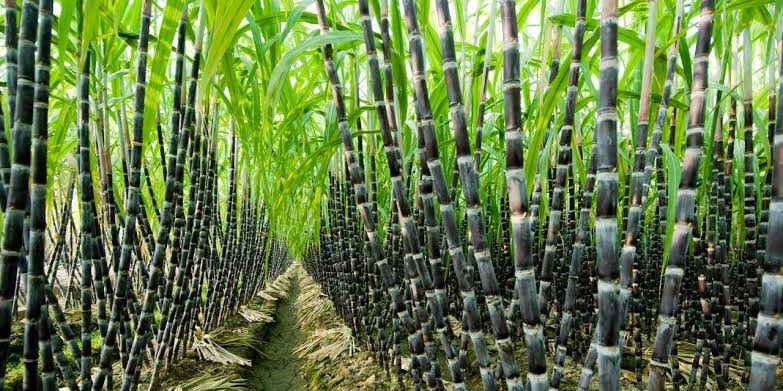
There was an ungainly, towering grass standing under tropical sunlight, accumulating an extraordinary amount of sweetness inside its stem before anyone boiled cane juice or packed sugar into containers for transportation across oceans. There was little about its outward appearance to suggest that humans would one day transport it across continents, organize entire agricultural economies around its cultivation, and develop elaborate methods for separating its sweetness from the living tissues that produced it. This unremarkable-looking grass could not have anticipated the extraordinary human history that would eventually unfold around its stored sugar, including the irony that a plant apparently so self-sufficient would one day enlist human hands to spread across much of the world.
The ancestral sugarcane was a tall, gangly grass with an almost arrogant confidence in its ability to provide for tomorrow. Its flowers did not need the colorful displays through which many plants attract birds and insects, because the wind could carry its pollen, while its towering stalks and spreading leaves gave it access to the tropical sunlight under which its photosynthetic machinery performed especially well. Unlike many plants that rely on the conventional C3 pathway, sugarcane had evolved a C4 photosynthetic arrangement that helped overcome one of the limitations of Rubisco, an enzyme that helps plants capture carbon dioxide during photosynthesis but can also react with oxygen.
Rather than allowing oxygen to compete so readily with carbon dioxide at the enzyme’s active site, sugarcane concentrates carbon dioxide around Rubisco, making photosynthesis particularly effective under warm, bright conditions. With such an efficient system for capturing carbon, our self-assured grass might have considered an enlarged underground storage organ an unnecessary extravagance. Why construct an enormous underground energy bucket when the stem is already standing there? Instead, it continues growing upward in long, jointed stalks, spreading its leaves toward the sunlight while accumulating remarkable quantities of sugar-rich sap within the very stems that support its growth.
The imagined arrogance of sugarcane should not obscure the plant’s dependence on suitable environmental conditions, because drought, disease, temperature and nutrient availability can still limit its growth. Nevertheless, that arrogance helps illuminate an unusual feature of its biology as a remarkably productive grass capable of accumulating substantial quantities of sweetness without packaging that sweetness as an obvious invitation to another organism.
Plants have nevertheless been exchanging biological services with animals for an extraordinarily long time, and “advertised” sweetness often plays an important role in those relationships. Flowers may provide nectar that attracts insects or birds, which transfer pollen while obtaining an energy-rich reward, while fleshy fruits may encourage animals to consume them and subsequently disperse their seeds. Neither the plant nor the animal needs to understand the arrangement for natural selection to preserve relationships in which both benefit. This is why it would be misleading to argue that sugars produced by plants are never intended for other organisms. In some circumstances, providing sweetness is precisely how a plant recruits animals into pollination or seed dispersal.
However, the sugar-rich stem of sugarcane presents a different proposition because the carbohydrate is stored within vegetative tissue rather than being offered as nectar or packaged inside a fleshy fruit associated with seed dispersal. Sugarcane has its own reproductive biology, including flowers, pollen and seeds, but the enormous reservoir of sucrose in its stalk is primarily part of the plant’s own carbon economy. It was not constructed as a reward for humans, and there is no evidence that the plant developed its sweet stem specifically to recruit humans into a reproductive partnership. Sugarcane was already conducting its biological affairs long before humans discovered that the stem contained something worth chewing.
We do not know who first stripped, broke or bit into a cane and discovered that an apparently ordinary grass could release intensely sweet juice. Nor can we assume that domestication began on a particular afternoon when one delighted ancestor ran home carrying a stalk. Human relationships with useful plants generally develop through repeated encounters across generations. People notice differences among plants, retain those they value and gradually alter the populations around them without understanding anything about genes, chromosomes or artificial selection. Some canes would have been sweeter, some thicker, some juicier and others better adapted to the places where people cultivated them, and those differences were sufficient to guide selection without anyone needing to understand their biological origins.
Sugarcane made that selection especially convenient because it could be propagated from pieces of its own stem. A section of stalk containing viable buds can produce another plant, allowing people to multiply a desirable cane without depending upon seeds and the genetic variation that sexual reproduction introduces. This did not mean that sugarcane had lost the ability to reproduce sexually, since flowering and seed production remained part of its biology, but vegetative propagation offered humans a practical means of preserving plants with characteristics they already valued. Once a particularly sweet or productive cane had been identified, pieces of its stem could be planted repeatedly, allowing human preferences to shape cultivated populations over many generations.
Here the relationship becomes rather ironic, because the self-assured grass had not produced a sweet fruit to persuade an animal to disperse its seeds, yet humans became extraordinarily effective at transporting and multiplying it after discovering the sweetness inside its stem. We selected the plants we preferred, cut their stalks into pieces, carried them into new environments and planted them again, effectively becoming a propagation department for a grass that had never offered us a conventional reproductive bargain. What began as an attraction to the contents of a stem gradually became a relationship in which human behavior helped determine where the plant would grow and which forms of it would become increasingly common.
The early domestication history of sugarcane is more complicated than a simple account of one wild grass becoming the cultivated plant known today. High-sugar canes associated with New Guinea occupy an important place in that history, while human movement, selection and later mixing among different sugarcane populations contributed to the development of cultivated forms across Island Southeast Asia and beyond. The sugar industry would emerge much later, but humans had already discovered a plant whose stored carbohydrate was valuable enough to influence which plants they selected, where they carried them and how deliberately they propagated them.
The sweetness that motivated this relationship, however, remained constrained by the physical structure of the sugarcane stem that stored the sugar. A cane stalk is large, wet, fibrous and perishable. People could enjoy its juice by chewing the stem directly, but moving large quantities of sweetness required transporting considerable amounts of plant tissue as well. The same biological structure that made sugarcane such an effective reservoir of sucrose also imposed a practical limitation on humans, because much of the stalk consisted of material other than the sugar they were seeking. To obtain more sweetness with less plant material, people had to learn how to separate the juice from the fibrous tissues in which it was contained.
Crushing cane changed that relationship by allowing juice to be extracted without chewing the stalk itself, while heating the liquid removed water and progressively increased its concentration. Syrups and other concentrated preparations could be stored, handled and transported differently from fresh cane, although they still contained water and required suitable processing and storage conditions. These developments were important steps in loosening the physical connection between sugarcane and its sweetness, but they did not occur as one sudden invention. Rather, humans gradually developed increasingly sophisticated ways of processing a biological product whose usefulness had already been recognized through generations of cultivation and consumption.
In South Asia, particularly in ancient India, the development of methods for concentrating cane juice and producing crystalline sugar became a major turning point in this longer history. The exact chronology remains difficult to reconstruct because processing techniques evolved over time and the surviving evidence does not preserve every stage, but the historical importance of Indian sugar processing is well established. By controlling the concentration and crystallization of sucrose, people could obtain sugar in a form that was substantially easier to preserve, divide and transport than the fresh stalk from which it originated.
Crystallization did not create the human relationship with sugarcane, nor was it the first means by which sweetness could travel without the original stalk. Its importance lay in allowing people to separate sugar more completely from the water and other substances in the extracted juice, producing a concentrated and comparatively durable substance that could be stored, divided and exchanged far from the fields where the grass had grown.
The biological work, however, remained unchanged at its source since sugarcane still had to grow in an environment capable of supporting its physiology. Crystallization did not eliminate those requirements, but it allowed the product of that biological work to move without the plant that had produced it. The gangly grass could remain rooted in the field while its stored carbohydrate traveled into environments where the plant itself might never grow.
Humans had discovered the vault long before they learned how to remove its treasure in a durable crystalline form. What began with the simple pleasure of chewing a sweet stem had become a relationship capable of carrying sugar into distant societies where its biological origins were increasingly removed from everyday experience.
Sugarcane originated in the New Guinea region, and its cultivation gradually spread across the islands of Southeast Asia and into other agricultural landscapes. The sugar produced from the plant would eventually travel along trade routes, cross oceans and reach distant human societies. Sugar, a photosynthetic product once confined to the stem of a tropical grass, became an increasingly valuable commodity capable of reorganizing economies and, eventually, the lives of millions of people.
Sugarcane was not for us!

Mukaila Kareem is a doctor of physiotherapy and founder of metabolichealthliteracy.com


