

War rarely begins with fire. It begins with a question. What must be done to prevent something worse? What follows is rarely the answer anyone expects.
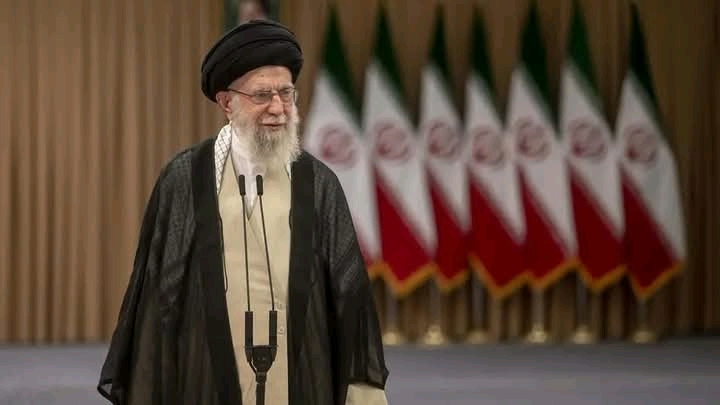
Israeli and American officials have publicly stated that Iran’s Supreme Leader, Ayatollah Ali Khamenei, was killed in yesterday’s strikes. Iranian state media and government authorities have denied those claims, insisting that he remains alive and directing national affairs. At the time of writing, independent confirmation from neutral international agencies has not been established. If the reported death is verified, it would mark one of the most consequential developments in modern geopolitics.
To understand the weight of this moment, one must understand the road that led here.
Hostility between Israel and Iran traces back to 1979, when Iran’s Islamic Revolution replaced a pro Western monarchy with a theocratic system that openly rejected Israel’s legitimacy. From that point forward, ideology and security fused. Tehran positioned itself as a central opponent of Israel. Israel viewed Iran’s regional ambitions and nuclear program as existential threats.
For decades the conflict unfolded indirectly. Iran extended influence through aligned groups across Lebanon, Syria, Iraq, and Yemen. Israel responded with intelligence operations, cyber sabotage, and targeted strikes on Iranian positions, particularly in Syria. Neither state formally declared war. Both operated within one.
The nuclear agreement once offered space for temporary restraint. Its collapse deepened mistrust. Sanctions tightened. Covert operations intensified. Rhetoric sharpened. What strategists described as a shadow war grew steadily less shadowed.
In recent months, that containment weakened further. Direct exchanges replaced plausible deniability. Missiles crossed borders more openly. Each side framed its actions as defensive. Each believed deterrence required visible resolve. The margin for miscalculation narrowed long before the current reports emerged.
In Iran, the office of Supreme Leader is not symbolic. It commands the armed forces, shapes foreign policy, and holds ultimate religious authority. Removing that figure, if confirmed, would not simply eliminate a policymaker. It would strike at the institutional and psychological core of the Islamic Republic.
Succession inside Iran is complex. It moves through clerical networks, military institutions, and factional rivalry. In moments of national trauma, hardline forces often consolidate influence. Moderates who advocate caution struggle to gain traction. External pressure can strengthen internal rigidity. Loss can become fuel.
States do not respond only to strategic necessity. They respond to injury, pride, and perceived humiliation. When a leader is removed by foreign force, the question shifts. It is no longer what is proportional. It becomes what restores dignity.
The confrontation between Israel and Iran has never been confined to two capitals. It involves a web of aligned actors and regional calculations. A destabilized leadership structure in Tehran could embolden affiliated groups to escalate, whether out of loyalty, anger, or opportunity.
The greater danger may lie in asymmetry. When direct military confrontation favors one side, indirect tools gain appeal. Cyberattacks, infrastructure disruption, maritime interference, operations through allied groups. The battlefield expands beyond territory into networks, supply chains, and civilian systems.
Markets already react to perception alone. Oil prices move sharply. Shipping costs rise. Governments adjust security protocols quietly. Ordinary travelers reconsider routes. Even those geographically distant sense a tightening in the global atmosphere. In an interconnected world, instability rarely remains regional.
For the United States, this moment tests the doctrine of preemption. Under Donald Trump, American foreign policy has often emphasized visible demonstrations of strength based on the belief that decisive action deters broader conflict. Supporters argue that force prevents escalation. Critics contend that it accelerates it. The removal of a supreme leader, if confirmed, would represent the most dramatic assertion of strategic reach.
History counsels caution. The assassination of Archduke Franz Ferdinand triggered a chain reaction few anticipated. The removal of Saddam Hussein reshaped Iraq in ways that outlived the initial objective. Leadership decapitation may disrupt command structures, but it can also intensify radicalization. Power vacuums rarely remain empty.
When the center of a political system is struck, the consequences extend beyond military calculations. Citizens process grief and anger. Rival factions reposition. External actors reassess opportunity. Non state actors interpret instability as invitation. Terrorism, cyber operations, and proxy escalation shift from theoretical risks to plausible responses.
The cost of a single strike does not end at the point of impact. It radiates outward to embassies, airports, financial markets, and digital infrastructure. It asks every government the same question. Can escalation be contained once symbolic thresholds are crossed?
The answer depends less on firepower than on restraint.
Back channel diplomacy, mediated engagement, and disciplined communication remain tools of prevention. They require political courage. They require acknowledging that humiliation breeds retaliation and that dignity, even between adversaries, can reduce the appetite for vengeance.
If the reports are confirmed and retaliation spirals unchecked, this moment will not be remembered merely as a tactical decision. It will be remembered as the point at which covert rivalry became open rupture, and the guardrails that contained escalation gave way.
If restraint prevails, this could instead become a stark reminder that power is not proven by removal but by control.
The world now watches not only what has been claimed, but what will be verified, and what will follow. History often turns quietly before it roars. This may be one of those turns.
Stephanie Shaakaa
08034861434


