

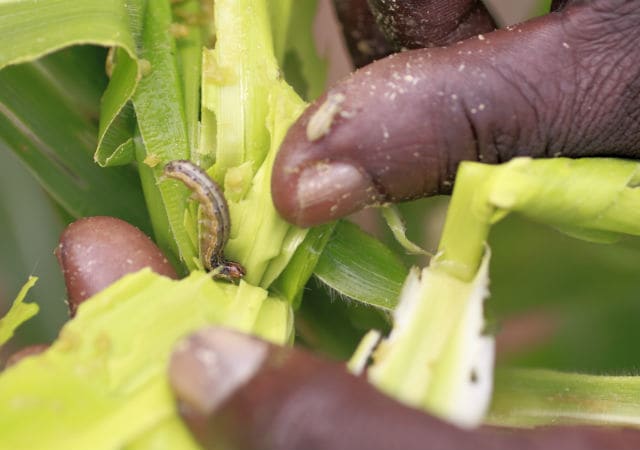
Africa is currently taking a three-pronged approach – prevention, early detection, and control – to manage the menace of invasive species on the continent.
It is estimated that 480,000 invasive species have been introduced to different ecosystems globally. Sadly, their geographic spread and impact are growing due to climate change.
As the climate continues to change, invasive species also continue to increase and spread globally.
Countries cannot wave off a global challenge individually hence the need for a continent-wide strategy.
This strategy was developed to respond to the invasive species challenge by linking conservation of biodiversity to human health.
Its overall objective is to effectively guide and coordinate prevention and eradication actions at continental, regional, and national levels.
Invasive species pose a huge global threat, both in terms of biodiversity and the cost to agriculture, trade, tourism, and development.
They disproportionately affect communities in poor rural areas—people who depend on natural resources and healthy ecosystems to make a living. For example, invasive insect pests and diseases can significantly affect agricultural productivity and production.
According to the strategy, the invasion of the fall armyworm in 12 African countries will cause an estimated annual yield loss of 4.1 to 17.7 million tons of maize crop alone.
Unfortunately, Africa lacks a functional and well-coordinated mechanism intended to secure instruments required for vigilance, predictive modelling, forecasting, monitoring/surveillance, data handling, institutional arrangements, and governance structures.
This mechanism is needed for prevention, preparedness and early detection, control and management of invasive species, as well as the restoration and rehabilitation from the impact of invasive species.
This strategy was developed to fill that gap and work as a comprehensive framework on invasive species at the continental level to coordinate member States in achieving global targets.
The International Centre of Insect Physiology and Ecology (ICIPE), International Institute of Tropical Agriculture (IITA), and Centre for Agriculture and Bioscience International (CABI) developed the strategy with contributions from the African Union’s Inter-African Bureau of Animal Resources and Inter-Africa Phytosanitary Council.
Funding partners include the Swiss Agency for Development and Cooperation, the UK Department for International Development (DFID) and the Netherlands Department for International Cooperation. Find the full strategy document here


