

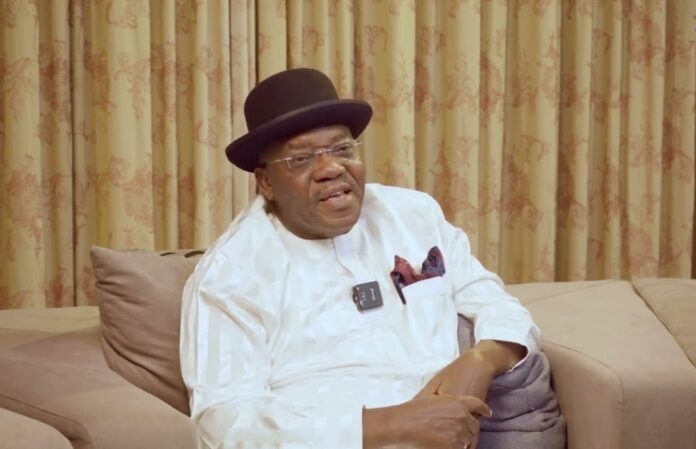
Former Nigerian diplomat, Ambassador Godknows Igali, has blamed the failure of Nigeria’s power sector privatisation on the inability of investors to inject sufficient capital into the electricity industry, revealing that many of those who acquired power companies relied on bank loans to finance their purchases.
Igali argued that privatisation itself was not a bad policy but faulted its implementation, particularly the lack of fresh investment needed to upgrade electricity infrastructure and improve generation and distribution.
Speaking on the podcast Conversations with Prof. Jideofor Adibe, he explained that the Bureau of Public Enterprises (BPE) handled the privatisation process, while the Ministry of Power was responsible for its implementation.
According to him, the government partially privatised generation and distribution, leaving transmission under public ownership.
He, however, said many investors who acquired the power companies borrowed money from banks rather than investing their personal capital, leaving little financial capacity to upgrade the facilities.
“The Nigerian private sector did not bring their money; they went and borrowed money from the banks to pay for their shares,” Igali said.
READ ALSO: Igali Explains How Afenifere, Ohanaeze, PANDEF, Others Work Together to Promote National Unity
He identified billionaire businessman Aliko Dangote as one of the few investors willing to commit personal funds at the time, adding that many of the successful bidders were bankers who financed their acquisitions through loans.
Igali noted that the situation left banks financially stretched, making it difficult for the new owners to secure additional funding for critical infrastructure upgrades.
He acknowledged that some power companies performed relatively well, particularly the one acquired by businessman Tony Elumelu, but maintained that several others purchased by bank-backed investors struggled.
The former diplomat also faulted the government for failing to provide sufficient financial support to the sector, despite interventions from the World Bank and the Central Bank of Nigeria, which he said were inadequate to address the industry’s challenges.
He further identified poor supervision as another major factor undermining the privatisation exercise.
Recalling his time overseeing the Ministry of Power under former President Muhammadu Buhari, Igali said he proposed diversifying Nigeria’s energy sources to reduce the country’s dependence on conventional electricity generation.
He disclosed that he advised Buhari to explore alternative sources, including solar, wind and coal, stressing the need for a diversified energy mix to address Nigeria’s persistent electricity challenges.


