

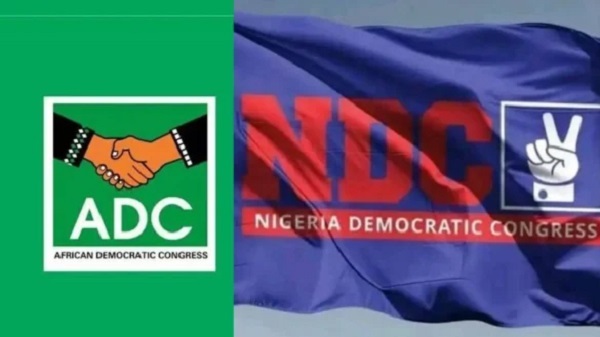
A chieftain of the National Democratic Congress (NDC), Mazi Nnamdi Dickson-Iroegbu, has condemned the Federal High Court ruling against the African Democratic Congress (ADC), warning the Tinubu-led administration against actions capable of undermining Nigeria’s democracy ahead of the 2027 general elections.
In a statement made available to The News Chronicle on Thursday, Dickson-Iroegbu, while acknowledging the authority of the judiciary, urged the courts to exercise caution and remain conscious of their constitutional and historic responsibility to strengthen democracy rather than fuel political instability.
He argued that the circumstances surrounding the ruling demand serious introspection, warning that judicial decisions perceived as undermining democratic participation could erode public confidence in the judiciary and worsen political tensions.
With political activities gradually gathering momentum ahead of the 2027 elections, the NDC chieftain cautioned against what he described as actions capable of creating the impression of political persecution, selective enforcement of the law and judicial overreach.
He stressed that democracy could not thrive where political expression is restricted, credible competition weakened and opposition parties subjected to intimidation.
In a strongly worded warning to the Tinubu administration, Dickson-Iroegbu declared that “enough is enough”, urging the Federal Government to desist from actions capable of further destabilising the country’s already fragile democratic environment.
He alleged that attempts to constrain opposition forces through intimidation, harassment, legal pressure or other destabilising tactics would neither silence Nigerians nor weaken the resolve of opposition parties.
“Such actions will only deepen public anger, harden opposition resolve and worsen the legitimacy crisis Nigeria can ill afford,” he warned.
The NDC chieftain further rejected what he described as the use of institutional pressure and coercion to sustain political power, insisting that political parties should be allowed to compete based on their ideas, organisation and popular support rather than their influence over state institutions.
Describing the moment as critical to Nigeria’s democratic future, Dickson-Iroegbu called on all arms of government, particularly the judiciary, to uphold independence, integrity and restraint.
He maintained that democracy would only flourish when the government respects the will of the people and creates an environment where political competition is free, fair and devoid of intimidation.
He also called on Nigerians, civil society organisations, political stakeholders and democratic forces to remain vigilant, united and committed to protecting the country’s democratic future.
“We will not be intimidated. We will not be distracted, and we will not surrender Nigeria’s democratic future to political manipulation,” he declared.


