

Political relationships are built on trust, mutual understanding and, most importantly, agreements that must be honoured. In politics, agreements are not merely words exchanged for convenience; they represent commitments, shared interests and the foundation of lasting partnerships. The North understands the value of such commitments and the importance of standing by those who have demonstrated genuine partnership, trust and commitment to its people.
The relationship between Northern and Southern Nigeria has historically been shaped by political understanding, negotiations, alliances and the informal principle of rotational power. As the country approaches the 2027 general election, it is important for Nigerians to reflect on the political arrangements that have helped sustain national cooperation and the need to preserve mutual trust among the country’s geopolitical zones.
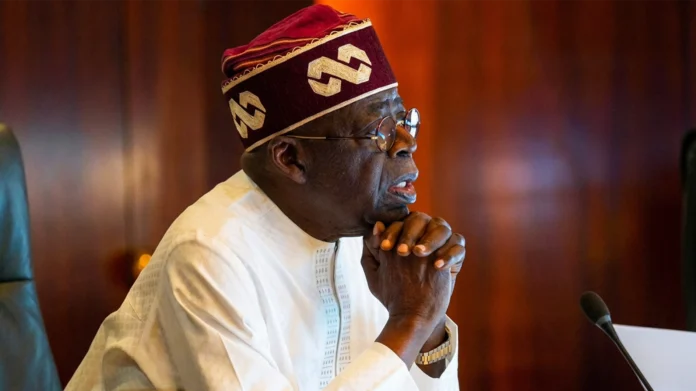
The North completed eight years under the late President Muhammadu Buhari (2015–2023), while the South assumed the presidency in 2023 under President Asiwaju Bola Ahmed Tinubu, GCFR. Although presidential zoning is not a constitutional requirement, it has remained an important political consideration in Nigeria’s democratic experience. The question of continuity, therefore, deserves serious consideration, particularly when political relationships and long-standing alliances are at stake.
Historical records provide an interesting perspective on this political understanding. In 2007, following President Olusegun Obasanjo’s eight years in office, the major presidential contenders included Northern politicians Umaru Musa Yar’Adua of the PDP and Atiku Abubakar of the Action Congress (AC). In 2011, following Yar’Adua’s death and Goodluck Jonathan’s assumption of office, the political contest featured Jonathan, Muhammadu Buhari of the CPC, Nuhu Ribadu of the ACN and Ibrahim Shekarau of the ANPP.
In 2019, Buhari sought re-election after completing his first four years, with Atiku emerging as his principal challenger. These elections demonstrate that regional considerations, party arrangements and political alliances have repeatedly influenced presidential contests. However, zoning has never been an absolute constitutional restriction on any Nigerian’s right to contest.
One significant aspect of Tinubu’s political history that deserves recognition is his contribution to providing political platforms for prominent Northern politicians. In 2007, the Action Congress provided the platform on which former Vice President Atiku Abubakar contested the presidential election after his departure from the PDP. In 2011, the Action Congress of Nigeria (ACN), which emerged from the Action Congress, presented Mallam Nuhu Ribadu as its presidential candidate.
These developments demonstrated the willingness of Tinubu’s political platform to accommodate influential Northern political figures and provide them with opportunities to participate in national leadership contests. Subsequently, Tinubu became one of the principal architects of the historic 2013 merger involving the ACN, CPC, ANPP and other political interests that produced the All Progressives Congress. That merger ultimately provided the platform through which the late President Muhammadu Buhari won the presidency in 2015.
The relationship between Tinubu and the late President Buhari also provides an important illustration of their political partnership. In 2018, President Buhari specifically assigned Tinubu the responsibility of leading reconciliation, consultation and confidence-building efforts within the APC following internal disagreements. In January 2019, Buhari appointed Tinubu co-chairman of his presidential campaign council and publicly handed him responsibility for leading the re-election campaign.
This was a significant demonstration of the confidence Buhari placed in Tinubu’s political experience and organisational capacity. Despite disagreements within the APC and opposition from some Northern political groups towards Buhari’s second-term ambition, Tinubu remained part of the political structure supporting the president’s re-election. His role was not merely symbolic; Buhari expressly entrusted him with coordinating the campaign.
Beyond political alliances, the Tinubu administration’s interventions in Northern Nigeria deserve examination through specific projects and their implementation status. These include the Abuja–Kaduna–Zaria–Kano Superhighway, the Kano–Maiduguri Road reconstruction, the Sokoto–Badagry Superhighway, the Zaria–Hunkuyi–Daya Road rehabilitation and the 700-kilometre Akwanga–Jos–Bauchi–Gombe–Biu–
Other interventions include the reconstructed Yakasai–Badume–Damargu–Marken Zalli roads in Kano, the Jimeta Bridge in Adamawa and the Dikwa–Gamboru–Ngala Road project in Borno. These investments have implications for agricultural transportation, commercial activities, connectivity and regional integration. It is equally important to distinguish completed sections from projects still under construction or at the commencement stage when assessing their impact.
Another important consideration is Northern representation within the Federal Government. Vice President Kashim Shettima from Borno State occupies the second-highest constitutional office in the country. Other prominent Northerners serving in strategic positions include Mallam Nuhu Ribadu as National Security Adviser, General Christopher Musa as Minister of Defence, Senator Abubakar Kyari as Minister of Agriculture and Food Security, Senator Abubakar Atiku Bagudu as Minister of Budget and Economic Planning, Professor Muhammad Ali Pate as Coordinating Minister of Health and Social Welfare, and Ahmed Musa Dangiwa as Minister of Housing and Urban Development.
These appointments reflect the participation of Northern political and professional figures in the administration’s executive structure. Furthermore, Kaduna State Governor Senator Uba Sani publicly acknowledged the Federal Government’s interventions in his state, stating on 25 October 2026: “No leader in the history of Nigeria has supported subnational governments as you have done, Mr President.” He specifically referenced federal support for infrastructure, education, agriculture and economic development.
As 2027 approaches, the debate should therefore extend beyond personalities and political competition to the substance of Nigeria’s national alliances, the record of successive administrations and the future of regional cooperation. The major opposition contenders, including former Vice President Atiku Abubakar of the ADC, former Anambra State Governor Peter Obi of the NDC and Oyo State Governor Seyi Makinde of the APM, bring their own political histories and governing experiences to the contest. Their proposals deserve the same scrutiny as those of the incumbent.
For the North, the important questions include what has been achieved, what remains unfinished, how political commitments will be sustained and what each candidate proposes for the region’s security, infrastructure, agriculture, education and economic opportunities. The North’s constitutional right to participate in the presidential contest remains unquestionable, but so does the importance of evaluating the consequences of political decisions for national unity and the continuity of established alliances.
The history of Nigeria’s political development teaches us that no region can achieve sustainable peace, stability and prosperity in isolation. From the First Republic, when the Northern People’s Congress (NPC) entered into a governing alliance with the National Council of Nigerian Citizens (NCNC), to subsequent political arrangements that brought different regions and political interests together, Nigeria’s progress has always depended on dialogue, mutual respect, accommodation and strategic partnerships.
These alliances were not necessarily built on identical political ideologies or regional interests, but on the understanding that national stability requires cooperation and shared responsibility. The political experiences of the First Republic, including the eventual breakdown of the NPC–NCNC coalition, also remind us that alliances must be sustained by trust, fairness and a genuine commitment to national unity. This is why the relationship between President Asiwaju Bola Ahmed Tinubu and the North should be viewed beyond the calculations of political elites. It should be understood within the broader context of national integration, political accommodation and the future of our country.
What the North must never forget is the importance of political agreements, strategic partnerships and the opportunities that come with being part of a government that recognises the value of national inclusion. President Tinubu’s emergence in 2023 was a product of a broad political coalition that cut across regional and political boundaries, with significant Northern political support. That partnership should not be reduced to the personal interests of a few politicians, nor should the North be persuaded to abandon a strategic national relationship because of temporary political disagreements or narratives designed to create regional resentment.
Let us be honest: the North continues to confront deep-rooted poverty, insecurity, unemployment, educational disadvantages, inadequate healthcare and enormous infrastructure deficits. These challenges did not begin with President Tinubu, and it would be politically dishonest to suggest that they can be resolved by changing political alliances every election cycle. Rather than portraying the President as a Northern problem, we should demand that his administration becomes an important part of the solution.
The ongoing economic reforms, increased federal allocations to states and local governments, infrastructure investments and regional development initiatives must translate into measurable improvements in the lives of ordinary Northerners. Equally, the Northern State Governors must seek political alliances with the Federal government and must be held accountable for delivering lasting solutions to insecurity, poverty and economic exclusion. The North deserves results, not political sympathy; development, not endless rhetoric.
As a young Northerner, I write not merely as a supporter of a political administration but as someone who represents the future generation and the next layer of leadership that must inherit the consequences of today’s political decisions. We cannot allow ourselves to be cowed into believing that supporting President Tinubu is somehow an act against Northern interests. Our generation must rise above emotional political narratives, regional sentiments and the narrow calculations of political actors whose immediate interests may not necessarily reflect the aspirations of millions of Northern youths.
We must ask a more important question: which political direction offers the North a stronger opportunity to confront its historical challenges, rebuild its economy, secure its communities, educate its children, empower its young people and connect its rural communities to national prosperity? My conviction is that the North should consolidate its political partnership with President Tinubu, engage his administration constructively and demand more tangible development in return for its support.
The argument for a Northern block vote in 2027 should therefore rest on strategic partnership, national stability, continuity of engagement and a clear commitment to addressing the region’s developmental priorities. It must not be a blank cheque, but a deliberate political decision anchored on the future of our people. The North must think beyond today’s political officeholders and consider the generations yet unborn. President Tinubu should not be seen as the North’s problem; he should be challenged, supported and held accountable as a partner in finding lasting solutions to the North’s problems. That is why the North must remember, and that is why our generation must not forget.
Danaudi, Public Affairs Analyst Writes From Bauchi Via danaudicomrade@gmail.com


