

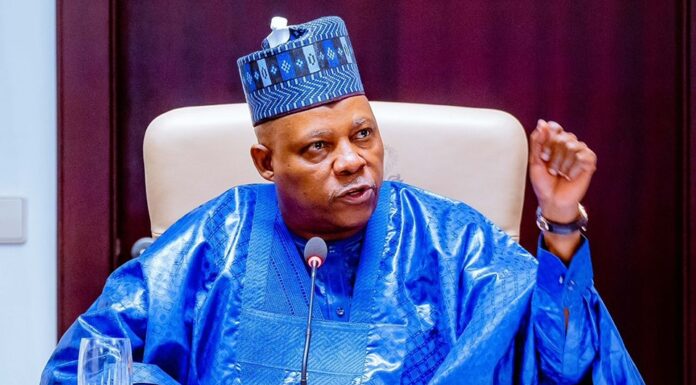
Vice-President Kashim Shettima has proposed an annual review of states’ electricity markets to assess the implementation of the Electricity Act 2023 and identify challenges affecting the reforms.
Shettima, represented by the Deputy Chief of Staff to the President, Senator Ibrahim Hadejia, made the proposal on Wednesday at the National Stakeholders’ Workshop on the Electricity Act 2023 in Abuja.
The workshop, organised under the theme “Empowering the States: Reviewing the Electricity Act 2023,” focused on strengthening the implementation of the law and improving electricity supply across the country.
The vice-president proposed a National Electricity Reform Review and Implementation Framework involving the Nigerian Electricity Regulatory Commission (NERC), the Federal Ministry of Power, the Nigeria Governors’ Forum (NGF) and state electricity regulatory institutions.
He said the annual review would help identify regulatory bottlenecks, assess progress and accelerate investment in the power sector.
Shettima urged states yet to establish electricity regulatory commissions to begin the necessary legislative and institutional processes without delay.
He also called on states that had made progress to share their experiences and technical expertise with others, warning against establishing regulatory bodies that existed only on paper.
“The success of the reform should be measured not by the number of commissions established but by the electricity generated, investments attracted, jobs created, reliability of supply and improvements in the lives of our citizens,” he said.
On investment, Shettima said the government alone could not provide the capital, technology and expertise required to transform the sector.
He urged state governments to adopt transparent licensing procedures, predictable regulations and commercially viable market arrangements to attract private investors.
He also called on states to identify their energy resources and develop viable projects capable of expanding electricity access, creating jobs and stimulating economic growth.
The vice-president stressed that consumer protection must remain central to the reforms, with regulators ensuring fair billing, reliable services, effective complaint-resolution mechanisms and accountability among electricity operators.
“The average Nigerian is not interested in the complexities of electricity regulation. He wants electricity that works,” he said.
Shettima urged participants to develop practical recommendations for implementing the proposed framework, strengthening state regulatory institutions and establishing clear timelines for monitoring progress.
He reaffirmed the Federal Government’s commitment to making electricity more accessible, reliable and affordable, describing dependable power supply as essential to building a productive and competitive economy.


