

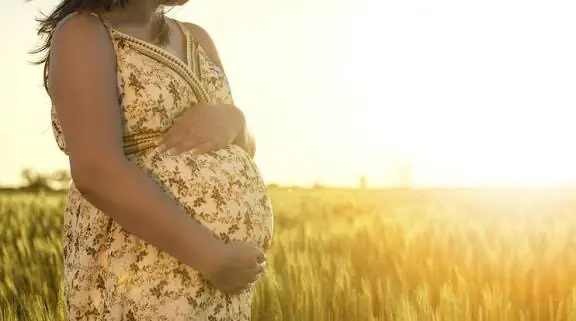
UN Climate Change Executive Secretary Simon Stiell has warned that extreme heat is emerging as a potentially fatal threat to pregnant women, newborns and maternal healthcare systems as climate change intensifies.
Stiell gave the warning on Monday at the Birthright event in Suva, Fiji, where he said rising temperatures were increasingly associated with pregnancy complications, premature births, stillbirths and low birth weight.
He described pregnancy and childbirth as a new “faultline” in the global climate crisis, warning that the consequences could be fatal.
“The picture is clear and very disturbing: as extreme heat worsens, pregnancy and birth are now a new faultline in the global climate crisis, and one which is potentially fatal,” he said.
The News Agency of Nigeria reports that Stiell’s remarks followed a new survey commissioned by Wellcome involving maternal health professionals across five countries and five continents.
The survey revealed growing concern over the effects of extreme heat on maternal, fetal and newborn health.
According to the findings cited by Stiell, 73 percent of healthcare professionals said heat-related cases or complications had increased over the past five years.
Similarly, 81 percent said they were concerned or very concerned that extreme heat would increasingly endanger maternal, fetal and newborn health without stronger intervention.
The survey also found that 98 percent of respondents had treated a pregnant woman whose health they believed had been affected by extreme heat, while 99 percent had cared for a baby affected by excessive heat.
Stiell said the figures represented more than statistics, stressing that they reflected the growing human cost of extreme temperatures for expectant mothers, newborns, families and healthcare workers.
He noted that people living in poorly ventilated homes, working outdoors, traveling long distances to healthcare facilities or relying on hospitals without reliable water, electricity or cooling systems could not be adequately protected through advice alone.
“‘Staying cool’ is simply not an option when there is no cool place to go,” he said.
The UN official warned that climate change could further deepen existing inequalities in access to safe pregnancy and childbirth, particularly among women in vulnerable communities and countries that have contributed relatively little to global warming.
“A safe birth is already too often shaped by geography, income and access to care. Without action, extreme heat will widen that injustice,” he said.
Stiell called for maternal and newborn health to be incorporated into climate adaptation strategies, heat-health action plans and broader climate policies.
He said issues that were not explicitly included in policy plans often failed to receive adequate funding, monitoring and protection.
“What is not named in a plan is too often not funded, not measured and not protected,” he said.
He identified three key priorities: integrating pregnancy and newborn care into climate adaptation and heat-health plans; translating evidence into practical protection; and strengthening data collection and analysis to identify emerging risks and determine which interventions are effective.
According to him, the measures should include climate-resilient healthcare facilities, reliable water and electricity supplies, trained health workers, clearer medical guidance, heat alerts and health systems capable of responding before extreme heat emergencies occur.
Stiell also called for improved data to identify areas where climate-related maternal and newborn health risks were rising, communities facing the greatest exposure and where financing and technology were most urgently required.
“Harm that is not counted is too easily ignored,” he said.
He called for the delivery of the tripling of adaptation finance agreed at COP30 in Brazil and urged governments and the global financial system to work towards mobilizing $1.3 trillion annually for developing countries.
The funds, he said, were essential to strengthening systemic resilience and accelerating the transition to clean, affordable and secure energy needed to sustain effective health systems.
Stiell welcomed the Birthright Campaign by Wellcome and the World Health Organization’s work on maternal health and climate change, saying both initiatives could help close existing gaps in protection.
He also cited the Belém Gender Action Plan and Belém Adaptation Indicators as mechanisms capable of strengthening gender-responsive climate action, data collection, financing, participation and progress tracking towards climate-resilient health services.
The UN climate chief stressed that protecting pregnant women and newborns from extreme heat should be regarded as a basic human protection issue rather than an unavoidable consequence of climate change.
READ ALSO: Otti Orders Second Phase of Renovation at Abia NYSC Orientation Camp
“A changing climate must never be accepted as a reason pregnancy and birth become less safe.
“A newborn’s healthy start must never depend on a family’s ability to escape the heat,” he said.
Stiell urged governments and other stakeholders to act before climate-related impacts become entrenched in maternity wards and vulnerable communities.


