

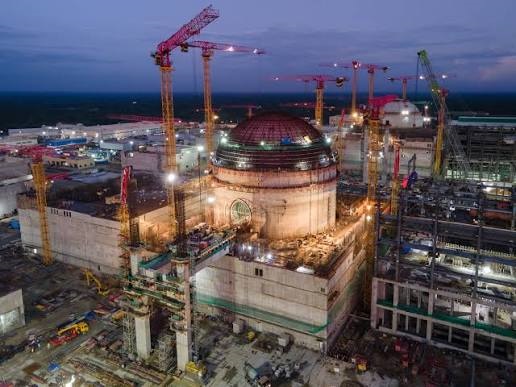
Global nuclear power capacity could more than triple by 2060 as countries increasingly turn to nuclear energy to meet rising electricity demand and strengthen energy security, the International Atomic Energy Agency (IAEA) has said.
IAEA Director General Rafael Grossi disclosed this in Vienna at the agency’s 70th General Conference, where he highlighted the growing role of nuclear energy in the global transition towards more secure and reliable power systems.
Grossi said renewed interest in nuclear power was extending beyond traditional electricity needs, with emerging sectors such as artificial intelligence (AI) data centers also driving demand for reliable energy.
According to him, the rapid growth of AI and its increasing electricity requirements could create new opportunities for nuclear power as countries seek dependable energy sources to support large-scale digital infrastructure.
He also identified the maritime shipping sector as another potential area for nuclear energy, noting that shipping accounts for about 80 percent of global trade.
The IAEA chief said there was growing optimism about the peaceful applications of nuclear technology, particularly among developing countries that see nuclear energy as an important driver of economic development.
He said the agency was supporting such countries through training, capacity building and technology transfer to expand access to nuclear science and technology.
“Many developing countries consider nuclear energy an essential element of their economic development,” Grossi said, stressing the need for a level playing field that would allow countries to benefit from advances in nuclear technology.
Beyond power generation, he said the IAEA’s work was supporting development in areas including cancer treatment, the combat of zoonotic diseases, and environmental protection.
Grossi, however, stressed that the expansion of nuclear energy must be accompanied by strong international cooperation, safety measures and effective safeguards.
He said the agency remained focused on nuclear safety, including efforts to prevent a nuclear accident at the Zaporizhzhia nuclear power plant in Ukraine.
He also acknowledged ongoing challenges surrounding Iran’s nuclear program, stressing that cooperation and verification remained essential to providing assurances about its peaceful nature.
UN Secretary-General Antonio Guterres, in a statement delivered on his behalf by Monica Juma, Director-General of the United Nations Office at Vienna, said the world was “on the cusp of a revolution in nuclear power generation”.
Guterres said the anticipated expansion of nuclear power would require careful management and monitoring, particularly amid increasing attacks on nuclear facilities and concerns over nuclear proliferation.
He urged member states to support the IAEA’s work and provide predictable and sustainable funding for its Technical Cooperation Fund, which helps developing countries access nuclear science and technology.
READ ALSO: Dangote: Call Me ‘Wealthiest,’ Not ‘Richest’ in Africa
The IAEA General Conference, the agency’s main policymaking body, brings together member states and thousands of participants annually to deliberate on nuclear energy, safety, security and the peaceful applications of nuclear technology.
About 4,000 participants are expected to attend this year’s conference throughout the week.


 has said.)