

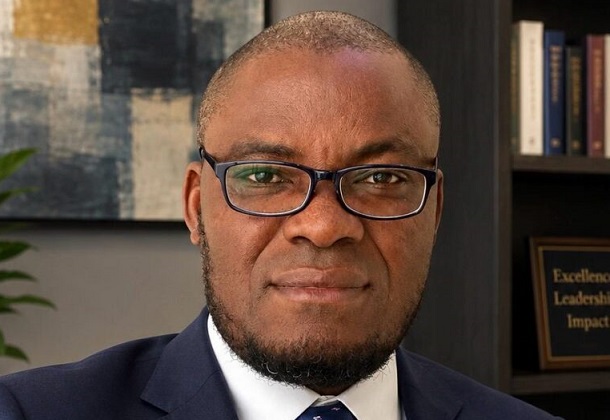
A financial expert, Dr Tunde Awesu, has said the N930 billion decline in banking system liquidity has not significantly pushed up short-term interest rates, indicating that the financial system remains sufficiently liquid.
Awesu, President of the Metropolitan School of Business and Entrepreneurship, made this known in an interview with the News Agency of Nigeria in Lagos on Wednesday while assessing recent liquidity tightening in the banking system.
He said the development should be viewed in the context of the significant liquidity injection recorded in August following the maturity of Treasury instruments.
Data from the Central Bank of Nigeria showed that N2.48 trillion was injected into the banking system on August 11 following the maturity of Open Market Operations securities, raising system liquidity to N6.81 trillion.
However, recent money market data showed that liquidity subsequently declined by N930 billion to N3.66 trillion following the settlement of a Treasury Bills auction.

The decline in liquidity led to a marginal two-basis-point increase in the overnight lending rate, which rose from 22.18 percent to 22.20 percent. The Open Buy Back rate, however, remained unchanged at 22 percent.
Awesu said the modest movement in short-term interest rates suggested that the liquidity withdrawal represented a correction of excess liquidity rather than an acute funding squeeze.
He said the CBN’s earlier liquidity injection through the retirement of Treasury instruments had significantly increased liquidity in the money market, adding that the recent operation was aimed at correcting the excess.
According to him, the two-basis-point movement in the overnight rate was insignificant compared with the volume of liquidity withdrawn.
Awesu said the movement indicated that although the amount of money withdrawn from the system was substantial, liquidity remained sufficient to prevent a significant impact on overnight rates.
He added that the unchanged Open Buy Back rate further reinforced the view that liquidity conditions in the banking system remained relatively comfortable.
READ ALSO: 2027: ECOWAS Moves to Fast-Track Launch of ECO Single Currency
The financial expert said the CBN’s Open Market Operations were currently achieving their objectives of managing liquidity, stabilising interest rates and moderating inflation.
He added that the latest liquidity tightening was unlikely to immediately result in higher borrowing costs for businesses, investors and the general public, particularly as the Monetary Policy Rate remained unchanged.
Awesu, however, warned that sustained liquidity tightening through OMO could eventually push short-term interest rates higher and increase borrowing costs.
He said if the CBN continued to tighten liquidity through OMO, the resulting increase in interest rates could translate into higher borrowing costs for businesses and investors.
The CBN continues to use OMO and Treasury Bills operations as part of its liquidity management framework, with recent auctions attracting strong demand from investors.


