

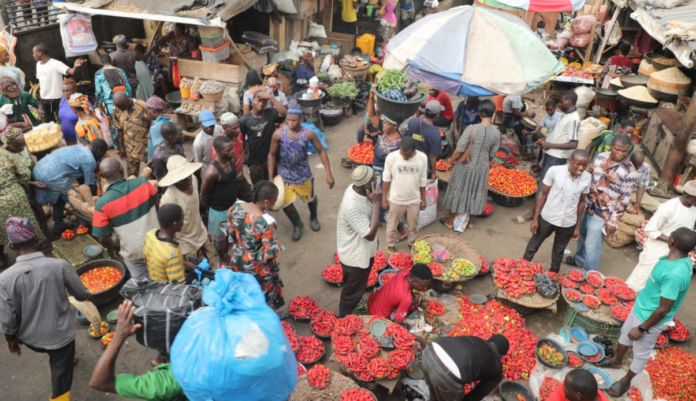
Nigeria’s improving economic figures are yet to translate into better living conditions for millions of households, as high prices, weak incomes and limited job opportunities continue to deepen financial pressure across the country.
The combination of inflation, naira depreciation, underemployment and rising costs of basic services is forcing many families to cut spending, use savings and sell productive assets simply to meet daily needs.
The News Chronicle reports that economists are increasingly concerned that Nigeria’s middle class is shrinking, with many workers now vulnerable to falling into poverty after a single major financial shock.
The problem is also affecting businesses as weak consumer purchasing power limits demand and discourages fresh investment. The situation has contributed to the exit or downsizing of some international companies operating in Nigeria.
Although inflation has moderated from its peak levels, household incomes have been unable to significantly advance despite the rising cost of food, transport, housing, healthcare and education.
Nigeria’s poverty challenge is especially acute in rural communities, where the lack of infrastructure, access to finance and links to markets continues to curtail economic opportunities.
Economists say job creation schemes, improved infrastructural development, appropriate social protection and pro-productivity policies are required for the country’s economic growth to trickle down to ordinary Nigerians.
Without such measures, analysts warn, the country could fall into a poverty trap in which generations live in poverty despite economic growth.


