

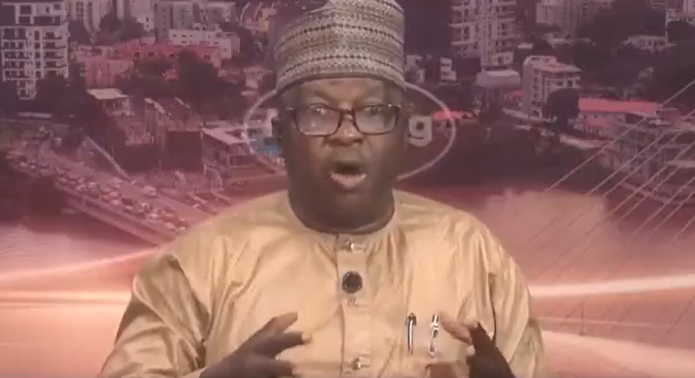
A former spokesman of the Nigerian Air Force, Group Captain Sadeeq Shehu (retd.), has described President Bola Tinubu’s approval for the expansion of the Nigerian Army from eight to 12 divisions as a commendable initiative but warned that the timeline for implementing the plan is unrealistic.
Shehu, in an interview on ARISE TV monitored by The News Chronicle, said the creation of additional military divisions could strengthen the country’s security architecture, but establishing fully operational and combat-ready formations within a few months was practically impossible.
President Tinubu had approved the expansion of the Nigerian Army from eight to 12 divisions as part of efforts to enhance the military’s operational capacity and address Nigeria’s growing security challenges.
The approval was announced on Thursday in a statement by the President’s Special Adviser on Information and Strategy, Bayo Onanuga.
Reacting to the development, Shehu said although the proposal reflected good intentions, the timeline announced by the Federal Government did not align with military realities.
“With due respect, it is a very good plan, but the timeline is not realistic,” he said.

“We were told that the first three divisions will come on stream by the end of September, which is just about two months away, while the last one is expected by December.
“It is very easy by presidential fiat to announce the establishment of a division, but to have a fully operational division—or even a brigade or battalion—within three to five months is barely possible.”
According to him, appointing a General Officer Commanding and setting up a divisional headquarters does not automatically translate into a combat-ready military formation.
READ ALSO: Tinubu Expands Nigerian Army to 12 Divisions, Approves Recruitment of 28,000 Troops
The retired officer also questioned how the proposed recruitment of 28,000 personnel would be distributed across the four new divisions.
He explained that a standard military division typically consists of between 15,000 and 20,000 officers and soldiers, making it unrealistic to rely solely on the proposed recruitment to staff the new formations.
“When you are talking about a division, you are talking about between 15,000 and 20,000 officers and men. So, if the 28,000 personnel are expected to populate four new divisions, that is unrealistic,” he said.
Shehu suggested that the government’s intention might instead be to reorganise existing military units by transferring personnel from current formations to the new divisions.
However, he warned that such a move could weaken existing brigades and battalions if they were already operating below their authorised strength.
“If existing units are already below their required manpower and equipment levels, moving personnel to create new divisions will only dilute their operational effectiveness,” he said.
He urged the Federal Government to first conduct a comprehensive assessment of the country’s security challenges before embarking on structural reforms within the military.
According to him, such an assessment should determine whether the Armed Forces require more personnel, improved equipment, better serviceability of existing assets or additional formations.
“We should first analyse the threats and identify where the existing gaps are. Is the problem manpower? Is it equipment? Is it serviceability? Only then can we determine whether we need more divisions or simply need to strengthen existing brigades and battalions,” he said.
Shehu also noted that the Nigerian Army already had several brigades approved under its 2016 Order of Battle that had yet to become operational.
He argued that priority should be given to activating and adequately equipping those formations before creating new divisions.
The retired Air Force officer further raised concerns about funding, noting that the Army reportedly received less than five per cent of its budget allocation for equipment this year.
He stressed that military formations require far more than headquarters buildings and commanding officers to function effectively.
Shehu maintained that while the expansion plan reflected the President’s commitment to improving national security, its success would depend on realistic planning, adequate funding and proper implementation.


