

The European Union (EU) and the Gulf Cooperation Council (GCC) have denounced what they described as unwarranted Iranian attacks on Gulf countries, warning that such actions pose a serious threat to regional peace and global security.
Both blocs urged Tehran to halt the attacks without delay. Their position was outlined in a joint communiqué issued following an emergency virtual meeting of EU and GCC foreign ministers on Thursday.
The statement was signed by Mr. Anouar El Anouni, spokesperson for EU Foreign Affairs and Security Policy.
During the meeting, the ministers reviewed the worsening Middle East crisis, particularly Iran’s attacks on GCC member states.
They reiterated the significance of the EU-GCC strategic partnership, originally founded under the 1988 Cooperation Agreement and later reinforced at the EU-GCC Brussels Summit in October 2024.
Bahrain’s Minister of Foreign Affairs, Dr. Abdullatif Al Zayani, who currently chairs the GCC Ministerial Council, led the Gulf delegation.
Also in attendance were the GCC Secretary-General, Jassim Mohammed Al-Budaiwi, alongside the foreign ministers of GCC member countries.
Representing the EU were the High Representative for Foreign Affairs and Security Policy, Kaja Kallas, European Commission Vice-President Dubravka Suica, and foreign ministers from EU member states.
The ministers strongly condemned the Iranian attacks on GCC territories and expressed the EU’s solidarity with the Gulf states.
They reaffirmed their collective commitment to maintaining stability in the region and stressed the need to protect civilians while ensuring full adherence to international law, including international humanitarian law and the United Nations Charter.
They also called on Iran to scale back its nuclear and ballistic missile programmes and desist from activities capable of destabilising both the Middle East and Europe.
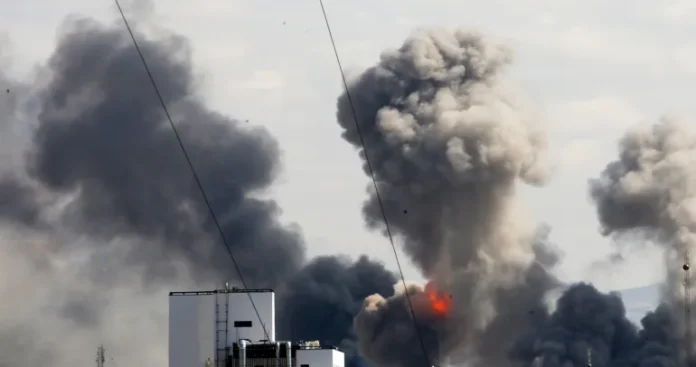
The ministers voiced concern about the destruction caused by recent Iranian strikes targeting civilian infrastructure such as oil facilities, service centres and residential areas.
According to them, the attacks resulted in significant material losses and posed a direct threat to civilian lives.
They noted that diplomatic engagements had been ongoing between the EU and GCC countries before the attacks, and highlighted the commitment of Gulf states not to allow their territories to be used as launchpads for assaults against Iran.
Despite the tension, the ministers reaffirmed their dedication to resolving the crisis through dialogue and diplomacy, while commending Oman for playing a constructive mediating role.
They also recalled that GCC member states are entitled under Article 51 of the UN Charter to defend themselves, either individually or collectively, in the event of armed aggression.
As such, the ministers said the Gulf countries reserve the right to take necessary measures to safeguard their territories, citizens and residents.
They emphasised the responsibility of the UN Security Council in preserving international peace and security and agreed to intensify diplomatic efforts aimed at preventing Iran from obtaining nuclear weapons.
The ministers further stressed the importance of halting the spread of ballistic missiles, drones and other threatening technologies.
They also underscored the need to protect regional airspace, critical maritime routes and the freedom of navigation, particularly around the Strait of Hormuz and Bab-el-Mandeb.
According to them, safeguarding supply chains and global energy markets remains essential for worldwide economic stability.
The ministers acknowledged the contributions of EU maritime operations ASPIDES and ATALANTA in securing major waterways and minimising disruptions to international trade routes.
The EU also expressed appreciation to GCC countries for their support in assisting European nationals in the region and pledged continued collaboration to ensure the safe evacuation of their citizens.
The GCC is made up of Bahrain, Kuwait, Oman, Qatar, Saudi Arabia and the United Arab Emirates.
These countries remain important markets for EU agricultural exports, while the EU mainly supplies products such as cereal preparations, cigars and cigarettes to the Gulf bloc.


