

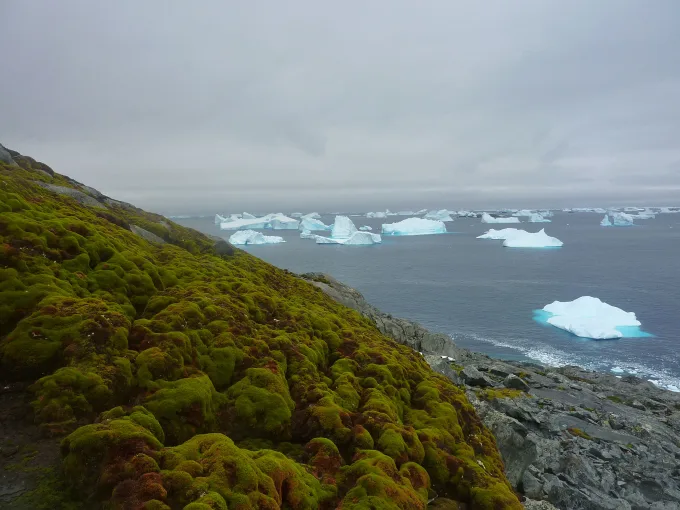
Parts of Antarctica, the coldest place on Earth, are seeing a surprising transformation as plant life is spreading rapidly due to extreme heat events, according to new research published in Nature Geoscience.
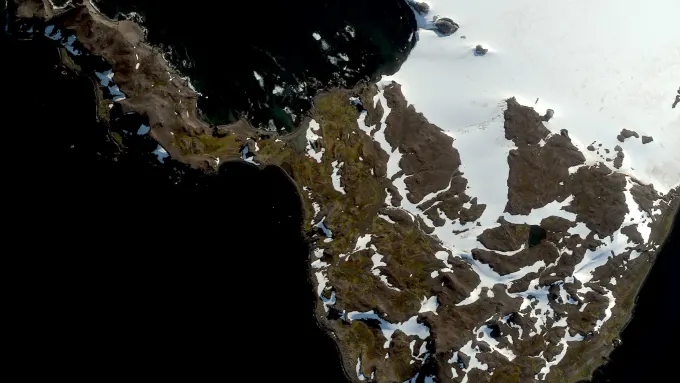
The Antarctic Peninsula, which points north toward South America, has seen vegetation levels increase more than tenfold over the past four decades, with the green cover growing from less than 0.4 square miles in 1986 to nearly 5 square miles by 2021.
Scientists attribute this shift to rising temperatures driven by human-caused climate change.
Tom Roland
“This iconic landscape could be changed forever,” said Olly Bartlett, a senior lecturer in geography at the University of Hertfordshire, one of the study’s authors. Bartlett noted that the greening rate accelerated by over 30% between 2016 and 2021, coinciding with record low sea-ice levels.
Thomas Roland, an environmental scientist at the University of Exeter, who co-authored the study, pointed out the alarming nature of the findings.
“Our findings confirm that the influence of anthropogenic climate change has no limit in its reach,” Roland said.
“Even on the Antarctic Peninsula – this most extreme, remote, and isolated wilderness – the landscape is changing, and these effects are visible from space.”
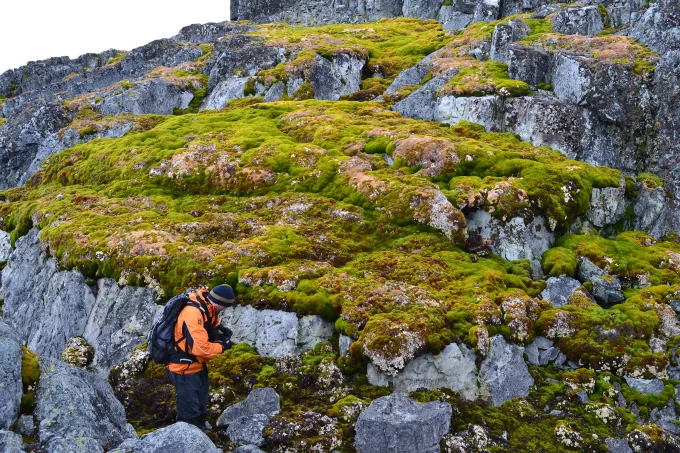
The greening is primarily caused by mosses, but Matthew Davey, a plant ecologist at the Scottish Association for Marine Science, suggests there could be more.
“We know that there are also large areas of lichens, grass, and green and red snow algae contributing to the vegetation area in Antarctica,” he said.
Davey, who was not involved in the study, added that while the overall area remains small, the percentage increase is striking.
The region, which has been warming much faster than the global average, recently experienced record-breaking heat.
In March 2022, temperatures in some areas rose by as much as 70 degrees Fahrenheit above normal, the most extreme temperature anomalies ever recorded on the continent.
This past July, parts of Antarctica also saw temperatures soar 50 degrees above average, further fueling plant growth.
Scientists warn that as the vegetation cover increases, the Antarctic Peninsula’s ability to reflect sunlight decreases, absorbing more heat and accelerating local warming. Bartlett cautioned that “this could help further accelerate the growth of plant life as the climate continues to warm.”
The study’s authors stress the need for more research to fully understand how these changes will affect Antarctica’s ecosystems and wildlife.
Roland warned that with ongoing warming, “we could see fundamental changes to the biology and landscape of this iconic and vulnerable region.”
Dan Charman
As Antarctica continues to warm, the once entirely frozen landscape may see even more dramatic changes, leaving scientists and conservationists alarmed about the future of the planet’s southernmost frontier.


