

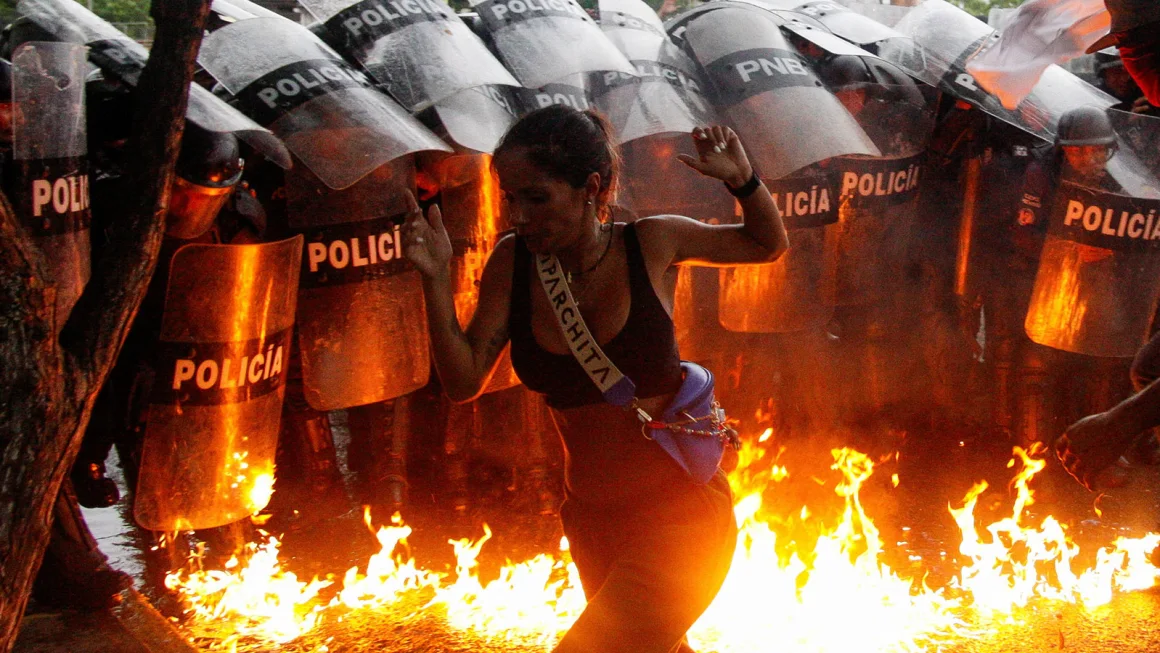
Mass protests have swept across Venezuela after the National Electoral Council (CNE) declared President Nicolás Maduro the winner of the presidential election, securing another term in office.
The announcement, made shortly after midnight, claimed Maduro received 51.2% of the votes with 80% of ballots counted. However, opposition leaders, including candidate Edmundo González, have denounced the results as fraudulent, asserting that González won with 70% of the vote.
However, this announcement has ignited widespread demonstrations. In Caracas, thousands of protesters took to the streets, banging pots and pans and demanding an immediate audit of the vote count.
International reactions have been swift with the United States, the United Nations, and several Latin American countries voicing serious concerns about the election’s legitimacy. US Secretary of State Antony Blinken emphasized the need for a fair and transparent counting of votes, urging Venezuelan authorities to release detailed polling data.
The UN and the Carter Center, the only independent election observers allowed in the country, have also called for the timely publication of results. However, the Carter Center has since withdrawn its staff and postponed its report.
Amid these tensions, Maduro’s government has accused opposition leaders of orchestrating a cyberattack to manipulate voting data, a claim that remains unsubstantiated. The government has also expelled diplomatic staff from several countries that refused to recognize the election results.
With Maduro poised to begin another six-year term, the political and economic crisis in Venezuela shows no signs of abating. Many Venezuelans, facing continued instability, are considering emigration, contributing to a growing exodus that has seen millions leave the country since 2014.
As protests continue and international pressure mounts, the future of Venezuela remains uncertain


