

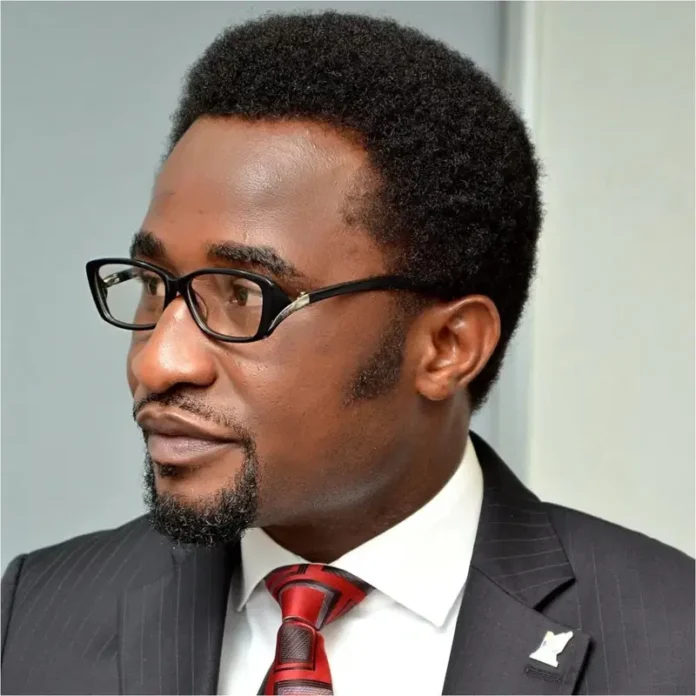
Political analyst Henry Shield has claimed that President Bola Ahmed Tinubu may struggle to match the votes he secured in the 2023 presidential election if the election were held under the current political climate.
Shield made the claim while discussing the 2027 presidential election, saying that his assessment was based on consultations, surveys and interactions with Nigerians from different sections of society.
According to him, a survey of 1,000 Nigerians would show that about 900 would not vote for Tinubu if the election were held today.
“We do market consultation, market surveys, we do street surveys. We go out and we engage with the people, and I can tell you, sample 1,000 Nigerians, 900 of them are not going to vote for Tinubu,” Shield said.
He challenged media organisations and other stakeholders to independently conduct a nationwide opinion poll to determine the current mood of Nigerian voters ahead of the 2027 general election.
Shield stressed that such a survey would provide a clearer indication of the president’s current level of support.
“Please don’t take my word. You are a media house. Engage people to do this for the sake of our democracy, sample just 1,000. Don’t do 1,001. Don’t do the other 9,999. Exactly 1,000,” he said.
He reiterated his prediction, saying: “Sample 1,000 opinions today in Nigeria, 900 of them are not going to vote for Tinubu.”
Tinubu won the 2023 presidential election with 8,794,726 votes, representing 36.61 per cent of the total votes cast.
Former Vice President Atiku Abubakar, who contested on the platform of the Peoples Democratic Party (PDP), came second with 6,984,520 votes, representing 29.07 per cent, while Labour Party candidate Peter Obi secured 6,101,533 votes, or 25.40 per cent.
The political landscape ahead of the 2027 presidential election has since shifted, with Atiku leaving the PDP for the African Democratic Congress (ADC), while Obi has also moved from the Labour Party to the Nigerian Democratic Congress (NDC).
The three politicians are expected to remain major figures in the 2027 presidential race, although the final shape of the contest and the level of support for each candidate will depend on evolving political alliances and voters’ preferences.
Shield’s claim, however, remains his own assessment and would require a credible, independently conducted nationwide opinion survey to establish whether it reflects the views of the wider Nigerian electorate.


