


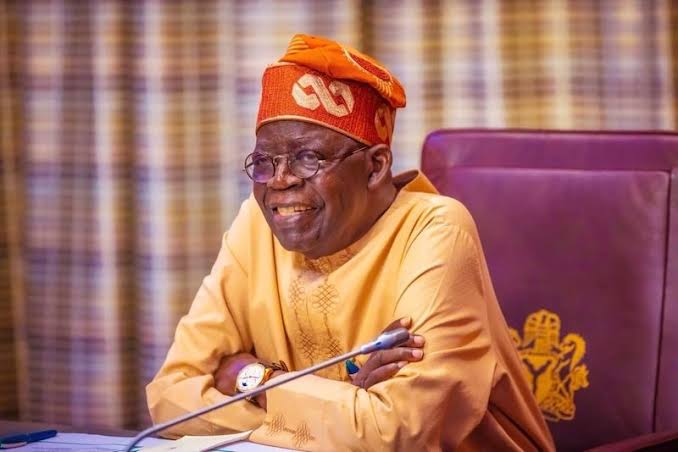
A Nigerian-American media publisher argued that President Bola Ahmed Tinubu has a considerable advantage ahead of the 2027 presidential election, citing the ruling All Progressives Congress (APC)’s extensive political structures across the country and the apparent lack of preparedness among opposition parties.
Akindana made this observation during an interview with Rudolf Okonkwo on 90MinutesAfrica, where he examined the prospects of the opposition parties, the challenges of forming a coalition against the incumbent president, the administration’s performance and the potential impact of electoral violence on voter turnout in 2027.
According to him, the constitutional requirement for winning a presidential election does not demand that a candidate secure victory in every state but requires a candidate to obtain at least 25 percent of the votes cast in at least two-thirds of the states of the federation and the Federal Capital Territory, alongside the constitutional requirement to secure the highest number of votes cast.
READ ALSO: INEC Upgrades Voting Process as BVAS Faces Test in Borno
He noted that the APC’s control of more than 32 state governments gives the ruling party a significant political advantage, as governors possess the political machinery and grassroots structures needed to mobilize voters in their states.
Akindana questioned how opposition parties intend to defeat an incumbent president without establishing effective political structures nationwide. He also expressed concern that several opposition parties lack candidates in many down-ballot elections, a situation he believes reflects their inadequate grassroots presence and organisational capacity.
On the possibility of opposition parties forming a coalition to challenge President Tinubu, the Moderator of the online platform, ChatAfrik argued that it might already be too late for such an arrangement to become sufficiently effective ahead of the 2027 election.
He explained that political parties and their candidates have different interests and ambitions, making it difficult to reconcile competing positions and establish a formidable coalition within a short period.
According to him, defeating an incumbent president requires extensive planning, negotiations, political organisation and sustained preparation, rather than hurried arrangements made only a few months before an election.
He maintained that any opposition coalition genuinely interested in defeating the ruling party should have commenced its preparations much earlier, stressing that electoral victories are built on structures and organisation established long before election day.
Commenting on campaign promises and the responsibility of elected officials to fulfill their commitments, Akindana acknowledged that politicians sometimes encounter realities in government that make it difficult to implement some of the promises made during electioneering.
However, he insisted that elected officials have a responsibility to explain such circumstances to the electorate rather than simply abandon their commitments without providing explanations.
Reacting to former Lagos State Governor Babatunde Raji Fashola’s denial that President Tinubu had promised Nigerians that they should not vote for him for a second term if he failed to provide stable electricity, Akindana suggested that Fashola’s position might have been influenced by his loyalty to the president.