


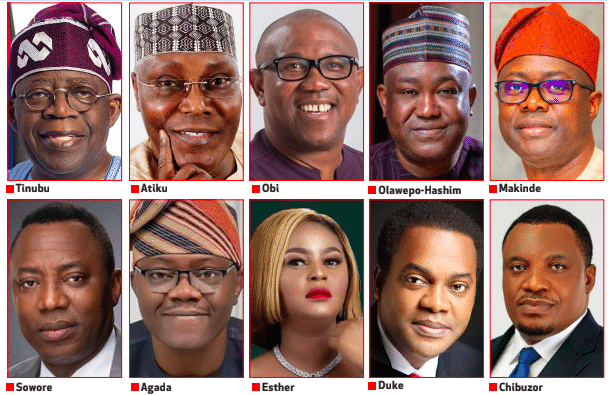
As Nigeria gradually approaches the 2027 general elections, political activities are gathering momentum, with aspirants and incumbent officeholders stepping up efforts to sell themselves to the electorate. As expected, campaign grounds are increasingly becoming arenas for grand declarations, elaborate manifestoes, political slogans and promises of a better Nigeria, sometimes degenerating into theatres of political battles.
However, amid the prevailing political theatrics, there is a fundamental distinction that should guide the conversations surrounding the elections: politicians seeking public office for the first time should campaign with achievable promises, while those seeking a second term should campaign primarily with their records of performance.
This distinction is important because the circumstances of these two categories of politicians are not the same. While a first-time candidate is asking voters to entrust him with an opportunity to demonstrate his leadership capacity, an incumbent seeking re-election is asking the electorate to renew a mandate he has already exercised. Consequently, they should not be subjected to precisely the same campaign expectations.
For first-time contestants, the campaign period offers an opportunity to communicate their vision, demonstrate an understanding of the challenges confronting their constituencies and explain how they intend to address them if elected. They have the responsibility to convince voters that their proposals are not merely attractive political slogans but achievable commitments supported by realistic strategies.
Unfortunately, Nigerian politics has developed a culture in which campaign promises sometimes appear detached from economic realities. Politicians promise uninterrupted electricity, massive employment opportunities, affordable housing, quality healthcare, improved education, better roads and an end to insecurity, often without explaining how these objectives will be achieved.
It is not that these aspirations are unnecessary. On the contrary, they represent some of the most pressing expectations of Nigerians. The problem, however, is that promising something and possessing the capacity to deliver it are two entirely different things.
A candidate seeking an elective position for the first time should therefore understand that the electorate deserves more than an impressive catalogue of intentions. Voters deserve to know the policies, resources, partnerships and institutional reforms that will support the promises being made.
For instance, a candidate promising to create jobs should explain how his proposed policies will stimulate businesses, attract investment and expand employment opportunities. Someone promising to improve education should address the challenges of inadequate infrastructure, teacher shortages, poor learning conditions and the quality of educational outcomes.
Similarly, a candidate promising affordable healthcare should explain how hospitals will be equipped, healthcare personnel recruited and essential services made accessible to ordinary Nigerians.
In essence, first-time contestants should sell possibilities backed by practical plans, not fantasies designed to generate applause at political rallies.
READ ALSO: 10 Things You Didn’t Know About Aso Rock Presidential Villa
There is nothing wrong with being ambitious. Indeed, leadership requires the ability to imagine a better society and mobilize people towards achieving it. However, ambition must be accompanied by a realistic understanding of available resources, constitutional responsibilities and the limitations of public institutions.
A candidate who promises what he cannot reasonably deliver may win an election through attractive rhetoric, but he risks beginning his administration with a credibility deficit.
Given the foregoing view, the expectation should be considerably different for incumbents seeking a second term in 2027. This is because having occupied public office for a substantial period, such politicians cannot reasonably approach the electorate as though they are newcomers seeking an opportunity to demonstrate what they can do. They have already been given that opportunity. They have exercised public authority, controlled or influenced the deployment of public resources, initiated policies and made decisions that have affected the lives of their constituents. They must therefore account for their stewardship.
For a president seeking another term, the central campaign conversation should revolve around the state of the economy, security, infrastructure, employment, education, healthcare and other critical national responsibilities. A governor seeking re-election should be prepared to present a comprehensive account of his administration’s performance in the state.
Likewise, senators and members of the House of Representatives seeking another mandate should explain the bills they have sponsored, the motions they have moved, the constituency projects they have facilitated and their contributions to legislative oversight.
The electorate should be interested in knowing what has changed since these politicians assumed office.
How many promised roads have been completed? How many schools have been rehabilitated? What improvements have occurred in healthcare delivery? How many employment opportunities have been facilitated? What measurable interventions have improved the living conditions of the people?
These are not unreasonable questions. They are legitimate demands from citizens who have entrusted politicians with public responsibilities.
Unfortunately, a recurring feature of Nigerian political campaigns is the tendency of some incumbents to return to the electorate with fresh promises without sufficiently accounting for the commitments made during their previous campaigns.
An incumbent who promised to construct roads, improve electricity, provide potable water or expand employment opportunities should not simply return four years later to make the same promises. He should present evidence of what has been accomplished, explain what remains outstanding and provide credible reasons for any significant shortfall.
After all, what is the justification for seeking another mandate if the first has not produced demonstrable progress?
Of course, it would be unfair to suggest that every campaign promise must necessarily be fulfilled within a single tenure. Governance is complicated, and administrations sometimes inherit enormous financial liabilities, encounter unforeseen economic difficulties or face institutional constraints beyond their immediate control.
Some projects also require longer periods to complete, while certain reforms may take time before their benefits become visible.
Nevertheless, these realities should not become convenient excuses for poor accountability. An incumbent who has made genuine progress should have no difficulty presenting evidence of it. Where projects remain incomplete, the administration should explain the circumstances and provide realistic completion timelines.
Seeking another term to complete an ongoing project is not necessarily objectionable. What should be questioned is an incumbent’s attempt to use unfinished projects as evidence of successful governance without explaining the reasons for the delays or demonstrating meaningful progress.
It is equally important to distinguish between announcements and achievements. The announcement of a road project does not mean the road has been constructed. The commissioning of a programme does not automatically establish that it has improved people’s lives. Similarly, the allocation of funds to a project does not necessarily mean the intended beneficiaries have received the promised benefits.
A political scorecard must therefore go beyond the number of projects announced or the volume of money reportedly spent. It should reflect completed interventions, measurable outcomes and their actual impact on the people.
This is where the media, civil society organizations and other accountability institutions have important roles to play ahead of the 2027 elections. Campaign claims should be scrutinized, promises fact-checked and incumbent scorecards independently examined.
Political debates should also move beyond personality clashes, ethnic considerations, religious sentiments and partisan accusations. Candidates should be challenged to explain their policy proposals, while incumbents should be required to defend their records with verifiable evidence.
The electorate, too, must recognize that voting is not simply an opportunity to reward political loyalty or demonstrate support for a particular personality. It is an exercise of democratic responsibility.
Citizens should be more interested in what a candidate intends to accomplish, how he plans to accomplish it and whether his previous conduct gives reason to believe that he can deliver.
This is particularly important in a country where the consequences of poor governance are felt in the daily struggles of ordinary people. From the rising cost of living and unemployment to insecurity, inadequate infrastructure and declining purchasing power, Nigerians have compelling reasons to demand greater accountability from those seeking their votes.
Political office should never be treated as a personal entitlement or an inheritance. It is a public trust temporarily entrusted to individuals by the electorate. Those who seek to retain that trust must demonstrate that they have exercised it responsibly.
As the 2027 campaign season approaches, political parties and their candidates should therefore appreciate that the electorate deserves two distinct conversations.
First-time contestants must present realistic, measurable and achievable promises that demonstrate their understanding of public challenges and their capacity to address them. Incumbents seeking another term must present credible scorecards showing what they have achieved, what they have failed to achieve and what remains to be done.
The distinction is simple but fundamental: “those seeking power should explain what they intend to do, while those already entrusted with power should demonstrate what they have done.”
Nigeria cannot afford another election cycle in which politicians recycle old promises, make fresh declarations and expect citizens to applaud without demanding evidence.
As politicians continue to campaign ahead of the 2027 general election, campaign promises should be subjected to scrutiny, while incumbent achievements should be subjected to verification. After all, democracy is not sustained by promises alone; it thrives when those who seek public trust are held accountable for the responsibilities they undertake.