


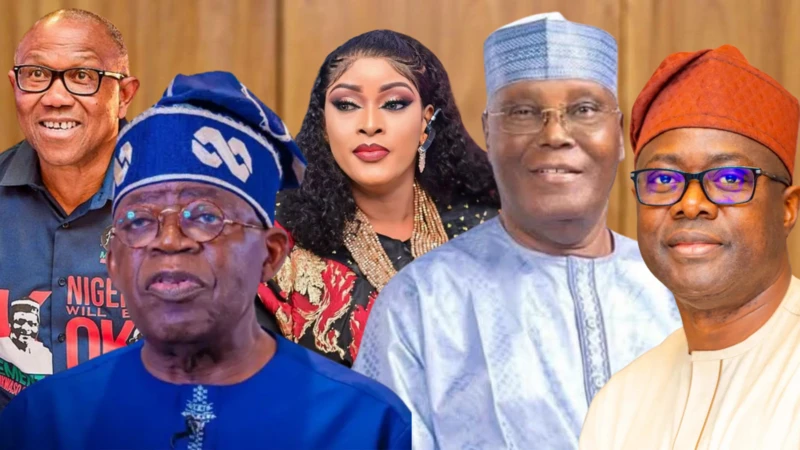
Peter Obi has made the most explicit public offer to be cross-examined on his record. As Nigerians prepare to vote on January 16, 2027, the question is whether any rival has matched it.
Nigerians head to the polls on January 16, 2027, with 18 presidential tickets on INEC’s final list. President Bola Tinubu is seeking another term under the APC, former Vice President Atiku Abubakar is running on the ADC platform, and Peter Obi carries the NDC ticket, alongside 15 other candidates. Voters have no shortage of manifestos. The harder thing to find is a candidate willing to be tested on their own record.
Scripture sets out what that test looks like. In 1 Samuel 12, Samuel, old and about to hand Israel to a king, stood before the people and asked whose ox or donkey he had taken, whom he had defrauded or oppressed, and from whose hand he had accepted a bribe. He promised restitution if anything could be shown. The people answered that he had cheated no one and taken nothing. His integrity was confirmed by those who had lived under his rule, not by Samuel himself.
A Samuel-style challenge is defined by four essential features: an open invitation to the public to examine and prosecute the claim rather than simply trust the speaker; a specific and verifiable claim that can be tested against available records; a clearly stated consequence or cost if the claim is proven wrong, as demonstrated by Samuel’s offer of restitution; and a willingness to accept the people’s verdict, allowing the claim to stand or fall on the strength of independent findings rather than the speaker’s own assertion. These elements provide the standard against which the claims and public accountability commitments of political candidates can be assessed.
Without a doubt, Obi has thrown his political record open to public scrutiny, challenging Nigerians to identify any wrongdoing that should disqualify him from the 2027 race. He has said that he and his running mate, Rabiu Kwankwaso, have put their personal and academic records up for global verification. He has also published My Record of Service, a document meant to let the facts of his eight years as Governor of Anambra State speak for themselves.
On the most contested question, whether he left debts behind in Anambra, he has dared critics and the state government to produce evidence of unpaid debts, salaries, pensions and contractor liabilities. He says his administration cleared more than N35 billion in historical gratuities and arrears. He has also said he left $150 million in Anambra’s treasury in 2014. He has also gone further, pledging to stop campaigning if anyone could show that land was allotted to him, his wife or any family member while he was governor.
READ ALSO: Munayi: The North Remembers
Without a doubt, these are specific, falsifiable claims with a stated penalty, and they are now being tested in public.
Almost in a similar vein, Atiku has issued a challenge of a kind. He has told the Federal Government to investigate and prosecute him if it has evidence of wrongdoing in office, in response to renewed allegations over power-sector projects. That is the “accuse me if you can” element of Samuel’s challenge, and it deserves credit.
However, it falls short of the full pattern in two ways. The dare is a reply to allegations raised against him, not an open invitation to examine his record. And questions about his past remain live. Blueprint reports that the EFCC has reopened a corruption matter dating to his time as vice-president. Atiku rejects suggestions that the renewed allegations establish wrongdoing, noting that he was not convicted despite earlier investigations. A pro-Tinubu movement has also challenged him to visit the United States and address questions raised during the federal corruption investigation there. None of this is a finding of guilt, but it means the challenge remains open.
President Tinubu’s case rests on his government’s record. Official figures from the presidency and the EFCC claim more than 7,000 convictions and over N500 billion recovered in the administration’s first two years. That is a record of enforcing anti-graft law against others, which is different from the Samuel test of inviting scrutiny of oneself.
Critics ask whether the administration has genuinely confronted Nigeria’s “big men” corruption culture or merely expanded enforcement against politically weakened targets. On personal disclosure, the civil society group SERAP has urged him to make his asset declaration form available to Nigerians. No public confirmation that he has done so was found in the reporting reviewed for this article.
In fact, this article has focused on the three most prominent tickets. The reporting reviewed here did not turn up a comparable public integrity challenge from the 15 other nominees, but that may reflect how little coverage smaller parties receive. Voters should look at every name on the final list and ask each campaign the same question.
Samuel’s claim was settled by the verdict of the people. Obi has not yet had that test, and the strongest challenge to it comes from his own state. The Anambra government insists his administration incurred debts that remained after he left office in 2014, and Obi has repeatedly rejected the allegation
His opponents are also holding him to his own pledge. The APC presidential campaign council argues that he should resign from the race, citing his promise to end his run if liabilities were proven. The Presidency says his record as governor is often overstated. Obi’s camp rejects these claims as politically motivated, and none of them has been decided by a court.
SERAP has asked the 2027 candidates to sign and publish a public integrity pledge committing themselves, their parties and campaign organizations to peaceful, transparent, accountable and corruption-free elections. That standard is open to every candidate on the ballot, and any of them can take it up before January 16.
So which other candidate has taken Samuel’s integrity challenge? On the record reviewed here, the clearest version belongs to Obi, with a partial version from Atiku and a different kind of claim from Tinubu. The more useful question for voters is what each candidate is willing to put on the table.
Samuel did not ask Israel to take his word. He asked them to check. Ahead of January 16, that is what voters should ask of every candidate: put your record on the table, name the cost of being wrong, and let the people decide.